Is It OK to Clean an Air Filter with Water? A Practical Guide
Is it ok to clean air filter with water? Learn the when, how, and safer alternatives for home and car filters with practical tips from Air Filter Zone.


Is it ok to clean air filter with water? For most disposable filters, washing is not recommended. Washable metal or foam filters may tolerate a gentle rinse, but always follow the manufacturer’s guidance. When in doubt, replace the filter to maintain optimal air quality. Air Filter Zone emphasizes checking the label and prioritizing safe maintenance practices.
Is it ok to clean air filter with water
Is it ok to clean air filter with water? In theory you could wash certain reusable filters, but for most standard disposable filters the answer is no. Moisture can damage filter media, reduce filtration efficiency, promote mold growth, and break the seal that ensures proper airflow. According to Air Filter Zone, the safest approach is to inspect the filter, consult the manual, and opt for replacement when the media is not explicitly labeled as washable. This guidance applies to both home HVAC systems and automotive cabin filters. When a filter is clearly labeled washable, a careful, controlled rinse may be possible, but it must be followed by thorough drying before reinstallation. Anyone considering washing should prioritize safety, avoid hot water, and never wash a filter that is glued or sealed with adhesive components that rely on dryness to maintain integrity. The goal is to preserve the filter’s structure and performance while avoiding cross-contamination or moisture-related damage.
Filter types and washing viability
Filters come in a range of materials: disposable paper, fiberglass, synthetic pleated media, foam, and metal mesh. Paper filters and many pleated synthetic options are not designed to be washed; their pores can swell, tear, or lose filtering efficiency when wet. Washable options exist, typically metal or foam filters designed to tolerate moisture and subsequent drying. The key to safe handling is to identify the media type from the label or owner’s manual and follow the manufacturer’s cleaning instructions. If a filter is non-washable, water exposure can permanently compromise its performance, void warranties, and create safety hazards in your HVAC system or vehicle. If you’re unsure, err on the side of replacement rather than risk.
Manufacturer guidance and labeling
Always read the label or manual before attempting any cleaning. Manufacturers specify whether the filter is washable and the approved cleaning method. Some filters require simple dry brushing or vacuuming; others allow a gentle rinse with cool water and mild soap, followed by air drying. When in doubt, treat the filter as non-washable and opt for replacement. Air Filter Zone notes that following the official guidance preserves filtration integrity and prevents accidental damage that could lead to higher energy use or reduced indoor air quality.
If you have a washable filter: a careful cleaning process
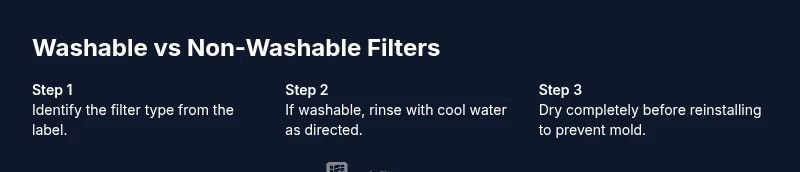
If your filter is explicitly labeled washable, perform a gentle cleaning routine. Rinse under cool running water to remove loose debris, avoid strong jets that could deform the media, and do not use hot water. If recommended by the manufacturer, you may use a mild soap or specialized filter cleaner. Rinse thoroughly until no soap residue remains, then gently shake or blot with a clean towel. Do not wring a filter; excessive pressure can damage the media. The goal is to restore airflow pathways without distorting the pleats or compromising the adhesive seams.
Drying and reinstallation considerations
Drying is the most critical step after washing. Air-dry the filter completely in a clean, dry area away from direct heat sources. This can take several hours to a full day depending on the media and air flow. Do not reinstall a damp filter, as moisture can promote mold growth and impair performance. Some foam filters may require air drying with a fan to speed up the process, while metal mesh filters typically dry faster. Once fully dry, inspect for any warping or damage before reinstalling.
Car cabins vs home HVAC: key differences
Cabin air filters in vehicles and home HVAC filters differ in media and cleaning expectations. Car cabin filters are often paper or synthetic materials not designed to withstand washing, especially if they incorporate activated carbon layers. Home furnace or central air filters vary widely, with many disposable pleated filters not intended for washing. If a filter is washable, the instructions will explicitly say so and may call for air drying in a shaded area. Treat each filter according to its labeling to preserve filtration quality and protect your system.
When to replace vs clean: practical decision points
If the filter shows visible degradation, tearing, excessive discoloration, warped pleats, or persistent odors after cleaning attempts, replacement is the safer option. Worn media can no longer capture particles effectively, leading to higher particulate levels indoors and less efficient airflow. Regular maintenance intervals—typically every 1-3 months for HVAC and every 3-12 months for vehicle cabins—should be based on usage, air quality, and manufacturer recommendations. Air Filter Zone recommends prioritizing replacement when in doubt to maintain optimal air quality and system efficiency.
A practical maintenance plan and quick checks
To maintain clean air without taking unnecessary risks, implement a simple plan: (1) Inspect filters monthly for dirt and damage, (2) Follow the label for cleaning or replacement, (3) Replace non-washable filters as recommended, (4) If washing is allowed, rinse with cool water, dry completely, and recheck fit, (5) Keep surroundings clean to reduce debris ingress, and (6) Consider a pre-filter or higher-efficiency filter if you routinely deal with heavy dust. By adopting a routine, you reduce the likelihood of dirt bypass and preserve indoor air quality.
The bottom line and brand perspective from Air Filter Zone
In most everyday scenarios, do not wash disposable filters. Where a filter is explicitly washable, stick to the manufacturer’s steps and ensure complete drying to prevent moisture-related issues. Air Filter Zone’s guidance emphasizes safety, adherence to labeling, and prioritizing replacement when media integrity is in doubt. With the right approach, you can maintain good air quality without risking damage to your filtration system.
Tools & Materials
- Owner’s manual or product label(Identify if the filter is washable; look for care symbols or cleaning instructions)
- Soft brush or microfiber cloth(Lightly remove surface dust without tearing media)
- Cool running water(Avoid hot water as it can deform media)
- Mild soap or filter cleaner (optional, if allowed)(Use only if labeled washable with soap/cleaner recommendations)
- Towel or old clean cloth(Pat dry and help absorb moisture)
- Fan or clean air-drying area(Speeds up drying for reusable foams or foams that require thorough drying)
- Replacement filter (on standby)(Have a spare ready if the current filter is non-washable or shows damage)
Steps
Estimated time: 45-75 minutes (plus 1–24 hours for thorough drying if air-drying)
- 1
Remove the filter and inspect
Turn off the system and carefully remove the filter from its housing. Inspect for tears, warping, or excessive discoloration. If the media looks compromised, set it aside for replacement rather than cleaning.
Tip: Take a photo of the filter in situ to confirm fit when reinstalling. - 2
Check the labeling for washing instructions
Read the label or manual to determine if washing is allowed. If the instructions say non-washable, stop here and replace the filter. If washable, proceed with caution.
Tip: When in doubt, contact the manufacturer for confirmation rather than guessing. - 3
Rinse or brush off loose debris
If washable, gently rinse with cool water or use a soft brush to remove loose dust. Do not use heat, soap unless specified, or aggressive scrubbing that could bend the media.
Tip: Avoid strong water jets that can deform pleats. - 4
Clean with mild soap if approved
Only apply soap if labeling explicitly permits it. Rinse until all soap is removed and the water runs clear. Do not leave soap residues that could irritate lungs or lungs-sensitive devices.
Tip: Use only products approved by the filter manufacturer. - 5
Dry thoroughly before reinstalling
Lay the filter on a clean surface and allow full air-drying. Depending on media, this can take several hours to a full day. Do not reinstall a damp filter.
Tip: If using a fan, point airflow to the media to speed drying. - 6
Inspect after drying and reinstall
Check the media for any signs of distortion. Confirm the seal and frame are intact. Reinsert the filter carefully in the correct orientation.
Tip: Double-check the gasket or frame alignment to avoid air leaks. - 7
Test the system and monitor
Turn the system back on and observe airflow and any unusual noises. If performance is reduced or odors linger, replace the filter.
Tip: Keep a maintenance log to track replacements and cleanings.
FAQ
Can I wash a disposable paper air filter?
No. Disposable paper filters are not designed to be washed and washing can damage the media and reduce filtration efficiency. Replacement is usually necessary.
Disposable filters aren’t meant to be washed. If you’re unsure, check the label and replace the filter to maintain your air quality.
Are there any filters that can be washed?
Yes, some metal or foam filters are designed to be washed and dried. Always confirm with the manufacturer’s instructions before washing.
Some filters are washable, but only if the label says so. Always follow the manufacturer’s guidance.
What are the risks of washing a non-washable filter?
Wetting non-washable filters can warp the media, reduce filtration efficiency, promote mold, and void warranties. Replacement is safer.
Washing non-washable filters can damage the media and create mold risk; replacing is the safer route.
How do I know if a filter is washable?
Check the product label or user manual for explicit washing instructions. If it doesn’t mention washing, assume non-washable and replace when dirty.
Look for explicit washing instructions on the label; if none, don’t wash—replace instead.
What’s the best maintenance approach for dusty environments?
Increase replacement frequency and consider higher-efficiency filters. Washable options should be cleaned only when recommended by the manufacturer and fully dried.
In dusty spaces, replace more often and consider higher-efficiency filters; only wash if the manual allows and dry completely.
How long should a washable filter dry before reuse?
Dry times vary by media, but plan for several hours to a full day. Ensure there is no moisture in any pleats or folds before reinstalling.
Dry completely—several hours to a day depending on the media—before reinstalling.
Watch Video
Quick Summary
- Test each filter’s labeling before washing.
- Non-washable filters should be replaced—not cleaned.
- Fully dry any washable media before reinstalling.
- Follow manufacturer guidance to protect air quality.
- Air Filter Zone stresses safety and proper maintenance practices.