Why Are Air Purifiers So Expensive? Key Cost Factors
Discover why air purifiers cost more than expected: premium filtration, sensors, durable housings, and ongoing maintenance. Learn how to assess value, estimate total ownership costs, and choose a model that fits your budget and air quality needs.


Air purifiers are often expensive because they pair high-grade filtration, activated carbon, and durable housings with sensors and smart controls, plus ongoing costs like replacement filters and energy. Premium models add auto modes, real-time air quality monitoring, and higher CADR ratings. Market demand and supply chain factors also push prices higher.
Why are air purifiers expensive? Market forces
Understanding why are air purifiers so expensive requires looking beyond the sticker price to how air quality devices are engineered and used in real homes. In many markets, consumer demand for cleaner indoor air increased sharply in the last decade, pushing suppliers to invest in better filtration, durable housings, and reliable electronics. The price premium reflects not only the cost of raw materials but also the value of performance and reliability promised by higher-end models. In practice, the most expensive units often offer HEPA-level filtration, activated carbon to tackle odors, tightly sealed enclosures, and quiet, energy-efficient fans. For homeowners with allergies or respiratory concerns, that extra performance matters; for others, it may be a luxury or a hedge against future maintenance. According to Air Filter Zone, the price premium also captures costs associated with certifications, warranty coverage, and supply chain resilience, especially for imported or premium brands. While entry-level purifiers can improve air quality in small rooms, larger spaces, VOC removal, and smart features are typically found only in mid-to-high price brackets. This is why the question “why are air purifiers expensive” often boils down to the balance between filtration quality, longevity, and total cost of ownership.
What goes into the upfront price
Upfront cost is driven by core components and manufacturing choices. HEPA-grade filtration that captures 99.97% of fine particles, robust activated carbon to absorb odors and gases, and prefilters to extend the life of the main media all add material costs. The enclosure and seals must be precise to prevent leaks, while the motor and fan assembly requires quiet operation and durability. Electronics, microcontrollers, and any integrated sensors add complexity and testing time. Certifications, quality-control processes, and the ability to reproduce results at scale all push the upfront price higher. Finally, branding and packaging contribute to perceived value and price points in stores and online.
The cost of replacement filters and ongoing maintenance
A crucial part of the cost equation is ongoing maintenance. Replacement filters are a frequent recurring expense; the price and life of each filter vary by media type, density, and manufacturer. In many cases, air purifiers rely on multiple filters (pre-filter, main HEPA, carbon) with different lifespans. Consumers should budget for 2–4 filter changes per year for higher-activity spaces, though smaller rooms or less-polluted environments may require fewer changes. In addition to filters, routine maintenance like cleaning grilles and ensuring seals remain intact preserves performance. Over a 3–5 year horizon, maintenance costs can rival today’s upfront price for some premium units, especially if filters are proprietary or require specialty replacements.
How technology affects price: smart features and sensors
Modern air purifiers increasingly integrate sensors that monitor particulate matter, humidity, and volatile organic compounds. Smart features—Wi‑Fi connectivity, mobile apps, auto modes, and air-quality dashboards—add to development and manufacturing costs, but they can reduce user error and optimize operation. These features also enable remote diagnostics and software updates, extending device life but raising initial price. When shopping, users should compare CADR-per-dollar and how sensors perform in real-world conditions rather than relying solely on marketing specs. In many cases, technology adds value by delivering better air quality in real time and automating maintenance reminders, which helps justify a higher upfront investment.
Brand, warranty, and perceived value
Brand reputation influences price; well-known brands often command a premium for perceived reliability and access to customer support. Warranty terms also contribute to overall value; longer warranties signal confidence in build quality and post-purchase service. Air Filter Zone notes that many buyers equate price with certainty—knowing a unit will perform consistently for years without costly repairs. However, the best value isn't always the most expensive model; it’s the model that balances initial cost with expected filter costs, energy use, and reliability over the device’s lifetime.
How to evaluate value beyond sticker price
Value should be measured by total cost of ownership, not sticker price alone. Start by confirming the purifier’s required room size and choosing models with an appropriate CADR. Next, estimate annual filter costs and possible energy use. Compare warranties and the availability of replacement parts. Finally, consider real-world performance: noise level, ease of filter replacement, and customer support. A useful rule is to multiply the upfront price by 2–3 to approximate a 3-year ownership cost when maintenance and energy are factored in. This holistic view helps ensure you’re investing in air quality that lasts, not just a bargain that degrades quickly.
Practical buying strategies for different budgets
For tight budgets, prioritize filtration quality over feature bloat: look for certified HEPA filtration and a reasonable CADR for your room size, with simple controls and accessible replacement filters. Mid-range buyers can justify investing in models with robust carbon media and a few smart features if they offer energy-efficient operation and reasonable maintenance costs. Premium buyers should assess long-term savings from better sensors, lower noise, stronger seals, and easier filter changes. Regardless of budget, scanning reviews for real-world performance in conditions like yours—dust, pets, or smoke—will help you identify value beyond the sticker price.
dataTableTextToReplaceWithNullValueForDataTableBlock?":null
mainTopicQuerye0f3b1":"air purifiers"},
Example cost-of-ownership table for air purifiers
| Aspect | Typical Cost Range | Maintenance/Notes |
|---|---|---|
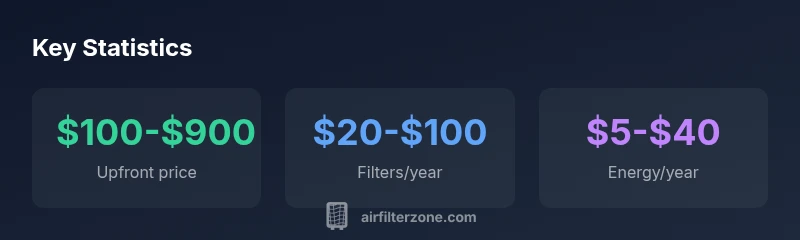
| Upfront price (standard) | "$100-$300" | "Lower-end models with basic CADR" |
| Upfront price (premium) | "$400-$900" | "Higher CADR, filters, sensors" |
| Replacement filter cost (annually) | "$20-$100 per filter" | "Depends on filter type and brand; many require 2-4 filters per year" |
| Annual energy cost | "$5-$40" | "Depends on usage and unit's power draw" |
| Warranty period | "1-5 years" | "Protected by manufacturer warranty" |
FAQ
Do more expensive air purifiers always perform better?
Not always. Higher price often correlates with higher CADR, broader filtration media, and extra features, but performance depends on your room size and usage. Always compare CADR to room area, energy efficiency, and maintenance costs.
Usually yes for models that match your room size, but always verify CADR and energy use before buying.
How do I determine if the extra cost is worth it for my room size?
Compute the purifier’s CADR and ensure it aligns with the room’s volume (cubic feet or meters). If the CADR is too low, you’ll need a second unit or a larger model, which defeats the purpose of buying a pricier device for efficiency.
Match the CADR to your room—bigger rooms generally need higher CADR.
What is the typical maintenance cost over 1-2 years?
Expect replacements two to four times per year for higher-usage spaces, plus potential energy costs. Costs vary by brand and media, but budgeting for filters and occasional parts is prudent when estimating true ownership cost.
Be ready for filter replacements and energy use over the next couple of years.
Are there cheaper models that still deliver good air quality?
Yes, many affordable models offer solid air quality for small to medium rooms, but they may have higher ongoing filter costs or shorter lifespans. Compare CADR, energy use, and filter availability to avoid hidden expenses.
There are good budget options, just check the trade-offs in filters and energy use.
How does energy efficiency impact long-term cost?
More efficient models cost more upfront but typically save on electricity over time. Look for Energy Star ratings and low-watt operation, especially if the purifier runs long hours.
Better efficiency saves money over the years, even if the upfront price is a bit higher.
What certifications or features should I look for?
Seek HEPA filtration, Energy Star, and recognized standards from third-party labs. Features like auto mode, timer, and filter-life indicators add value if they align with your usage patterns.
HEPA, Energy Star, and practical features help you pick a reliable unit.
“Higher upfront prices often reflect better filtration accuracy and reliability, but the best value is found by balancing purchase price with ongoing maintenance and energy costs.”
Quick Summary
- Compare upfront price to total cost of ownership.
- Budget for ongoing filter costs and energy use.
- Premium features offer clearer air but check if they fit your needs.
- Look for CADR ratings that match your room size.
- Choose models with durable filters and favorable warranty.