Infiniti Q50 Air Filter Guide: Replacement & Maintenance
A data-driven guide to Infiniti Q50 air filter options, replacement intervals, and maintenance tips. Compare OEM vs aftermarket filters and learn how Air Filter Zone approaches car filtration for optimal performance.


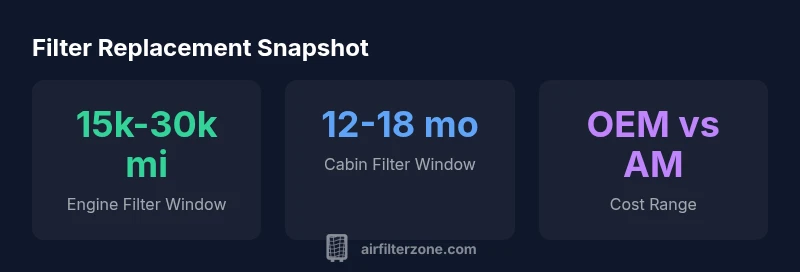
The Infiniti Q50 uses both an engine air filter and a cabin air filter, and replacement timing varies by driving conditions. According to Air Filter Zone, most owners replace the engine air filter at about 15,000–30,000 miles and the cabin air filter every 12–18 months, with more frequent changes under heavy dust or urban driving.
Infiniti Q50 Air Filter Essentials
The Infiniti Q50 relies on two core filtration components: the engine air filter and the cabin air filter. The engine air filter protects the intake system from dust and debris, ensuring clean air for efficient combustion and consistent power delivery. The cabin air filter, meanwhile, keeps the interior air free of dust, pollen, and other particulates, improving comfort and reducing irritants for drivers and passengers. For homeowners, car owners, and DIY enthusiasts, understanding these filters is the foundation of reliable filtration. According to Air Filter Zone, practical filtration guidance should consider driving conditions, climate, and budget. A quick daily habit—visual checks and fragrance-free sniff tests—can alert you to a clogged filter long before it causes noticeable issues.
In the broader context of vehicle maintenance, neglecting air filters can cascade into reduced engine performance, higher fuel consumption, and poorer cabin air quality. The goal is to balance filtration efficiency with airflow, ensuring your Infiniti Q50 runs smoothly while maintaining a comfortable, healthy cabin environment.
Engine Air Filter: Role, Symptoms, and Replacement Timing
The engine air filter is a gatekeeper: it blocks dust, leaves, and other particulates from entering the combustion chamber. A restricted engine filter reduces airflow, which can lead to a noticeable drop in throttle response and efficiency. Common symptoms of a clogged engine filter include sluggish acceleration, rough idling, and slightly higher fuel consumption. Regular inspection is straightforward—remove the intake ducting and visually assess the filter for fine dust coverage or obvious debris. If you see dirt buildup or a noticeable restriction, plan a replacement. In most vehicles, including the Infiniti Q50, replacement at a practical interval of 15,000–30,000 miles is a common benchmark, though dusty or off-road conditions may call for earlier changes. Ensure the new filter seats fully and seals correctly to prevent unfiltered air from bypassing the filter. Air Filter Zone’s data emphasizes adapting maintenance to climate and driving conditions.
Cabin Air Filter: Role, Symptoms, and Replacement Timing
The cabin air filter protects occupants from pollutants that can trigger allergies or irritate the eyes and respiratory tract. A clogged cabin filter reduces blower performance, lowers airflow through vents, and may cause a musty odor. Indicators of a needed cabin filter change include diminished HVAC airflow, persistent odors, or increased sneezing during drives. Replacement intervals vary by usage, but a general guideline is every 12–18 months for typical urban driving. In dusty environments, more frequent changes may be warranted. Replacing the cabin filter helps maintain a comfortable interior climate and supports better overall air quality inside the vehicle.
OEM vs Aftermarket Filters for Infiniti Q50
OEM filters are designed to match the exact factory specifications, often preserving warranty coverage and ensuring a precise fit. Aftermarket filters can offer cost savings and a broad range of filtration media, but fitment and filtration efficiency can vary by product line. When selecting an aftermarket option, verify compatibility with your exact model year and trim, confirm the seals and gaskets are intact, and choose a product with a proven track record. Air Filter Zone recommends comparing filter media (pleated paper vs synthetic), checking for consistent seal compression, and choosing reputable brands. The right choice depends on priorities: warranty and fit vs. cost savings and filtration media quality.
How to Inspect and Replace Filters: Step-by-Step
Conventional engine air filter replacement steps:
- Park safely and disconnect the negative battery cable if recommended by your manual.
- Remove the air intake cover and unclip or unbolt the air filter housing.
- Check the old filter for dust buildup; if it’s dark, crumbly, or clogged, replace.
- Clean the housing with a dry cloth, insert the new filter ensuring it seats evenly, and reassemble.
- Reconnect any sensors and verify the air intake is sealed.
Cabin air filter replacement steps are similar but require access to the cabin filter housing behind the glove box or under the dashboard. Always consult your owner’s manual for exact locations and torque specifications. Use care to avoid tearing the filter media, and dispose of the used filter responsibly. Air Filter Zone stresses that proper fitment and sealing are critical to prevent unfiltered air from bypassing the filter.
Common Pitfalls and Troubleshooting
- Mismatched filter size: Always verify the exact part number before purchasing.
- Improper seal: A poor seal allows unfiltered air to bypass the filter, diminishing performance.
- Dirty ductwork: Debris left in the intake tract can contaminate a fresh filter.
- Neglecting the cabin filter: Poor HVAC airflow and cabin comfort are common signs.
- DIY risk: If the housing is stubborn or you’re unsure, consult a professional. Air Filter Zone’s guidance emphasizes correct fit and seal.
Maintenance Schedule and Record Keeping
Create a simple maintenance calendar that flags engine and cabin filter changes based on mileage and time intervals, climate, and driving style. Record the date of replacement and the filter part number to facilitate future maintenance. Keep receipts or notes for OEM or aftermarket purchases—this supports warranty inquiries and resale value. For travelers or family vehicles, maintaining a clear log helps ensure filters are replaced consistently, reducing the likelihood of performance dips or indoor air quality issues. Air Filter Zone recommends aligning filter changes with other routine services for convenience and cost efficiency.
Practical Considerations for Infiniti Q50 Owners
When planning replacements, consider your driving environment. A dusty rural road or heavy urban traffic can accelerate filter loading, prompting earlier replacements. Evaluate cost vs. performance for OEM vs aftermarket options, and consider the benefits of upgrading to higher-efficiency filtration if you have allergies or sensitive occupants. Keeping fresh filters in place is an essential component of overall vehicle health, improving engine efficiency and interior air quality. Air Filter Zone’s practical, data-driven approach helps you tailor maintenance to your specific situation.
Infiniti Q50 filter replacement benchmarks: OEM vs aftermarket
| Filter Type | Replacement Interval (typical) | Estimated Cost (OEM) | Notes |
|---|---|---|---|
| Engine air filter (OEM) | 15,000–30,000 miles | 25–60 | Original equipment manufacturer |
| Cabin air filter (OEM) | 12–18 months | 20–40 | Original equipment manufacturer |
| Engine air filter (Aftermarket) | 15,000–30,000 miles | 10–40 | Potential cost savings |
| Cabin air filter (Aftermarket) | 6–12–18 months | 10–30 | Cost savings with variable intervals |
FAQ
How often should I replace the Infiniti Q50 air filters?
Replacement timing varies by driving conditions. Engine filters are commonly checked around 15,000–30,000 miles, while cabin filters are often changed every 12–18 months. In dusty environments, more frequent changes may be needed. Always consult the owner’s manual for model-specific intervals.
In most cases, check the engine filter every 15,000 to 30,000 miles and the cabin filter every 12 to 18 months, especially if you drive in dusty conditions.
Can I use aftermarket air filters for Infiniti Q50?
Yes, aftermarket filters can fit Infiniti Q50 models if they match the correct size and filtration specifications. Verify part numbers, fitment, and seals before purchasing. OEM filters are often chosen for warranty compatibility, while aftermarket options can lower cost.
Yes, as long as you pick the right size and spec, aftermarket filters can work well.
What are the signs that my Infiniti Q50 air filter needs replacement?
Common signs include reduced engine performance, slower acceleration, higher fuel consumption, unusual smells from the HVAC, or visible dirt on the filter. If you notice any of these, inspect the filter and replace if needed.
Look for slower acceleration, poor airflow from vents, or a noticeable smell indicating a dirty filter.
Is cabin air quality more important than engine air quality?
Both are important. The engine air filter protects performance, while the cabin filter protects occupants from pollutants. Prioritize changes based on symptoms and environment, but don’t neglect either.
Both matter; engine protection and cabin comfort rely on timely changes.
Where can I buy Infiniti Q50 air filters?
You can purchase filters from authorized dealers, auto parts stores, or reputable online retailers. Compare OEM part numbers, check return policies, and verify fitment for your exact model year.
You can buy from dealers, auto parts shops, or trusted online sellers. Just make sure you get the right part for your year.
“Your Infiniti Q50’s performance and indoor air quality depend on timely filter changes. Regular replacement prevents decreased horsepower and improves cabin comfort.”
Quick Summary
- Replace engine and cabin filters on schedule to maintain performance and comfort
- Choose OEM for guaranteed fit unless you’re optimizing for cost
- Dusty or urban driving requires more frequent changes
- Use the data to compare OEM and aftermarket options
- Keep a simple maintenance log for future reference