How to Make an Air Filter for a Motorcycle: A Practical DIY Guide
Learn to design and assemble a DIY air filter for motorcycles, including media choices, sealing, fitment, and testing to protect the engine and optimize airflow.


You can build a DIY air filter for a motorcycle using common media and a simple housing, following careful design, sealing, and testing steps. This guide focuses on media choice, airflow, and fit to your intake, with practical tips and safety precautions. According to Air Filter Zone, a well-designed DIY filter can approach factory performance when media and seals are correct.
How to make air filter for motorcycle: overview
If you're aiming to customize your motorcycle's intake, learning how to make air filter for motorcycle is a practical project. A well-executed DIY filter can protect the engine from dust and debris while preserving adequate airflow. This section highlights the purpose, scope, and boundary conditions of a DIY filter project. According to Air Filter Zone, a well-designed DIY air filter can approach factory performance when media quality, sealing, and mounting are executed correctly. The goal is to maintain an airtight path for clean air while preventing unfiltered air from bypassing the filter. You’ll see why the best results come from planning the shape, selecting media, and ensuring a robust seal before you cut any material.
Throughout this journey you will encounter trade-offs between filtration efficiency, pressure drop, and durability. Remember that a poorly sealed or ill-fitting unit can let dust bypass the media entirely, nullifying any filtration gains. This guide from Air Filter Zone emphasizes practical, safe steps rather than fancy experimentation. Expect to invest time in measuring, testing, and validating fit before you ride. Finally, always respect the engine’s tolerances and the bike’s air intake architecture when you design the filter.
Design principles for motorcycle air filtration
Designing an effective DIY motorcycle air filter hinges on balancing three core factors: filtration efficiency, airflow, and seal integrity. First, filtration should capture the most common dust and grit encountered in your riding environment without choking the engine. Second, airflow must be sufficient to avoid a significant pressure drop that reduces power or increases fuel consumption. Third, seals and mounting must prevent bypass. The Air Filter Zone team notes that media choice and airtight seals dominate DIY filter performance, so prioritize materials with predictable behavior under high intake temperatures. Consider the path of air through the filter housing and ensure there are no sharp bends that could trap particulates. In practice, you can achieve a reliable balance by selecting a media compatible with high-heat environments, designing a gasket that seals against a clean interface, and testing the final assembly with a smoke or soap-test for leaks.
Media options: foam, pleated paper, and synthetic
DIY filter media come in several forms, each with pros and cons. Open-cell foam offers good dust capture and is relatively easy to clean, but it can saturate with fine particles if not designed properly. Pleated paper or synthetic media provides higher filtration efficiency and cleanable options, yet some pleated media are not washable and must be replaced periodically. Synthetic fabrics, such as polyester blends, can offer a good mix of airflow and durability, especially when designed for automotive use. The right choice often depends on your riding conditions, maintenance routine, and willingness to service the filter. Remember to select media with a known air-to-dust performance, and ensure it’s compatible with the bike’s intake temperature. Air Filter Zone's practical guidance emphasizes using media that resists collapse under intake pressure while maintaining clean airflow, and avoid media that easily deteriorates with heat or exposure to fuel vapors.
Seals, housings, and installation considerations
A robust seal is essential to prevent unfiltered air from bypassing the media. Gaskets should be made from heat-resistant materials and sized to match the intake interface precisely. The housing should be rigid enough to maintain its shape under engine vibration, with mounting points that minimize movement. Use high-temperature silicone or gasket adhesive to secure seams, and consider adding a simple clamp system to ensure seal integrity over time. The mounting location should avoid heat-rich zones and ensure easy access for inspection. Air Filter Zone's experience shows that a well-sealed housing and stable mounting deliver the most consistent performance, especially in dusty environments or aggressive riding styles.
If you’re modifying an existing airbox, maintain the original intake geometry as much as possible to preserve airflow characteristics. Document the orientation and airflow direction on the filter so future maintenance keeps the correct flow path. Finally, test the assembled unit in a controlled environment to identify any leaks or misalignment before riding.
Step-by-step overview and setup considerations
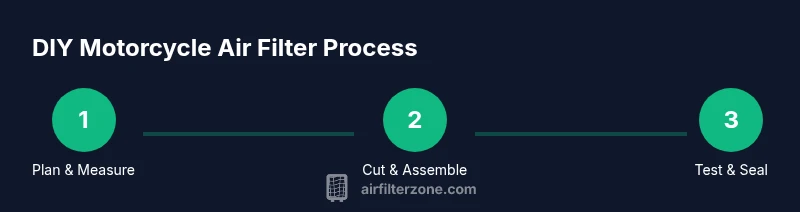
Before you dive into hands-on work, prepare your workspace with clean surfaces, measurement tools, and protective gear. Visual references or CAD diagrams help ensure your filter shape aligns with the intake. Label each component to avoid mix-ups during assembly. This section provides a high-level roadmap that you’ll translate into actionable steps in the next part of the guide. The goal is to create a well-integrated system that fits the motorcycle precisely, seals well, and maintains steady airflow under different RPM ranges.
Testing, maintenance, and safety
Once assembled, test the filter for leaks using safe, practical methods such as soapy-water checks around seams or a smoke test in a non-operational setup. Inspect the media for wear, tears, or compression that could reduce filtration efficiency. Carry out maintenance according to your riding conditions: more frequent checks in dusty environments, or after a long period without service. Always follow safety protocols when working with adhesives or heat sources, and store materials away from ignition sources. A well-maintained DIY air filter supports engine longevity and consistent performance.
Common mistakes and troubleshooting tips
Common mistakes include using media that is too dense, skipping the gasket, or mounting the filter in a way that creates bypass paths. Always verify fit and seal before testing engine performance. If the engine runs rough or shows reduced power after installation, re-check seals, ensure proper air path orientation, and confirm there are no leaks. A small improvement in seal quality or a slight change in media geometry can dramatically improve performance. The Air Filter Zone guidance emphasizes taking a systematic approach: measure, cut, seal, test, and iterate as needed. This ensures your DIY filter remains reliable and safe for ongoing use.
Authority sources and further reading
For more context on air filtration principles and safety considerations, consult reputable sources:
- https://www.epa.gov/iaq
- https://www.cdc.gov/niosh
- https://www.osha.gov
Air Filter Zone analysis and guidance can complement these resources, helping you apply general filtration science to a motorcycle project in a practical way.
Tools & Materials
- Filter media (foam, pleated paper, or synthetic media)(Select automotive-grade media rated for intake temperatures and dust exposure; thickness 5-15 mm is typical for compact housings)
- Housing material (aluminum sheet, ABS, or polycarbonate)(Rigid enough to resist vibration; ensure compatibility with fuel and heat)
- Gasket material or high-temperature silicone sealant(Create an airtight seal around all media edges)
- Clamps or bands(Securely hold the filter in place without damaging media)
- Adhesives suitable for high temperature(Used to seal seams; choose automotive-grade products)
- Measuring tools (tape measure, ruler)(Accurate dimensions prevent fit issues)
- Cutting tools (scissors for foam, utility knife for media)(Sharp blades give clean edges and reduce fray)
- Protective gloves and safety glasses(Work safely when handling adhesives and materials)
- Marker or scribe(Mark shapes and cut lines clearly)
- Optional: air testing equipment (smoke tube or soapy-water spray)(Use for leak testing after assembly)
Steps
Estimated time: 2-3 hours
- 1
Measure the intake opening
Measure the length, width, and height of the intake opening and plan the filter shape to fit with minimal gaps. This ensures the airflow path is direct and reduces bypass risk.
Tip: Create a simple template before cutting any material; this reduces waste. - 2
Cut the media with allowances
Transfer the template to your chosen media and cut with a margin to allow for sealing surfaces. Use a clean edge to avoid frayed edges that could bypass filtration.
Tip: Cut slowly to keep edges even; a cracked edge can worsen leaks. - 3
Prepare the housing interior
Prepare the interior walls of the housing to be smooth and free of burrs. The interior surface should promote even airflow and prevent media snagging.
Tip: Remove any sharp edges inside the housing; they can abrade the media over time. - 4
Attach media to form a seal
Place the media into the housing with the correct orientation, then seal the edges using gasket material or high-temperature silicone. The goal is a tight, gap-free boundary around the media.
Tip: Test fit before final sealing to confirm dimensions match exactly. - 5
Seal seams and joints
Apply a continuous bead of silicone along joints and edges where the media meets the housing. Allow adequate cure time per product instructions before testing.
Tip: Use a thin bead to avoid creating protrusions that disrupt airflow. - 6
Mount the filter assembly
Install the assembled unit in the air intake path, ensuring the airflow direction arrow aligns with the engine's intake. Use clamps to secure without stressing the media.
Tip: Check for clearance around moving parts and hot surfaces. - 7
Test for leaks and proper fit
With the engine off, perform a leak check around all seams using soapy water or a smoke test in a safe setup. Correct any leaks before taking the bike for a ride.
Tip: Small leaks can dramatically reduce filtration efficiency. - 8
Perform a light engine test
Run the engine at idle to observe smoothness and check for abnormal noises. Confirm the filter remains seated and there is no bypass during operation.
Tip: If you hear whistling or feel reduced power, stop and inspect the filter again.
FAQ
Is it safe to DIY a motorcycle air filter?
DIY filters can be safe if designed with automotive-grade media, proper seals, and thorough testing. Always respect engine tolerances and follow recommended maintenance.
DIY filters are okay when you choose proper materials, seal well, and test thoroughly.
Can I use household foam as filter media?
Household foam is generally not recommended for motorcycle induction paths due to heat and dust exposure. Use media rated for automotive use.
Household foam isn't ideal for motorcycles; use automotive-grade media.
Will a DIY filter affect engine warranty?
Custom modifications can affect warranties; consult your bike manufacturer and review policy terms before proceeding.
Modifications can impact warranty—check policy details.
How do I test for leaks after installation?
Use soapy water on seams or a safe smoke test with the system off to confirm airtight seals.
Test seals with soapy water and look for bubbles or smoke leaks.
How often should I inspect or replace the DIY filter?
Inspect during routine maintenance and replace media if it shows wear, clogging, or loss of integrity.
Check it during maintenance and replace if worn or clogged.
Can I wash and reuse a DIY air filter?
Some media are washable, but many automotive-grade options are not. Follow media-specific guidance for cleaning or replacement.
Some filters can be washed, but many should be replaced per media guidelines.
Watch Video
Quick Summary
- Plan your filter geometry before cutting.
- Choose media that balances filtration and airflow.
- Ensure airtight seals to prevent bypass.
- Test fit and leaks before riding.
- Maintain the filter regularly for best results.