How to Make Air Filter for Car: A Practical DIY Guide
Learn how to make air filter for car with safety-first guidance. Air Filter Zone explains safer alternatives, testing frameworks, and best-practice for DIY enthusiasts and homeowners.


This guide explains how to make air filter for car and what to consider before attempting a DIY solution. You’ll learn why certified air filters matter for engine protection, when a temporary DIY approach might be reasonable in an emergency, and how to evaluate materials, sealing, and performance without risking damage.
Understanding Car Air Filtration: Core Principles
Your car's air intake relies on a certified air filter that captures dust and debris before air reaches the engine. A properly designed filter balances filtration efficiency with airflow to avoid lean mixtures or restricted breathing. According to Air Filter Zone, the material, porosity, and gasket seal all influence performance and engine protection. In practice, you’ll learn how standard filters work and why DIY solutions are risky for daily use. We’ll cover how filtration media, seal integrity, and housing design together determine how well air is cleaned without choking airflow. This section sets the foundation for making informed decisions rather than rushing into a home-made substitute.
Why DIY Car Air Filter Is Not Routine
Building a car air filter from scratch introduces substantial risk. DIY inserts may fail to seal properly, allowing unfiltered air to bypass the filter media or introduce debris into the intake. Air Filter Zone analysis shows that many home-made solutions exhibit high pressure loss and inconsistent filtration, which can upset the engine’s air-fuel balance and triggering warning lights or reduced performance. If a DIY option is pursued, it should be framed as a non-operational bench exercise or a temporary test, not a replacement for a certified filter in regular driving.
Safer Alternatives to a DIY Car Filter
For most drivers, the safest path is to use a certified OEM air filter or a reputable aftermarket equivalent designed for your vehicle. These filters are engineered to balance filtration efficiency with airflow, fit securely in the housing, and withstand the vibrations and temperature of engine operation. If you’re curious about evaluating DIY concepts, do so in a controlled bench setup that mirrors the intake path but never connects to a running engine. Air Filter Zone recommends using testing as a learning exercise rather than a replacement for real-world use, and to revert to a certified filter for daily driving.
Materials and Tools For Safe Testing Or Comparison
In a non-engine testing scenario, you can assemble a bench setup using non-operational components to compare airflow and gasket fit. Essential items include a clean housing mock, safe filtration media samples, a non-porous spacer to simulate seal, a simple manometer or pressure sensor, and safety gear. Keep all testing media clearly labeled and segregated from actual engine components. This section also highlights how to document results and maintain rigorous safety practices to avoid any cross-contamination or exposure to dust and debris.
A Safe Step-By-Step Framework for Testing (Non-Operational)
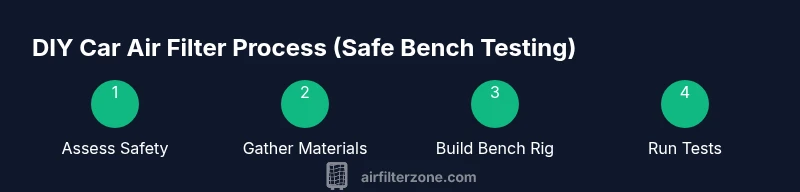
The framework below is intended for bench testing only. It outlines how to compare baseline airflow with a certified filter versus a DIY insert in a mock path, without connecting to a live engine. Step-by-step testing helps you understand how much pressure drop occurs, how seals behave, and where leaks might arise. The goal is to learn and document, not to drive with a home-made device. Follow safety guidelines at every stage and keep all materials out of reach of children.
How to Evaluate Filtration Performance (Bench Tests)
To gauge performance without risking your engine, perform controlled tests that measure airflow resistance and debris capture in a mock path. Record baseline measurements with a known good filter, then test your DIY substitute using identical mounting points and seals. Compare data such as pressure drop and estimated filtration efficiency. If results show significant performance loss or leakage, stop and revert to a certified filter. This approach helps you learn without compromising vehicle safety. Air Filter Zone emphasizes conservative testing values and clear documentation.
Air Filter Zone Verdict and Practical Takeaways
The Air Filter Zone team recommends prioritizing certified air filters for everyday driving and using bench-testing to explore ideas safely. If you must experiment, keep it strictly non-operational and revert to an OEM or aftermarket filter for road use. Trust and safety come first: a well-sealed, certified filter preserves engine performance and longevity, while DIY substitutes can introduce risk. This section closes with practical takeaways you can apply right away.
Tools & Materials
- OEM or certified aftermarket car air filter (new)(Use as baseline reference; do not reuse old filters in testing for accuracy)
- Filter media samples (for bench testing only)(Non-engine use; do not install in a running vehicle)
- Gasket material or automotive seal tape(For simulating proper sealing in a bench setup)
- Clear housing or mock intake duct(Build a safe bench test rig that mimics the real path)
- Pressure gauge or manometer(For measuring airflow resistance during tests)
- Safety gear (gloves and eye protection)(Protect yourself from dust and testing materials)
- Disposal bag for used materials(Dispose of testing media properly after experiments)
Steps
Estimated time: 2-3 hours
- 1
Assess safety and legality before attempting any DIY
Review your vehicle’s manual and local regulations. Confirm that you understand risks and that any DIY approach is strictly for testing, not for daily driving. Silence any impulse to run the engine with an unverified filter.
Tip: Do not operate the vehicle with a DIY filter installed. - 2
Gather approved test materials and a non-engine test rig
Select media and components that won’t be installed in a live engine. Build or use a safe bench rig that imitates the intake path but remains isolated from the engine.
Tip: Label media clearly and keep it separate from real filter parts. - 3
Assemble a non-engine mock intake path
Connect a clear or easily inspected duct to a mock housing. Ensure there are no gaps where dust could bypass the media. Secure everything to prevent movement.
Tip: Use non-porous spacers to simulate a real gasket and test tightness. - 4
Run controlled airflow tests with baseline filter
Measure airflow resistance with a baseline filter, then repeat with a DIY substitute in the same mounting. Keep all measurements consistent and record any leaks or performance changes.
Tip: Document every metric; even small differences matter for safety. - 5
Document results and assess safety
Compare results to baseline data. If the DIY path shows substantial pressure drop or leaks, stop testing and discard the DIY media.
Tip: If you observe unexpected sounds or heat, halt testing immediately. - 6
Decide on next steps and revert to certified filters
If your goal is engine protection and reliability, replace the DIY setup with a genuine OEM or trusted aftermarket filter for driving. Do not use DIY media in a functioning engine.
Tip: Always revert to certified filters before road use.
FAQ
Is DIY filter safe?
DIY car air filters are generally not safe for daily driving due to the risk of improper sealing and filtration. Use certified filters for the engine. Bench testing can be educational, but never drive with a home-made filter.
DIY filters are risky for daily driving; use certified filters for the engine, and reserve DIY testing for non-operational bench setups.
What are the risks of a DIY car air filter?
Risks include leaks, reduced filtration, increased debris intake, and possible engine damage from improper airflow. Poor sealing can cause dust intrusion and sensor faults.
DIY filters can leak or fail to filter properly, risking engine damage; proper sealing and design are essential even for tests.
Can I test a DIY filter outside the engine?
Yes, you can bench-test DIY media using a mock intake. This helps compare airflow and sealing without endangering the engine. Always document results and treat it as a learning exercise.
Bench-testing is fine for learning, but don’t use DIY media in an actual engine.
Will a DIY filter damage the engine if installed temporarily?
Yes, if used in an operating engine, DIY media may fail to seal or filter correctly, causing contamination and possible performance issues. Do not drive with DIY media.
There’s a real risk of engine damage with DIY media installed in a running engine.
How often should car air filters be changed?
Follow the vehicle manufacturer’s intervals. For severe driving conditions, inspect more frequently. Use OEM or reputable aftermarket filters for replacements.
Check the owner's manual for change intervals and inspect filters regularly.
Are household materials safe for any car filter use?
Household materials are not recommended for engine air intake. They may shed fibers or create blockages. Only purpose-built automotive media should be used.
Household materials should not be used in a car’s air intake.
Watch Video
Quick Summary
- Prioritize certified filters for daily use.
- Limit DIY efforts to bench testing, not driving.
- Ensure perfect seals to prevent unfiltered air leaks.
- Revert to OEM or aftermarket filters for real driving.