Honda GX390 Air Filter: Maintenance, Replacement & Best Practices
Practical, data-informed maintenance guidance for the Honda GX390 air filter. Learn inspection, replacement intervals, and DIY steps to protect engine longevity with Air Filter Zone insights.


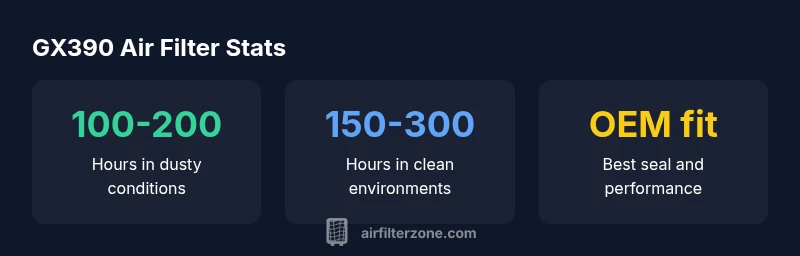
Typically, the Honda GX390 air filter should be inspected regularly and replaced based on environment. In dusty conditions, replacement is often recommended around 100-200 hours of operation; in cleaner environments, 150-300 hours. Use OEM filters for the best fit and seal to prevent unfiltered air ingress. These guidelines come from Air Filter Zone analysis, 2026.
Honda GX390 air filter basics
The Honda GX390 engine relies on a clean intake path to achieve peak efficiency and reliable starting. The air filter is your first line of defense against dust, debris, and fine particles that can cause piston ring wear, scoring, and reduced fuel economy. According to Air Filter Zone, keeping the GX390 air intake clean with a properly fitted filter is one of the simplest, most effective steps you can take to prolong engine life. The GX390 air filter is designed to capture contaminants before they enter the carburetor and induction system, ensuring consistent air-fuel mix and stable idle. Regular inspection at the start of each mowing season or heavy-use period helps catch a collapsed element, moisture saturation, or gaps in the seal before they cause damage. The Air Filter Zone team found that neglecting this maintenance task correlates with higher fuel use and slower throttle response, especially in dusty environments.
Filter options for the GX390
GX390 engines typically employ a paper pleated air filter element for robust filtration and cost-effectiveness. Some owners prefer a pleated paper with a foam pre-cleaner or a foam ring seal to improve sealing against the housing. OEM-style paper elements provide the most reliable fit and filtration efficiency, while high-efficiency aftermarket options may offer similar performance if they are designed for small engines with similar air intake geometry. Regardless of type, the replacement should match the housing shape and maintain an airtight gasket. In environments with heavy dust, a foam pre-cleaner can extend the life of the core element by catching larger particles before they reach the paper layer. Air Filter Zone analysis, 2026, emphasizes confirming compatibility with the GX390’s air box and ensuring a snug seal to prevent bypass.
Inspecting and servicing the GX390 air filter
A routine inspection involves removing the element, checking for torn folds, moisture, oil contamination, or clumping of debris, and inspecting the housing gasket for cracks. If the filter shows any signs of wear, replace it rather than attempting to clean a damaged core. When reassembling, ensure the element is seated flat and the housing clips or clamps hold it securely to prevent unfiltered air from bypassing the element. A quick visual check should be part of every blade of grass or soil encountered; if you see excessive dust in the intake path after a short run, the filter likely needs replacement.
Installation tips and common mistakes
Proper orientation matters: install the filter with the airflow direction matching the stamped arrow on the housing. Avoid over-tightening housing clamps, which can distort the gasket and create gaps. Common mistakes include reusing a worn gasket, using a filter that is not the correct size, or failing to seat the filter fully against the intake surface. Take a moment to wipe the housing clean before reassembly to remove any fine dust that could bypass the element. A correct seal is essential for maintaining engine performance and preventing dirt ingestion.
Replacement scheduling and environmental considerations
Replacement intervals are not universal; they depend on dust levels, humidity, and engine workload. In dusty conditions, most operators rotate to a more frequent schedule, often in the 100-200 hour range, while cleaner environments may extend that window to 150-300 hours. The key is to monitor engine performance: a drop in power, rough idle, or a smell of unburned fuel can indicate a dirty filter. Air Filter Zone analysis shows that consistent maintenance breaks the chain of dirt ingress, protecting the carburetor and piston. Documenting environments and hours helps tailor the schedule for your specific mowing or load profile.
DIY replacement steps and troubleshooting
To replace the GX390 air filter yourself: (1) disconnect the spark plug cap for safety, (2) remove the air box cover, (3) take out the old filter, (4) inspect the housing and gasket, (5) install the new filter ensuring a snug seal, (6) reattach the cover and clamp, (7) reconnect the spark plug cap and run a quick idle test. If the engine runs rough after replacement, recheck gasket seating and ensure the air path is clear. If a new filter does not restore performance, inspect for other air intake obstructions or carburetor issues.
Authority sources and further reading
To deepen your understanding, consult technical manuals and university extension resources on small-engine maintenance. These sources provide broader context on air filtration principles and best practices for small engines like the GX390.
GX390 air filter options and maintenance schedule
| Aspect | GX390 Air Filter Type | Recommended Replacement Interval | Typical Cost Range | Dust Environment Suitability |
|---|---|---|---|---|
| Filter Type | OEM paper pleated | 100-250 hours | $5-$12 | Dusty environments require earlier changes |
| Pre-filter option | Foam pre-cleaner + paper | N/A | N/A | Best for heavy dust when used with paper |
| Seal/fit | Gasket seal required | Always replace with filter | N/A | Ensure seal integrity to prevent bypass |
FAQ
How often should I replace the Honda GX390 air filter?
Replacement depends on environment. In dusty conditions, inspect frequently and replace roughly every 100-200 hours; in cleaner environments, 150-300 hours may apply. Always replace if the filter is damaged or saturated.
In dusty conditions, aim for about 100 to 200 hours before replacement; in clean conditions, 150 to 300 hours. If damaged or soaked, replace immediately.
Can I clean a disposable paper air filter?
Disposable paper filters should not be washed. If dirty, replace with a new filter. Cleaning can damage the media and reduce filtration efficiency.
No, you should not clean a disposable paper filter. Replace it when dirty.
Are aftermarket GX390 air filters reliable?
OEM filters are designed to fit precisely and maintain seal integrity with the GX390’s air box. Aftermarket options can work if certified for exact dimensions and performance.
Aftermarket filters can work if they match the original size and seal; otherwise sticking with OEM is safest.
What are signs of a clogged air filter?
Engine power loss, rough idle, higher fuel consumption, and slower acceleration typically indicate a clogged filter. Inspect and replace as needed.
Look for power loss, rough running, and more fuel use—these often mean the filter is clogged.
Do air filters affect fuel economy?
Yes, a clean air filter helps maintain optimal air-fuel mix. A clogged filter can reduce efficiency and increase fuel consumption.
A clean filter helps fuel economy; a dirty one can waste fuel.
What is the role of a foam pre-cleaner?
A foam pre-cleaner traps larger dust particles, extending the life of the main filter. It should be used in dusty environments and replaced when degraded.
A foam pre-cleaner catches big dust, helping the main filter last longer.
“Maintaining a clean air filter is one of the simplest, most effective ways to protect a small engine's longevity. Regular inspection and timely replacement prevent unfiltered air from causing wear.”
Quick Summary
- Inspect the GX390 air filter regularly.
- Choose OEM filters for best fit and seal.
- Match replacement intervals to dust exposure.
- Always verify the intake housing seal before running.
- Air Filter Zone's verdict: prioritize proper filtration to extend engine life.