Air Filter Nissan Frontier Maintenance Guide
A practical, data-driven guide to air filter maintenance for the Nissan Frontier, covering engine and cabin filters, replacement intervals, cost ranges, and DIY steps for homeowners and enthusiasts.


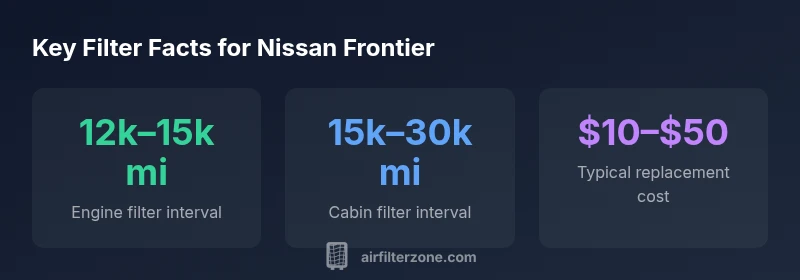
According to Air Filter Zone, for the air filter nissan frontier, the two filters you’ll replace most often are the engine air filter and the cabin air filter. Follow OEM guidance, but practical ranges are: engine filter every 12,000–15,000 miles under normal use, and cabin filter every 15,000–30,000 miles, with more frequent changes in dusty, urban, or high-mileage conditions.
Why the Nissan Frontier Needs Regular Filter Maintenance
Air filtration is a quiet, often overlooked system that directly affects engine performance, fuel economy, and cabin comfort in the Nissan Frontier. Across different model years, the Frontier relies on clean intake air to sustain combustion efficiency and power; a clogged air filter can reduce airflow, causing the engine to work harder and possibly increase emissions. Regular filter maintenance also protects sensors and the intake paths from dust and grit that can cause accelerated wear. In dusty or desert environments, even shorter mileages may be enough to degrade performance, so drivers in rural or off-road settings should pay closer attention. From a consumer perspective, investing in a high-quality engine air filter and a good cabin filter helps maintain throttle response and HVAC performance, and it supports longer engine life. The Air Filter Zone team has observed that simple, timely changes yield noticeable gains in performance, fuel economy, and occupant comfort, especially when combined with a proactive maintenance schedule.
Engine Air Filter: Role and Symptoms of a Clogged Filter
The engine air filter is the first line of defense against dust and contaminants entering the intake system. When it becomes clogged, the Frontier can show reduced acceleration, slower throttle response, and a drop in fuel economy. In severe cases, a restricted air supply can cause rough idling or misfires. Regular inspection helps catch dark, brittle filter media or a noticeably obstructed intake. Replacing a dirty filter restores optimal air flow, restoring horsepower and improving combustion efficiency. For health of the long-term drivetrain, keeping the air path clean minimizes unfiltered dust reaching sensitive sensors and the combustion chamber.
Cabin Air Filter: Health, Comfort, and HVAC Performance
The cabin air filter protects interior air quality by trapping dust, pollen, and other particulates before air passes through the HVAC system. A clogged cabin filter reduces airflow, makes the compressor work harder, and can cause stale odors or increased HEPA-like filtration demand. For drivers and passengers, this translates to reduced comfort, more pollen exposure, and decreased efficiency of your climate controls. Regular replacement of the cabin filter helps maintain effective cabin airflow, better defogging performance, and a healthier in-vehicle environment, especially for allergy sufferers or households with children.
How to Inspect Your Frontier's Filters
Inspecting filters is a straightforward process you can perform in under an hour. Start with the engine air filter: locate the intake box under the hood, open the housing, remove the element, and check color, texture, and visible debris. A gray or black, oily, or excessively dusty filter indicates replacement. For the cabin filter, remove the passenger-side glove box or footwell access panel as needed and inspect the media for dust buildup or mold. Hold the filters up to a light source; if you cannot clearly see through them, replacement is recommended. If you drive in dusty conditions or clay-rich soils, plan more frequent checks.
Replacement Tips: OEM vs Aftermarket
OEM filters are designed to match the exact fit and filtration efficiency of your Frontier, ensuring consistent performance. Aftermarket filters can offer cost savings and sometimes superior filtration, but quality varies by brand. When choosing, look for compatible MERV-like resistance indicators for cabin filters and ensure the engine air filter uses a similar or better filtration media. Always verify fitment with your model year and trim level. Maintain a log of replacements and compare fuel economy and performance to verify filter effectiveness.
DIY Replacement Steps: A Practical Guide
Tools you’ll need are simple: a screwdriver or socket set (as needed for your model year), replacement filters, and a clean workspace. Steps: 1) Park safely and disconnect battery to reduce risk. 2) Open the hood and locate the engine air filter housing; 3) Remove the clamp or screws and lift out the old filter; 4) Clean the housing with a dry cloth, ensure no debris remains; 5) Insert the new filter with the correct orientation; 6) Reinstall the housing, tighten clamps, and reset any warning indicators if applicable. For the cabin filter, follow a similar procedure behind the glove box or under the dash, depending on year and trim.
Environmental Factors: Dust, Sand, and Urban Driving
Regional dust levels and climate strongly influence filter life. Desert regions and heavy urban driving expose filters to fine particulates that saturate media quickly. In such environments, expect more frequent changes, and consider high-quality aftermarket options designed for dusty conditions. Conversely, in clean, suburban areas, the intervals may skew toward the higher end of the suggested ranges. Keep a maintenance diary to adjust schedules as conditions change.
Common Mistakes and How to Avoid Them
Common mistakes include reinstalling a dirty filter, using an ill-fitting model, or overtightening clamps, which can warp housings. Avoid using household air or vacuum cleaners to clean the filter media. Do not reuse old gaskets or seals; replace if damaged. Finally, never ignore warning indicators about air intake performance—address potential causes promptly, as a poor seal can negate replacement benefits.
Maintenance Rhythm: Creating a Simple Schedule for Your Frontier
Establish a schedule that aligns with your driving environment and model year. Start by recording odometer miles at each replacement, set reminders at 12,000 miles for the engine filter in normal conditions, and 15,000 miles for cabin filters. For dusty regions, reduce the interval to 8,000–12,000 miles for engine filters and 10,000–20,000 miles for cabin filters. Review the schedule every spring and after long off-road trips. A simple log—either a paper diary or a mobile note—helps you stay consistent and informed.
mainTopicQuery
Filter maintenance reference for Frontier
| Filter Type | Recommended Replacement | Typical Cost Range | Notes |
|---|---|---|---|
| Engine air filter | 12,000–15,000 miles | "$10–$30" | OEM or aftermarket |
| Cabin air filter | 15,000–30,000 miles | "$15–$40" | Check for dusty environments |
FAQ
How often should I replace the engine air filter on a Nissan Frontier?
Follow OEM guidance, but typical ranges are 12,000–15,000 miles under normal driving. In dusty conditions, consider shortening this interval.
Engine air filter replacement is usually every 12,000 to 15,000 miles, with shorter intervals in dusty settings.
Is the cabin air filter important for the Nissan Frontier?
Yes. The cabin filter protects HVAC performance and indoor air quality, reducing odors and allergy exposure.
Yes. The cabin filter keeps the interior air cleaner and your HVAC working well.
Can I replace filters myself on a Frontier?
Absolutely. With basic tools and careful reversing steps, you can replace both engine and cabin filters.
Yes—it's a straightforward DIY with the right filters and a few tools.
What are signs a Frontier filter needs replacement?
Reduced engine performance, lower cabin airflow, strange odors, or visible debris indicate replacement is due.
Watch for reduced airflow or strange smells as clues to replace filters.
Are OEM filters better than aftermarket for Frontier?
OEM filters guarantee fit but quality aftermarket options can match or exceed performance; verify fit and media quality before buying.
OEMs fit perfectly, but high-quality aftermarket options can work well too.
How much do Frontier filter replacements cost in general?
Costs vary by filter type and brand, typically a moderate range for both engine and cabin filters.
Costs vary, but it's usually a modest investment for both filters.
“A well-maintained air filtration system is the first line of defense for engine efficiency and cabin air quality. Regular checks prevent performance loss and discomfort.”
Quick Summary
- Follow OEM guidance for filter intervals.
- Evaluate driving environment to adjust frequency.
- Choose OEM or high-quality aftermarket filters.
- Replace both engine and cabin filters for optimal performance.
- Log mileage to track wear and plan maintenance.