Air Filter Guide for Nissan Sentra 2015: Cabin and Engine Filters
Data-driven guide for cabin and engine air filters on the 2015 Nissan Sentra, covering replacement intervals, DIY steps, cost ranges, and practical maintenance tips from Air Filter Zone.


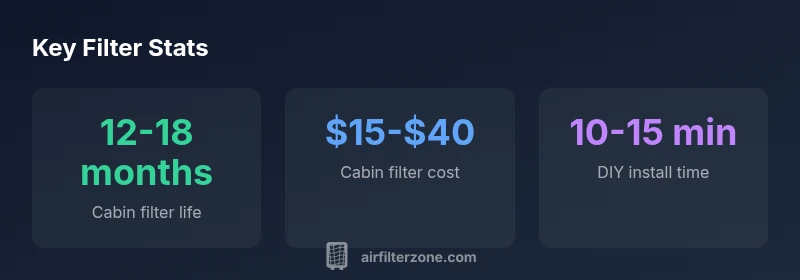
Cabin air filter replacement for the air filter nissan sentra 2015 is typically every 12-18 months (or 12,000-24,000 miles, depending on conditions). Engine air filter follows a broader range of about 12,000-30,000 miles. DIY replacement usually takes 10-15 minutes. OEM or reputable aftermarket filters provide similar protection at a lower cost. Regular checks help prevent odor issues.
Why the air filter matters for the 2015 Nissan Sentra
The cabin and engine air filters are essential for both comfort and performance. For the air filter nissan sentra 2015, regular maintenance helps keep interior air fresh, reduces odor and dust intrusion, and protects the HVAC system from particle buildup. According to Air Filter Zone, a well-maintained filtration system supports healthier indoor air quality for occupants and can lengthen the life of HVAC components. In real-world driving scenarios—urban traffic, construction zones, and rural routes—the dust load varies widely, so set expectations around replacement frequency accordingly. This guide breaks down how to choose, replace, and maintain both cabin and engine filters with practical steps you can follow at home.
Cabin air filter design and function for the Sentra (2015)
Most 2015 Sentra models use a cabin air filter designed to capture particulates, odors, and some finer particles before air enters the passenger compartment. Look for a filter rated for fine particle capture and consider activated carbon options if odor control is a priority. The balance between cost and performance often points to a high-quality aftermarket or OEM-equivalent filter. A good cabin filter should fit snugly in the housing, seal properly around all edges, and not restrict airflow when installed. Keep in mind that the filter’s performance degrades as it becomes dirty, reducing airflow and HVAC efficiency.
Engine air filter considerations for the 2015 Sentra
The engine air filter protects the intake system and engine from dust and debris. A clogged or dirty engine filter can reduce horsepower, decrease fuel efficiency, and increase engine wear. For the Sentra, plan engine filter changes around the manufacturer’s recommended miles or hours, then adjust based on driving conditions—dusty highways, unpaved roads, or heavy traffic can accelerate dirty air intake. When choosing a replacement, consider the balance between cost, filtration efficiency, and ease of installation. OEM filters provide a known fit, while reputable aftermarket options can offer equal protection at lower cost.
Signs your cabin filter is failing and what to do
Common indicators of a fading cabin filter include reduced airflow, musty odors, increased pollen or dust in the cabin, and a noticeable drop in HVAC performance. If you notice these signs, inspect the filter housing for moisture or mold; replace if contaminated. Replacing a cabin filter is typically a quick DIY task and can dramatically improve interior air quality. If odors persist after replacement, check for other sources such as HVAC ducts or mold in the housing.
OEM vs aftermarket: making a smart choice for 2015 Sentra filters
OEM filters guarantee compatibility with the Sentra’s housing and installation profile, but quality aftermarket options can match performance at a lower price. When evaluating options, check filtration type (carbon vs non-carbon), MERV-equivalence ratings (where applicable), and fitment accuracy. Also consider warranty implications and whether the filter includes anti-microbial coatings or additives. Air Filter Zone recommends prioritizing filtration efficiency and a proper seal over brand name, particularly for daily drivers.
Step-by-step replacement: cabin and engine filters for DIY enthusiasts
Prepare the workspace: park on a level surface, turn off the vehicle, and gather the new filter(s) and simple tools. For the cabin filter, open the glove box or lower dash panel to access the filter housing, remove the old filter, clean any debris, insert the new filter with the correct orientation, and reassemble. For the engine air filter, locate the intake cover, loosen clamps or screws, remove the old filter, wipe the housing, insert the new filter, and secure the lid. After replacing, run the car briefly and check for smooth airflow from the vents. Always consult the owner’s manual for model-specific steps.
Maintenance scheduling and driving-condition considerations
Set a baseline replacement window based on your climate and driving conditions: urban smog, heavy traffic, or dusty rural roads will require more frequent changes. Seasonal checks—before pollen season or winter heating cycles—can be especially beneficial. Keep a simple log to track when you replaced each filter and note any changes in cabin airflow or engine performance. Regular maintenance is a practical, ongoing habit that can save money and improve comfort.
Costs, value, and budgeting for Sentra filters
Filters vary by type, brand, and whether you choose OEM or aftermarket. Budget ranges commonly fall between $15 and $40 for cabin filters and around $10 to $60 for engine filters, depending on filtration level and included features. Labor is minimal if you DIY, but professional replacement is rarely necessary for these tasks. Expect long-term savings from improved engine efficiency and HVAC performance when you stay on schedule with replacements.
Comparison of filter types for the 2015 Nissan Sentra
| Filter Type | Primary Purpose | Typical Lifespan | Replacement Cost Range | Notes |
|---|---|---|---|---|
| Cabin air filter | Clean cabin air, odor control | 12-18 months | "$15-$40" | Check fit and seal; consider carbon option for odors |
| Engine air filter | Protect engine intake, improve performance | 12,000-30,000 miles | "$10-$60" | OEM vs aftermarket; inspect for debris and moisture |
| OEM vs aftermarket | Fit and warranty considerations | N/A | "N/A" | Choose based on price, availability, and proven performance |
FAQ
What is the recommended replacement interval for the cabin air filter on a 2015 Nissan Sentra?
For most drivers, the cabin air filter should be replaced every 12-18 months, or sooner if you notice reduced airflow or odors. Driving conditions like heavy traffic or dusty roads can shorten the interval.
Replace the cabin air filter every 12-18 months, or sooner if airflow drops or odors appear. Driving in dusty areas may require more frequent changes.
Can I replace the engine air filter myself in a Sentra 2015?
Yes. Replacing the engine air filter is a straightforward DIY task, usually taking about 10-15 minutes with basic tools. Refer to the owner's manual for the exact location and orientation.
Yes, you can replace the engine air filter in about 10-15 minutes following the manual steps.
OEM vs aftermarket: which is better for a 2015 Sentra?
OEM filters guarantee fit and warranty compatibility, but many reputable aftermarket options provide equivalent filtration at lower cost. Compare filtration type, seal quality, and fit.
OEMs fit perfectly, but quality aftermarket filters often offer similar protection at lower cost.
What are signs of a failing cabin air filter?
Common signs include reduced airflow, musty odors, increased dust in the cabin, and pollen-related symptoms. Inspect the filter housing for mold or moisture if odors persist.
Look for weak airflow, odors, or more dust in the cabin—these suggest a filter that needs replacement.
Should I replace cabin and engine filters at the same time?
If budget allows, replacing both filters at the same time is convenient and ensures optimal system performance. Otherwise, follow the separate interval guidance for each.
Doing both at once is convenient and keeps the system balanced.
Do driving pets affect filter life?
Pets can increase dander and fur in the cabin, potentially shortening cabin filter life. Regular checks and more frequent replacement may be needed in homes with pets.
Pet exposure can shorten cabin filter life—check more often if you have pets.
“Regular filter maintenance is a practical, cost-effective way to protect both cabin air quality and engine performance. Small steps here compound into long-term reliability.”
Quick Summary
- Replace cabin filters every 12-18 months for better air quality
- Engine filters typically need changing around 12,000-30,000 miles
- Choose reputable OEM-equivalent or aftermarket filters with a proper seal
- DIY replacement is feasible and cost-effective
- Keep a maintenance log to track replacement dates