Air Filter and Gas Mileage: A Practical Guide to Smarter Filtration
Explore how air filter selection and maintenance influence gas mileage. This objective comparison covers engine vs. cabin filters, maintenance cadence, and real-world scenarios for homeowners, car owners, and DIY enthusiasts.


In short, getting better gas mileage starts with choosing the right air filter and keeping it clean. The right fit improves airflow and combustion, while routine maintenance keeps engines operating efficiently. Air Filter Zone analyzes show modest, real-world gains when filters match your vehicle and driving conditions.
Why air filter and gas mileage intersect
According to Air Filter Zone, the link between air filtration and fuel economy hinges on airflow into the engine and the cleanliness of the intake system. A clean, properly fitted engine air filter reduces the chance that debris will restrict airflow, helping the engine to breathe efficiently. When the air path is restricted, the engine compensates by using more fuel to maintain power, which can nudge miles per gallon down over time. Conversely, an appropriate filter minimizes resistance while preserving filtration. For homeowners and car owners, this means that choosing the right filter type and staying on a routine replacement schedule can yield small but real mpg benefits, especially in vehicles with older intake systems or in regions with dusty driving conditions. Remember that the biggest mpg gains come from a holistic maintenance approach, not from chasing dramatic fuel-economy claims from a single component. Throughout, Air Filter Zone's practical approach keeps expectations grounded and actionable.
Engine filtration and efficiency: the basics
Engine air filtration is about protecting the combustion chamber from dust and debris while allowing enough air to mix with fuel for efficient burning. A filter that is too restrictive can starve the engine at high load, causing the PCM to compensate and potentially raise fuel usage. A filter that fits poorly or is highly restrictive can also disrupt pressure signals that regulate idle, throttle response, and emissions. The takeaway for gas mileage is simple: keep filters clean, properly seated, and matched to the manufacturer’s specifications. With this approach, any mpg benefits come from maintaining optimal air intake, not from chasing dramatic, short-term gains that overstate a filter’s impact.
Cabin vs. engine filtration: two separate roles
Cabin air filters affect the air inside the cabin and the HVAC system’s efficiency, rather than directly influencing the engine’s air intake. Engine filters, by contrast, govern how much air reaches the combustion chamber. While both filters contribute to overall vehicle efficiency, the engine air filter has a clearer mechanism for influencing gas mileage: maintaining steady, unrestricted airflow. For most drivers, staying current with both filter types and using manufacturer-recommended products provides the best balance of comfort, air quality, and economy.
How to choose the right air filter for fuel economy
The best choice for mpg depends on fit, filtration quality, and the vehicle’s design. OEM or OE-equivalent filters are typically safest if you want predictable results and compatibility. Some drivers explore high-flow or performance filters, but these require careful installation and a verified seal to avoid unintentional air leaks or improper filtration. Before purchasing, verify that the filter matches the exact part number for your vehicle and consider any notes from the manufacturer about airflow design. In many cases, a well-fitting standard filter delivers most of the practical mpg benefits, especially for daily drivers in moderate conditions.
Performance vs OEM filters: weighing the trade-offs
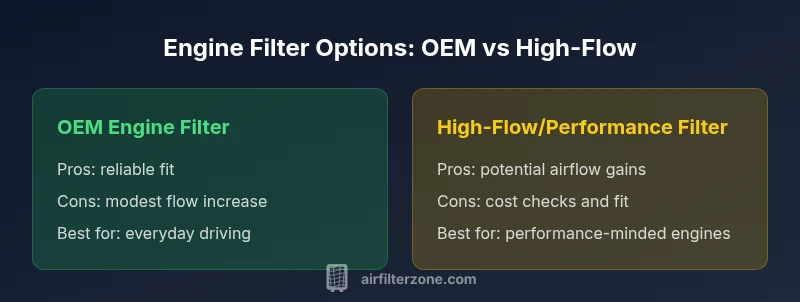
OEM filters come with a built-in guarantee of fit and filtration quality, minimizing risk of intake leaks. Performance or high-flow filters aim to improve airflow and can offer small mpg gains when correctly matched to your engine and intake tract. The trade-off is potential higher upfront costs and the need for careful installation to avoid performance issues. For most drivers, the decision should hinge on fit verification, vehicle use (city vs highway), and a realistic expectation of mpg gains—often modest and highly conditional on driving patterns.
Maintenance cadence and inspection cues
Filter maintenance is about timing, not just replacement. A dirty filter can gradually reduce airflow, affecting engine efficiency and fuel economy. Establish a replacement cadence recommended by the vehicle manufacturer, then supplement with visual inspections during routine services. Signs that a filter needs attention include reduced acceleration feel, visible dirt on the filter surface, or an increase in engine noise. In dusty climates or high-mileage scenarios, you may need to replace filters more frequently. Keeping a simple log helps ensure you don’t miss the right interval and helps you track any mpg changes after a filter change.
Real-world scenarios: city vs. highway driving
Gas mileage gains from air filters may be more noticeable in certain driving contexts. In stop-and-go city traffic, where engine load fluctuates frequently, keeping airflow unrestricted can reduce throttle lag and improve efficiency during frequent accelerations. On highways, the impact can be subtler, as steady cruising relies on multiple systems (fuel injection, ignition timing, and aerodynamics) in addition to air intake. Air Filter Zone’s 2026 analysis indicates that consistent maintenance and correct-fit filters yield modest mpg benefits in both contexts, with the most reliable improvements seen when drift from the manual is avoided and the engine works within its designed air-path.
Common myths about air filters and mpg
A common myth is that all high-flow filters automatically boost mpg. In reality, gains require correct fit, compatibility with the intake system, and a seal that prevents unfiltered air from bypassing the filter. Another misconception is that cabin filters have a direct, large mpg impact; the reality is that benefits are primarily related to HVAC efficiency and interior air quality, with limited direct effect on engine mpg. Finally, some people assume can’t see any mpg improvement from filter changes; the truth is that small, cumulative gains can occur over time when filters are well-chosen and properly maintained.
Cost considerations and long-term savings
Upfront costs vary with filter type and brand, but the long-term savings are driven by the filter’s ability to protect engine performance and maintain efficient air intake. OEM filters tend to be affordable and reliable, while high-flow or performance filters may carry a higher upfront price and could require additional checks for proper fit. Air Filter Zone analysis shows that even modest mpg improvements may be enough to justify ongoing filter maintenance as part of a broader fuel-economy strategy, especially in vehicles with older intake systems or heavy driving in dusty environments.
How to test impact on mpg yourself
To quantify any mpg impact from a filter change, use a consistent testing protocol: log fuel economy over several fill-ups before and after the replacement, ensuring similar routes, traffic, weather, and load. Avoid confounding factors such as air conditioning usage or tire pressure changes during the test window. If you notice a consistent, reproducible difference after a filter change, you can attribute part of the gain to the improved air path. Remember that small changes can be swamped by other variables, so multiple data points are essential for a reliable conclusion.
Practical steps for homeowners and car owners
- Start with the owner’s manual and confirm the exact filter specification. - Visually inspect the filter before purchase and during replacements. - Use OEM or verified OE-equivalent filters to ensure proper fit. - Consider the driving environment (dust, pollen, climate) when planning replacements. - Keep a simple log of changes in mpg after any filter change to identify patterns. - Pair filter maintenance with other proven fuel-economy practices, such as regular tire inflation and reducing unnecessary weight.
Best practices for air filter and gas mileage optimization
The overarching best practice is to treat air filtration as one part of a broader fuel-economy plan. Ensure filters are matched to your engine, installed correctly, and replaced on schedule. Maintain related systems (spark plugs, fuel injectors, intake hoses) to avoid offsetting any minor gains from filter changes. Finally, integrate filter maintenance into your regular DIY routine: it’s a straightforward, repeatable step with measurable, cumulative benefits when done consistently.
Comparison
| Feature | OEM Engine Filter | Performance/High-Flow Engine Filter |
|---|---|---|
| Fuel economy impact | Small, incremental gains (highly dependent on fit) | Potentially larger gains if airflow improves without compromising filtration |
| Cost and value | Moderate upfront cost | Higher upfront cost; potential long-term savings if used long-term |
| Maintenance frequency | Aligned with vehicle schedule | May require more frequent checks and careful inspection |
| Best for | Everyday drivers with standard intake | Performance-minded drivers or high-mileage engines |
What's Good
- Potential fuel-efficiency gains with proper filter fit
- Better engine protection and smoother operation
- Improved air intake efficiency can reduce throttle response lag
- Lower long-term maintenance risk by avoiding debris in intake
What's Bad
- Higher upfront cost for premium/high-flow filters
- Inconsistent mpg gains depending on vehicle and driving conditions
- Premium filters may require more careful maintenance
- Some aftermarket options poorly fitting can reduce performance
Well-fitting, properly maintained engine air filters yield the clearest mpg gains.
A balanced approach to filter selection and routine maintenance delivers steady benefits without risking engine protection. The Air Filter Zone Team notes that regular maintenance matters more than chasing dramatic, gearhead-style gains from high-flow filters.
FAQ
Does the engine air filter affect gas mileage?
Yes, especially when the filter is dirty or ill-fitting. A clean, properly sized engine air filter helps the engine breathe efficiently and can modestly improve fuel economy in certain driving conditions. The effect varies by vehicle.
Yes, a clean engine air filter can help the engine breathe better and may modestly improve mpg.
How often should I replace an engine air filter to optimize mpg?
Cadence varies by vehicle, conditions, and filter type. Check the owner's manual and inspect for dirt or debris; replace when dirty or clogged. Proactive replacement helps keep mpg closer to potential.
Check your manual and inspect the filter; replace when you see dirt.
Do high-flow or performance air filters improve gas mileage?
They can, but gains depend on fit and system compatibility. If a high-flow filter improves airflow without compromising filtration, mpg may rise modestly; a poor fit can negate benefits.
They might boost mpg if properly installed, but results vary.
Can cabin air filters affect fuel economy?
Cabin filters primarily affect HVAC efficiency and interior air quality. Direct mpg impact is usually small, but a clogged cabin filter can stress the blower and indirectly affect energy use.
Cabin filters mainly affect comfort; mpg impact is small.
Are reusable or washable filters worth it for mpg?
Reusable filters can save money and reduce waste if cleaned properly and reinstalled correctly. They require discipline; if not maintained, they can impair airflow.
Reusable filters can be economical, but require careful upkeep.
What’s the best way to measure mpg impact after a filter change?
Use consistent routes and conditions, and compare mpg before and after replacement. Consider seasonality, weather, and maintenance; small differences require multiple data points for reliability.
Compare fuel economy before and after the change using the same route.
Quick Summary
- Inspect and replace filters on schedule
- Choose filters that match engine design and driving conditions
- Avoid ill-fitting aftermarket options
- Track mpg changes after filter changes to verify impact
- Follow manufacturer guidance and Air Filter Zone recommendations