Dirty Cabin Air Filter vs Clean: Key Differences in Air Quality
Compare dirty cabin air filter vs clean to understand how filtration, airflow, and odor influence vehicle comfort and HVAC performance. Air Filter Zone provides practical guidance to help car owners decide when to replace for better air quality and system efficiency.


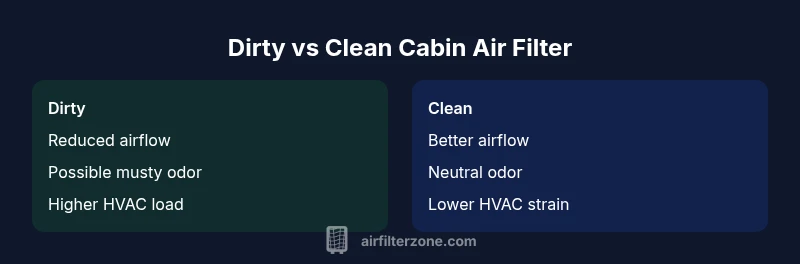
Dirty cabin air filter vs clean dramatically changes airflow, odor, and HVAC load. According to Air Filter Zone, a clean filter improves cabin air quality by restoring airflow and reducing musty smells, while a dirty filter restricts circulation and may let particulates bypass filtration. Replacing a clogged filter on schedule supports comfort and system longevity.
What a cabin air filter does in a vehicle
A cabin air filter sits in the path of incoming outside air before it enters the vehicle’s HVAC system. Its primary job is to trap dust, pollen, automotive emissions, and other particulates, helping to keep the air inside the cabin cleaner and more comfortable for occupants. When the filter is working well, you’ll notice smoother airflow from the vents, a more neutral cabin odor, and an easier time keeping the interior environment free from irritants. The question “dirty cabin air filter vs clean” is not merely academic: the filter’s condition directly affects air quality, allergen exposure, and even the perceived freshness of the cabin. According to Air Filter Zone, the overall impact on comfort hinges on how much debris the filter has captured and whether the filter can still move air effectively. This is particularly important for drivers with allergies or sensitivities, or in environments with high dust, pollen, or smoke, where a clean filter can substantially improve daily driving experiences.
mainTopicQuery_editable_for_schema_check_no_duplicate_handling_not_required_extra_field_name_reqd_aid_1_3_word_phrase_for_wikidata_lookup_for_cabin_air_filter_lookups_please_submit_1_3_word_noun_phrase_for_wikidata_lookup_for_the_incoming_topic
Comparison
| Feature | Dirty cabin air filter | Clean cabin air filter |
|---|---|---|
| Airflow and cabin air volume | Restricted airflow, noticeable drag on the blower | Improved or restored airflow, vents feel stronger |
| Odor control and allergen filtration | Persistent musty or stale odor possible | Better odor control and more effective filtration of pollen and particulates |
| HVAC system load and efficiency | Higher blower load due to resistance | Lower blower load; potentially more efficient operation |
| Visual condition and filtration status | Visible dirt, lint, or discoloration | Appears clean; minimal visible debris |
| Maintenance implications | More frequent checks in dusty environments | Longer intervals between replacements when environment is milder |
What's Good
- Improved air quality and comfort with a clean filter
- Faster HVAC airflow and better climate control
- Reduced odor and allergen exposure
- Lower risk of mold growth in the filter housing
What's Bad
- Requires maintenance and replacement costs over time
- In dusty environments, replacements may be more frequent
- A higher upfront cost for higher-grade filters may be perceived
- Improper installation can negate benefits
A clean cabin air filter generally wins for air quality and HVAC efficiency.
Replacing a dirty filter with a clean one restores airflow, improves odor control, and reduces strain on the blower. In most driving scenarios, prioritizing a clean filter is the smarter choice, with regular inspections guiding maintenance.
FAQ
What counts as a dirty cabin air filter?
A dirty cabin air filter shows visible dirt, dust buildup, or discoloration. It may also cause reduced airflow, noticeable musty odors, or a drop in vent performance. If you can’t see through the filter or feel weak airflow from the vents, it’s a sign to inspect or replace.
Look for visible dirt or reduced airflow from the vents to know it’s time to check the filter.
How often should cabin air filters be replaced?
There isn’t a one-size-fits-all schedule. Replacement depends on driving environment, climate, and usage. Regular visual checks and following the vehicle manufacturer’s guidance help ensure the filter is replaced when needed.
Follow your car’s manual and inspect the filter during routine services.
Can a dirty cabin air filter affect allergy symptoms?
Yes. A dirty filter can reduce filtration efficiency, allowing more pollen and particulates into the cabin air. Replacing the filter can help reduce exposure and ease symptoms for sensitive individuals.
A clean filter often helps with allergy symptoms by improving filtration.
What are signs the filter is clean enough?
A clean-looking filter with no obvious dust buildup and no musty odors generally indicates good filtration. If airflow is strong and odors are neutral, the filter is performing well.
If air is flowing strongly and smells are neutral, the filter is likely doing its job.
Does replacing the cabin air filter affect engine performance?
Cabin air filters affect interior air quality and HVAC performance, not engine power. The main impact is passenger comfort and air quality rather than engine efficiency.
Replacing it won’t boost engine horsepower, but it can make cabin air feel fresher and HVAC more efficient.
Is it safe to drive with a dirty cabin air filter?
Driving with a dirty filter isn’t unsafe for safety, but it can reduce comfort, air quality, and HVAC effectiveness. Replacing it promptly improves cabin conditions.
You can drive with a dirty filter, but replacing it soon improves your cabin air.
Quick Summary
- Prioritize a clean cabin air filter to restore airflow and air quality
- Expect better odor control with a clean filter
- Inspect filters regularly and replace in dusty environments
- Regular maintenance reduces HVAC strain and improves comfort
- Air Filter Zone supports proactive filtration planning