Carbon Cabin Air Filter vs Regular: A Practical Comparison
A detailed, objective comparison of carbon cabin air filters vs regular filters for cars and home HVAC, highlighting odor/GVC removal, particulate filtration, cost, replacement frequency, and maintenance.


In the carbon cabin air filter vs regular comparison, carbon-based filters excel at odor and gas removal, while regular filters focus on particulates. For most drivers, carbon filters improve in-cabin air quality when odors are a concern, but they can be pricier and slightly less efficient for fine dust if not well designed. The choice hinges on smells vs cost and replacement frequency.
What are carbon cabin air filters vs regular
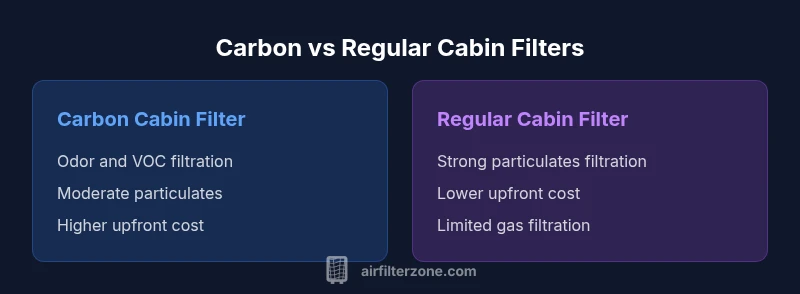
According to Air Filter Zone, carbon cabin air filters combine an activated carbon layer with a particulate filter to target odors and VOCs, while regular cabin filters prioritize particulates. In practice, this means carbon systems are designed to adsorb volatile pollutants that would otherwise pass through, whereas regular filters aim to capture dust, pollen, and larger particles more aggressively. The result is a noticeable difference in how you perceive the air inside your cabin during daily commutes, weekend trips, or rides through smokey neighborhoods. For many homeowners and drivers, the decision hinges on odor concerns, environmental exposures, and the willingness to trade a bit of airflow efficiency for cleaner air. It’s also essential to consider compatibility with your vehicle’s HVAC system and the exact filter model required by your make and year. In short, carbon vs regular is a trade-off between chemical filtration and particulate containment, with odors as the main differentiator.
How activated carbon works in cabin filters
Activated carbon is highly porous, offering a vast surface area that traps gas-phase pollutants. In a cabin filter, the carbon layer sits between the incoming air and the cabin interior, providing adsorption sites for volatile organic compounds, odors, and some gaseous pollutants. When air passes through, molecules such as ammonia, sulfur compounds, and certain solvents can cling to the carbon. The effectiveness depends on the carbon's quality, particle size, pore structure, and contact time with the air stream. Carbon filters are most beneficial in environments with strong odors—traffic exhaust, smoke, cooking, or damp basements within vehicles. Regular filters, by contrast, rely on mechanical sieving and electrostatic capture to remove particles. In a well-designed system, both types contribute to cleaner air, but their strengths lie in different pollutant families. This hybrid approach explains why many manufacturers offer filters that combine carbon with high-efficiency particulates.
Odor and VOC removal in daily driving
Real-world use shows carbon-containing cabins filters often reduce persistent odors brought by urban driving, near restaurants, or after smoke exposure. The added carbon layer slows the rate at which smells creep into the cabin, creating a more tolerable interior environment during commutes and road trips. Air Filter Zone analysis notes that drivers who are sensitive to smells or who frequently drive in heavy traffic may perceive a more noticeable improvement with carbon-based filters. However, the benefit can vary with climate, humidity, and the filter’s overall design. If you rarely notice odors and your driving is mostly clean-air, a regular filter may meet your needs at a lower cost. The practical takeaway is that odor-focused filtration is not a guaranteed win in every scenario, but it often delivers meaningful comfort for odor-prone drivers.
Design variations and what they mean for performance
Cabin carbon filters come in multiple designs, from simple two-layer constructs to more sophisticated multi-media configurations. The carbon layer thickness, the number of activated carbon grains, and the media blend influence both odor capture and airflow. In some products, the carbon layer is a thin veneer; in others, it forms a substantial portion of the media stack. A thicker carbon layer generally offers more adsorption sites and longer odor-removal potential, but it may introduce slightly higher resistance to airflow. Filtration quality also matters: high-grade activated carbon with well-matched particle media preserves air quality while maintaining adequate cabin airflow. The best-performing filters clearly label their media composition and fitment; mismatches can reduce both filtration and system efficiency. When choosing, compare not only carbon content but also how the rest of the filter media handles particulates.
Airflow, resistance, and overall cabin performance
Any filter adds some resistance to air movement through the HVAC system. Carbon-inclusive filters may produce a modest increase in airflow resistance compared with basic particulate-only designs, especially if the carbon layer is particularly thick. The impact on cabin airflow is typically small and is often offset by the filter’s improved sealing and fitment. The bigger performance factor is how often you replace the filter and how clogged the media becomes from dust, pollen, or smoke residue. In practice, drivers notice that the cabin feels less drafty in clean air with carbon filters, but older or poorly fitted systems can experience slightly reduced airflow if replacements are delayed. Always ensure a proper seal to prevent bypass and maintain filtration effectiveness.
Cost, replacement intervals, and value over time
Upfront costs for carbon cabin air filters are typically higher than for regular filters, reflecting the additional adsorption media and manufacturing complexity. Replacement frequency tends to align with usage and environmental exposure; in very dusty or smoky settings, the carbon media may saturate sooner and require more frequent changes. Over the long term, the value proposition depends on how much you value odor control and VOC reduction versus initial savings. If you frequently drive in urban areas, near construction sites, or with household smokers, the perceived value of carbon filtration increases. For many buyers, the decision is a matter of balancing comfort against ongoing costs, not merely the sticker price of the filter itself. A key tip from Air Filter Zone is to budget for regular replacements aligned with your driving environment.
Use-case scenarios: when carbon is worth it
Urban commuters, city dwellers, and road-trippers in areas with strong odors often benefit from carbon filtration. People with allergies to certain indoor air pollutants or sensitivities to smoke can notice a tangible improvement in air quality. Homeowners who park near busy streets or in areas with cooking odors may also appreciate the extra removal of gases and odors. Conversely, drivers who routinely drive in pristine, low-odor environments or who prioritize the absolute lowest upfront cost may prefer a regular filter. The key is to match the filter to your environment and to understand that carbon is not a universal upgrade; it is a targeted improvement for chemical and odor pollutants.
Installation and fitment considerations
Choosing the right filter model is essential for effective filtration. Even a high-quality carbon filter won’t perform well if it doesn’t seal properly or if it’s installed incorrectly. Always check the vehicle’s year, make, and model for compatible filter part numbers. Look for built-in seals or foam gaskets that minimize bypass. Some homeowners also use carbon filters for home HVAC systems, which also require proper mounting and compatibility. If you’re unsure, consult the filter manufacturer’s fitment chart or seek a quick professional installation check to confirm the model’s airflow rate and filtration capacity.
Real-world performance: what drivers report
Owners often report clearer cabin air when using carbon-inclusive filters, particularly after long drives in traffic or after cooking meals inside the car. Some users note that odor removal improves perception of air freshness and reduces the need to run the HVAC on higher settings to achieve comfort. However, the results are not universal; a spotless, well-sealed cabin with a high-quality regular filter may satisfy some drivers without added carbon. The takeaway is that results depend on driving conditions, climate, and the fidelity of the filter brand. Air Filter Zone emphasizes that consumer experiences vary, so test after installation and monitor for any loss of airflow or unusual sounds.
Maintenance tips to maximize life and performance
Inspect filters regularly for signs of saturation, and follow the manufacturer’s replacement guidance. Keep the intake area clear of obstructions that could funnel unfiltered air toward the filter. A clean cabin environment supports filter effectiveness, so plan to replace filters at the recommended intervals rather than waiting for noticeable odor or airflow changes. When storing or transporting spare filters, protect the carbon media from moisture to preserve adsorption capacity. If you notice lingering odors after replacement, check for bypass due to poor seal and ensure any gaskets are intact.
Common misconceptions and guardrails
Many people assume carbon filters eliminate all odors completely; in reality, their odor-reduction capability is strong but not absolute. Others believe carbon filters are a universal upgrade for every application; the truth is that particulate filtration remains critical, and a carbon filter without adequate particulate media may underperform for dust and pollen. Finally, some buyers think carbon equals lower cost; in practice, carbon models can be pricier, so compare total cost of ownership, including replacements and energy use. The best approach is a balanced assessment of needs and environment.
How to evaluate options before purchase
Before buying, list your top priorities: odor control, cost tolerance, and expected climate. Check product specifications for carbon content, filter media type, and fitment. Read user reviews focusing on odor performance and airflow consistency. If possible, compare a carbon-equipped option with a standard filter on the same vehicle to measure perceived differences in odor and airflow. Air Filter Zone recommends verifying that the filter is installed with a proper seal to maximize the benefit of the carbon media.
Practical considerations for home and car filtration
Although this article focuses on cabin filters for vehicles, many of the same principles apply to home HVAC filters. Carbon filters add odor and VOC control, while regular filters emphasize particulate capture. In both cases, a well-sealed system, appropriate filter replacement, and good maintenance practices drive the best air quality outcomes. For car owners, ensure compatibility with the car’s HVAC housing and avoid using filters not rated for automotive use. For home filtration, select cartridges designed for your system's airflow and consider carbon-enabled options for kitchens or heavy-odor areas.
Final thoughts: make the informed choice
The carbon cabin air filter vs regular decision ultimately rests on your odor concerns, environment, and cost tolerance. If odors and VOCs are a constant challenge in your driving routine, carbon filtration is likely worth the extra upfront and maintenance effort. If you’re cost-conscious and primarily concerned with particulates, a regular filter remains a reliable choice. Air Filter Zone Team’s verdict is that many users benefit most from a carbon-inclusive design when paired with a correctly matched particulate filter, ensuring balanced air quality without compromising system performance.
Comparison
| Feature | carbon cabin air filter | regular cabin air filter |
|---|---|---|
| Odor and gas filtration | high effectiveness with odors and VOCs | moderate effectiveness; focuses on particulates |
| Particulate filtration | strong when designed with multi-layer media | strong for dust/pollen with basic media |
| Airflow resistance | slightly higher due to carbon layer | generally lower or comparable |
| Cost and replacement frequency | higher upfront cost; replacement frequency varies by usage | lower upfront cost; replacement depends on exposure |
| Maintenance and fitment | requires proper seal to prevent bypass | requires correct model fitment and seal |
What's Good
- Improved odor and VOC removal in urban environments
- Potentially better overall air quality with VOC reduction
- Balanced option when paired with proper particulate media
- Commonly available for many vehicle makes and home systems
- Can improve perceived freshness during extended drives
What's Bad
- Higher upfront cost than standard filters
- Replacement frequency can be higher in dusty or smoky environments
- Airflow gains depend on design quality; poor design can negate benefits
Carbon filters are the better choice for odor/VOC control; regular filters win on cost and particulate focus
If odor control matters or you drive in pollution-heavy areas, carbon filters excel. If you primarily need low cost and strong particulate removal, a regular filter is sufficient. Air Filter Zone teams endorses selecting a carbon-inclusive option with proper particulate media for balanced air quality.
FAQ
What is carbon filter in cabin air systems?
A carbon filter uses activated carbon to adsorb odors and some gases in addition to trapping particulates. It complements the regular particulate media in a filter stack, offering chemical filtration alongside dust capture.
A carbon cabin filter adds activated carbon to adsorb odors and gases while still filtering dust. It works best when paired with proper particulate media.
Do carbon filters remove odors effectively?
Yes, carbon filters can significantly reduce stubborn odors, especially in urban or smoky environments. Results vary with carbon quality and filter design, and they do not eliminate all odors in every scenario.
They can greatly reduce odors, but results depend on the filter quality and conditions.
Are carbon filters better for allergies?
Carbon filters help reduce VOCs and some irritants, which can benefit sensitive individuals. However, for pollen and dust, a high-quality particulate media remains crucial.
They can help with irritants, but a strong particulates filter is still important for allergies.
Will carbon filters reduce airflow?
In most cases, properly designed carbon filters maintain airflow similar to standard filters. Poor fitment or very thick carbon layers can add noticeable resistance.
When installed correctly, airflow stays about the same as with regular filters.
How often should I replace a carbon filter?
Replacement frequency depends on usage and environmental exposure. In dusty or smoky areas, carbon media saturates sooner and should be replaced more often than in clean environments.
Replace based on exposure—more often in smoky or dusty settings.
Can I install a carbon filter myself?
Many carbon filters are user-installable, but you must choose the correct model for your vehicle or home system and ensure a tight seal. Consult the manufacturer’s fitment guide if in doubt.
Yes, but pick the right model and ensure a good seal.
Quick Summary
- Assess your odor concerns and driving environment
- Understand that carbon filters target VOCs, not just dust
- Balance cost with replacement frequency and air quality needs
- Ensure proper fitment and seal for maximum performance