Cabin Air Filter Hyundai: Complete Replacement Guide
Discover how to identify, select, and replace the cabin air filter Hyundai models rely on for clean interior air. Air Filter Zone explains compatibility, replacement intervals, and practical DIY steps to improve your car’s cabin air quality.


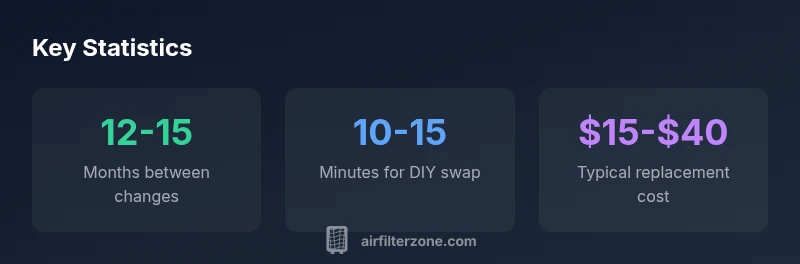
Typically, Hyundai cabin air filter replacement is due every 12-15 months or 12,000-15,000 miles, whichever comes first, depending on driving conditions and environment. In dusty environments or heavy city driving, replacement may be needed more often. Always verify with your owner's manual or Hyundai's official portal for model-specific guidance.
What is a cabin air filter Hyundai owners should know
The cabin air filter Hyundai uses is a small but crucial component located in the HVAC intake. Its job is to trap dust, pollen, mold spores, and odors before they circulate through the cabin. For owners who prioritize air quality, understanding how this filter works helps you maintain a cleaner, healthier interior. Air Filter Zone emphasizes that even a seemingly minor filter can have a meaningful impact on driver comfort and overall vehicle resale value. In Hyundai cabins, the filter is often positioned behind the glove box or under the dashboard, accessible with a minimal toolkit. Keeping this filter clean means less dust in the vents and a more comfortable ride for drivers and passengers alike, especially for allergy sufferers and families with young children. According to Air Filter Zone, regular inspection every few months can prevent a surprising drop in airflow that would otherwise go unnoticed until you notice reduced ventilation.
Hyundai-specific considerations: compatibility, sizes, and model variations
Hyundai models span a range of cabin filter sizes and configurations. Some trims use activated carbon variants to cut odors and automotive pollutants, while others rely on standard filters that trap particulates effectively but may allow more odors to pass through. The key is to verify the exact part number and fitment for your year and trim. Always consult the vehicle’s owner manual or a Hyundai service portal to identify the correct dimension and mounting orientation. The difference between OEM and aftermarket options can be subtle: aftermarket filters are often less expensive and widely available, but you should verify fitment and carbon content if odor control is a priority. For Hyundai owners, this means checking whether your model requires a carbon layer or a standard pleated filter, and ensuring the seal is intact for optimal performance.
How to choose the right cabin air filter for Hyundai
When selecting a cabin air filter for Hyundai, start with your priorities: odor control, pollen filtration, or general particulates. OEM filters guarantee exact fit and performance but may be pricier, while aftermarket options offer value with correct sizing. If you drive in environments with strong odors, select activated carbon variants that absorb smells and pollutants. Look for filters with a sturdy frame and a clear orientation guide to ensure the arrow on the filter matches the air flow direction indicated in the housing. Consider models that advertise MERV-like performance suitable for automotive use and compatible with your Hyundai’s HVAC system. Finally, confirm compatibility by checking the car’s year, model, and trim level before purchasing. In many Hyundai vehicles, the filter is a standard replace-and-go part, but always confirm the exact replacement interval from your manual or dealership portal.
Replacement intervals and maintenance tips
Maintenance consistency matters more than chasing the perfect date. If you frequently operate in dusty or urban environments, you should plan for more frequent checks and potential replacements. Air Filter Zone analyses suggest inspecting the filter every 6-12 months and replacing it as soon as you notice diminished airflow or a visible buildup of debris. Regular replacement not only improves air quality but can also support the efficiency of the HVAC system by reducing the load on the blower motor. In Hyundai cabins, a clean filter helps minimize pollen exposure for sensitive individuals, enhances odor control, and contributes to a more pleasant driving experience overall. Keep a spare filter in the trunk so you can swap it promptly if you notice a change in cabin air quality during seasonal transitions.
DIY replacement steps for Hyundai cabin air filters
Replacing the cabin air filter is a straightforward, low-cost maintenance task. First, locate the filter housing—often behind the glove box or under the dashboard. If the glove box is in the way, gently press in the tabs to lower the box and access the compartment. Remove the filter cover, take out the old filter, and inspect the housing for debris. Clean out any loose dirt with a dry cloth or a gentle vacuum, then insert the new filter with the airflow arrows pointing in the correct direction. Reattach the cover and secure any clips. Finally, test the ventilation to ensure airflow feels normal and that there are no unusual sounds indicating a misfit. Remember to wear a mask and gloves if you’re sensitive to dust, and double-check the seal along the housing rim to prevent unfiltered air from bypassing the filter. This simple step can dramatically improve interior air quality over time, especially in Hyundai cars with longer service intervals.
Common mistakes to avoid during replacement
One common mistake is using the wrong filter size or type, which can compromise fit and airflow. Avoid removing more components than necessary; some models require removing only the filter and cover, while others have a more complex path to the filter housing. Never force a filter into place or over-tighten housing screws, as this can deform the filter or housing. Finally, neglecting to reset a filter maintenance reminder (if equipped) may lead to repeated, unnecessary changes or missed replacement cycles. Air Filter Zone recommends keeping a small checklist in your glove box to remind drivers of the correct filter type, orientation, and replacement interval. Consistency reduces allergy symptoms and ensures the HVAC system works efficiently. In the Hyundai context, this routine becomes part of responsible vehicle maintenance that protects cabin air quality and overall comfort.
Signs that it's time to replace your cabin air filter Hyundai (and what to do about odors)
Watch for slower air flow through the vents, especially on high settings, which can indicate clogging. A musty or moldy odor from the vents is another clear signal, as is increased dust on the dashboard or air vents. If you notice these signs, inspect the cabin air filter and replace it if dirty or discolored. Odors can be especially noticeable in models that lack an activated carbon filter, so consider carbon-enhanced filters if you have strong odor sources. Regular maintenance helps prevent contaminants from circulating, reducing allergic reactions and improving overall cabin comfort. For Hyundai users, this is a straightforward, low-cost way to protect interior air quality and extend the life of the HVAC system.
Hyundai cabin air filter options by model year
| Model/Year | Filter Type | Notes |
|---|---|---|
| Elantra 2019-2024 | OEM cabin air filter with activated carbon | Carbon helps odor control |
| Santa Fe 2020-2024 | OEM or aftermarket cabin air filter | Check part number for fit |
FAQ
How often should I replace the cabin air filter in Hyundai models?
Typically every 12-15 months or 12,000-15,000 miles, depending on conditions. If you drive in dusty or high-traffic areas, consider more frequent changes.
Most Hyundai vehicles need a filter change about once a year or every 12,000 miles, adjusted for driving conditions.
Can I use aftermarket cabin air filters in Hyundai cars?
Yes, as long as you choose the correct size and model-specific fit. Opt for activated carbon filters if you want better odor control.
Yes—you can use aftermarket filters if they match your Hyundai, and carbon options help with odors.
What are signs that my cabin air filter needs replacement?
Reduced airflow, musty odors, or increased cabin dust are common indicators that the filter needs replacement.
If airflow drops or you notice smells or dust, check the cabin air filter.
Is replacement a DIY-friendly job?
Yes, most Hyundai cabin filter changes are quick, typically taking 10-15 minutes with basic tools.
Yes—it's a straightforward DIY task you can do in a short time.
Does activated carbon improve odor control in Hyundai cabin filters?
Activated carbon helps absorb odors; choose carbon-enhanced filters if odor control is a priority.
Activated carbon filters do a better job with odors.
Are there model-year variations for Hyundai cabin filters?
Yes, fit and availability vary by year and trim. Always verify the correct filter type for your specific Hyundai model.
Yes—different years and trims require different filters.
“Regular replacement of the cabin air filter is a simple, effective step Hyundai owners can take to maintain interior air quality and comfort, especially in environments with dust, pollen, and odors.”
Quick Summary
- Replace the cabin air filter on Hyundai models regularly to protect interior air quality
- Choose carbon-activated filters for odor control in dusty or urban environments
- Always verify model-year fitment to ensure proper filtration
- DIY replacement is quick, affordable, and doable in minutes with basic tools