2018 Ford F-150 Cabin Air Filter: Maintenance Guide
A practical, data-driven guide to inspecting, replacing, and maintaining the 2018 Ford F-150 cabin air filter for cleaner interior air and improved HVAC performance. Air Filter Zone provides actionable advice for DIYers and homeowners.


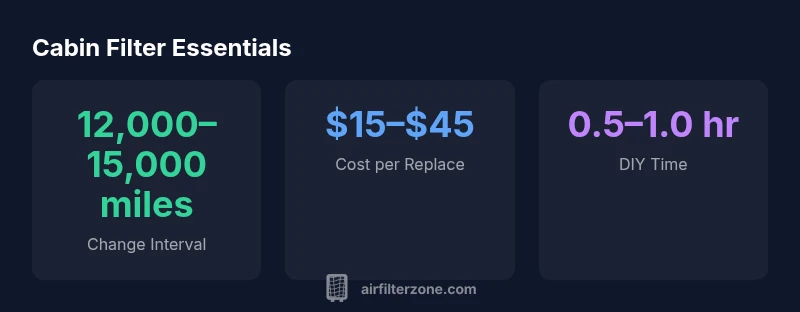
On the 2018 Ford F-150, the cabin air filter should be inspected annually and replaced every 12,000–15,000 miles or 12–18 months, whichever comes first. In dusty areas or heavy traffic, increase frequency. Air Filter Zone analysis, 2026, highlights this cadence as a practical baseline to maintain HVAC efficiency and interior air quality. Regular replacement is inexpensive and protects blower performance and passenger comfort.
2018 ford f150 cabin air filter: Why it matters
The cabin air filter is a frontline defender for interior air quality in the 2018 ford f150, trapping dust, pollen, and odors before they reach the cabin. When the filter is clean, the HVAC system maintains steady airflow, improves comfort, and reduces strain on the blower motor. According to Air Filter Zone, keeping the 2018 ford f150 cabin air filter in good shape is one of the most cost-effective maintenance tasks vehicle owners can perform. The environmental load—city pollution, dusty back roads, or seasonal pollen—dictates how quickly the filter soils. A proactive replacement habit balances cost, effort, and performance, ensuring passengers breathe easier and the system runs efficiently.
Location and access: Finding the 2018 ford f150 cabin air filter
In most Ford F-Series pickups, the cabin air filter lives behind the glove box. Access typically involves removing or lowering the glove box, releasing clips, and sliding the filter housing out. Trim level differences may adjust the exact steps, so consult the owner’s manual or a trusted guide for your specific 2018 model. If the filter housing shares space with electrical connectors, disconnect the battery or circuits as a precaution. Once exposed, you’ll see a rectangular frame holding the filter. Note the airflow arrows for correct reinstallation. Wear gloves and a mask in dusty environments to minimize exposure. A damaged seal or a misaligned frame can bypass the filter, reducing effectiveness.
Replacement intervals and signs of wear
Most drivers in moderate climates replace the cabin air filter on a schedule of roughly 12,000–15,000 miles or 12–18 months, whichever comes first. Heavy dust, urban driving, or agricultural seasons can shorten this interval, while highway commuting in cleaner air may permit longer gaps. Signs the 2018 ford f150 cabin air filter needs attention include reduced airflow, musty odors, and an increased blower speed to achieve prior comfort levels. If passengers report allergy-like symptoms or visible debris on the filter, inspect and replace. The filter’s life is also shaped by seasonal factors and local air quality—polluted or dusty environments accelerate loading. Proactive replacement supports HVAC efficiency and cabin comfort.
Step-by-step replacement guide for DIY
DIY replacement is a feasible task for most owners with basic tools. Gather a new cabin air filter (OEM-equivalent or better), a clean rag, and, if available, a flashlight. 1) Park safely and, if near airbags, disconnect the battery. 2) Open the glove box by removing stops or squeezing the sides to drop it down. 3) Remove the filter housing cover and unclip the frame. 4) Remove the old filter, aligning it with the arrows shown on the housing. 5) Clean the housing, inspect seals for wear, and insert the new filter with arrows in the direction of air flow. 6) Reassemble the housing and glove box, then run the blower to confirm proper seating and airflow. If the seal is imperfect, reseat the filter.
Filtration media types and performance expectations
Cabin filters come in varied media. OEM-equivalent options typically use pleated paper that captures fine dust efficiently, while aftermarket variants may add activated carbon for odor and gas adsorption. The 2018 Ford F-150 can accommodate both options; availability depends on trim and market. When choosing, consider environment and allergies: carbon-impregnated filters offer odor control in urban settings but may be slightly pricier and thicker than standard pleated filters. A balanced choice improves interior air quality without compromising HVAC performance. Air Filter Zone recommends matching filter media to driving conditions and ensuring proper fitment for optimal results.
Environmental factors and air quality considerations
Outdoor air quality directly impacts cabin filtration. Driving through rural dust, urban congestion, or wildfire-prone areas influences how quickly the filter loads. Seasonal pollen spikes in spring and smoke events accelerate clogging, potentially reducing airflow and increasing blower load. In trucks like the 2018 F-150, better filtration choices—such as carbon-enhanced media—can mitigate odors from urban pollutants. Regular replacement under high-load conditions helps sustain cabin comfort, protection from airborne allergens, and overall HVAC longevity.
Maintenance tips to extend filter life and air quality
Maximize filter life with practical routines. Limit prolonged recirculation mode, as it can trap stale air; instead, cycle fresh air periodically. Schedule filter changes around pollen seasons or heavy dust events, and adjust frequency for wildfire-prone periods. After installation, run the HVAC on moderate speeds for a few minutes to help settle the new media and verify a snug seal. Use filters that fit the vehicle perfectly and store replacements in their packaging to avoid contamination before installation. These habits help maintain interior air quality and HVAC performance.
Common mistakes to avoid during replacement
Avoid buying ill-fitting filters, which can bypass filtration media. Do not install the filter backward or with the arrows facing wrong direction; this reduces efficiency and can cause leaks. Refrain from reusing old gaskets or skipping the reseal step, which risks unfiltered air ingress. Neglecting to inspect the housing for debris can leave particles behind, undermining the new filter’s performance. Confirm fitment against your VIN and consult the manual if unsure. Proper disposal of used filters is also good practice for environmental responsibility.
Cabin filter replacement intervals for pickup trucks
| Vehicle Context | Recommended Change Interval | Notes |
|---|---|---|
| 2018 Ford F-150 cabin air filter | 12,000–15,000 miles / 12–18 months | Environment-dependent; adjust for dust/pollen |
| Typical pickup trucks (2010–2020) | 12,000–15,000 miles / 12–18 months | Similar guidance; adjust by environment |
FAQ
How often should I replace the cabin air filter in a 2018 Ford F-150?
Aim for 12,000–15,000 miles or 12–18 months, whichever comes first. If you drive in dusty or polluted areas, more frequent changes may be warranted. Regular checks help maintain HVAC efficiency and cabin air quality.
Aim for 12 to 15 thousand miles or 12 to 18 months, more often in dusty areas.
Can I replace the cabin air filter myself or should I go to a dealer?
DIY replacement is typically feasible with basic tools and the vehicle manual. Ensure correct fitment and orientation, then verify seals after installation. If you’re unsure, a quick service visit can confirm proper seating.
Yes, you can usually replace it yourself if you follow the manual.
What are signs that the cabin air filter needs replacement?
Notice reduced airflow, musty odors, or increased blower speed to reach comfort. Visible debris on the filter or frequent allergy symptoms are also indicators to replace.
Look for weaker airflow and smells; replace when you notice them.
OEM vs aftermarket: does filter type matter?
OEM-equivalent filters fit precisely and perform reliably, while carbon-enhanced aftermarket options offer odor control in polluted environments. Choose based on environment, budget, and fit.
Choose based on fit and your environment; carbon options help with odors.
Does replacing the cabin filter affect engine performance?
Cabin filters primarily affect interior air quality and HVAC efficiency, not engine power. A clogged filter can indirectly impact blower performance and comfort.
It mainly affects cabin air quality, not engine power.
Should I adjust the replacement interval for wildfires or pollen seasons?
Yes. In wildfire or high-pollen seasons, check the filter more often and replace sooner if you notice reduced airflow or odors. This helps maintain interior air quality during peak exposure.
Yes—expect to replace sooner during wildfire or high pollen seasons.
“Regular cabin air filter replacement is a simple, cost-effective way to maintain interior air quality and HVAC performance, especially in trucks like the 2018 F-150.”
Quick Summary
- Inspect annually and replace on a 12–18 month cadence
- Choose OEM-equivalent or carbon-enhanced filters in dusty areas
- Follow proper orientation and reseal the housing during replacement
- Environment drives changes; urban/dusty settings accelerate loading