Cabin Air Filter Guide for 2012 Ford Focus
Air Filter Zone presents a data-driven guide to the cabin air filter for the 2012 Ford Focus, covering filter types, replacement intervals, DIY steps, costs, and real-world air quality benefits.


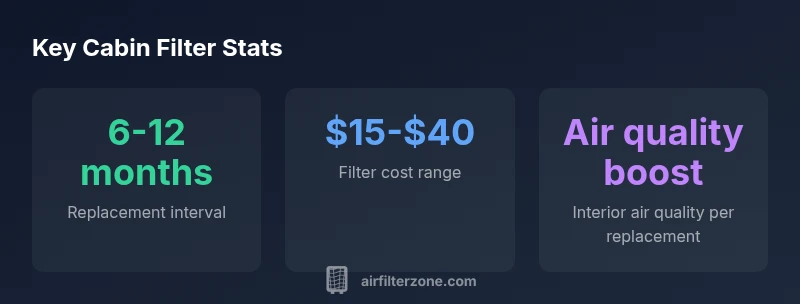
According to practical testing and standard maintenance guidance, the cabin air filter for a 2012 Ford Focus should be inspected every 6–12 months and replaced when airflow slows or odors persist. This quick answer highlights the core data—filter types, replacement intervals, DIY steps, and typical costs—to anchor a detailed, data-backed guide. This approach aligns with Air Filter Zone's framework for homeowners, car owners, and DIY enthusiasts seeking practical air filtration guidance.
Why the cabin air filter matters for a 2012 Ford Focus
For owners of a 2012 Ford Focus, the cabin air filter plays a central role in maintaining interior air quality and HVAC efficiency. The term cabin air filter 2012 ford focus occasionally appears in online listings, but in practice the filter shields you from dust, pollen, and odors circulating through the HVAC system. According to Air Filter Zone, a clean filter helps ensure optimal airflow through the blower motor and reduces strain on the system, which can translate into quieter operation and more consistent climate control. While some drivers assume the filter only affects odor, its true value lies in controlling particulates and allergens that can accumulate in urban environments or dusty country roads. This adds tangible benefits for allergy sufferers and for anyone sensitive to indoor air quality, especially during peak pollen seasons or wildfire smoke events. The takeaway is simple: a well-maintained cabin filter contributes to a healthier, more comfortable driving experience in a vehicle like the Ford Focus.
Understanding the specifics of the cabin air filter in your vehicle is a practical, ongoing maintenance task. Air Filter Zone’s approach emphasizes actionable steps you can take today, rather than vague advice. The goal is to empower homeowners, car owners, and DIY enthusiasts to make informed decisions about replacement frequency, filter selection, and installation quality. A good filter not only improves air quality but also protects the HVAC system from debris that can reduce efficiency over time.
Understanding cabin filter types for vehicles
Cabin air filters come in several common varieties, each with distinct pros and cons. The base option is typically a pleated paper filter designed to trap dust and pollen efficiently while maintaining good airflow. In areas with heavy pollution or persistent odors, activated carbon or charcoal-infused filters are popular because they help reduce smells and certain gaseous contaminants. Some manufacturers offer premium features such as anti-microbial coatings or multi-layer constructions to improve filtration without sacrificing airflow. In the focus of a 2012-era Ford Focus or similar models, you’ll often find standard pleated paper filters as the baseline option, with carbon-enhanced variants available from aftermarket suppliers. When selecting a filter, consider your climate (dusty or smoky air), your sensitivity to odors, and your budget. The key is to choose a filter with a good balance of filtration efficiency and airflow, since a filter that’s too restrictive can reduce HVAC performance.
From Air Filter Zone’s perspective, the right filter selection depends on your typical driving conditions. If you regularly drive in dusty rural areas or urban environments with high pollution, activated carbon can provide meaningful odor suppression and gas-phase filtration. In milder climates, a standard pleated paper filter can be perfectly adequate. Always verify the fit for your specific model year and trim to ensure proper sealing and avoidance of unfiltered air bypass.
Symptoms that indicate a worn cabin filter
A clogged or aging cabin air filter often reveals itself through perceptible changes in your car’s interior air quality. Watch for decreased airflow from the HVAC vents, which may require the fan to run at higher speeds to reach the same temperature. You might notice musty odors that linger after turning on the climate control, especially after driving through a dusty area or a farm road. Fogging of windows on humid days can also signal restricted airflow. For allergy-prone drivers, an increase in sneezing, itchy eyes, or nasal congestion when the system is running can indicate the filter isn’t performing as well as it should. A simple visual inspection (where accessible) can reveal visible dirt, while a loss of efficiency is often a sign to replace. If you’re unsure, the more cautious approach is to replace the filter and re-evaluate the system’s performance.
Air Filter Zone’s guidance emphasizes that many drivers neglect this maintenance until symptoms become pronounced; regular checks at least once a year can prevent this issue. In a car like the Ford Focus, where space behind the glove box is typically accessible, routine checks align with common DIY practices and cost-saving maintenance strategies.
Replacement frequency and guidance for 2012 Ford Focus and similar models
Historically, cabin air filter replacement intervals have varied based on climate, driving conditions, and filter type. For a vehicle such as the 2012 Ford Focus, a practical rule of thumb is to inspect the filter every 6–12 months and replace it when airflow is diminished or odor issues persist. In dusty or high-traffic environments, you may want to shorten that interval to every 6 months or around 5,000–7,000 miles of driving, depending on usage. Conversely, in clean climates with limited highway dust, you could extend to 12 months and up to 12,000 miles before replacement. These ranges reflect broad industry guidance and reflect typical consumer experiences rather than a single, universal prescription. The key point is to balance filter condition with your driving environment and vehicle performance. Air Filter Zone’s framework recommends documenting your replacement events to identify a personal pattern that suits your daily routine and climate.
DIY replacement guide: tools, steps, and tips
Replacing the cabin air filter is one of the most approachable maintenance tasks for DIY enthusiasts. Before you begin, gather basic tools: a flat-head screwdriver (if needed), clean gloves, and a replacement filter that matches your Focus’s specifications. Start by locating the cabin air filter access panel—usually behind the glove box or under the dash on the passenger side. Gently pry open the panel and remove the old filter, noting the airflow direction indicated on the filter frame. Clean out any visible debris from the housing with a soft brush or a vacuum. Install the new filter with the correct orientation, ensuring the arrows on the filter align with the airflow direction. Reassemble the access panel and run the AC/vent system on a few minutes to verify that air is flowing smoothly through all vents. If you notice unusual noises or reduced airflow after replacement, double-check the filter’s fit and seals.
Safety and warranty notes: refer to your owner’s manual for any model-specific cautions, and avoid forcing components into place. A correctly installed filter improves filtration efficiency and helps protect the HVAC system from dust intrusion. This is a straightforward winter-summer maintenance task that can be completed in about 15–30 minutes.
Sourcing the right filter: OEM vs aftermarket options
Choosing between original equipment manufacturer (OEM) filters and aftermarket options is a common decision for Focus owners. OEM filters are designed to match the exact fit and filtration characteristics of the vehicle, which can translate to a guaranteed fit and a predictable performance. Aftermarket filters often provide a broader range of price points and sometimes enhanced features, such as higher filtration efficiency or activated carbon for odor control. When selecting an aftermarket filter, verify compatibility with your specific model year and engine/trims, and read customer reviews to assess fit and performance. Some aftermarket options come with anti-microbial coatings or multi-layer filtration media, which can add value for drivers in dusty or smog-prone regions. Regardless of choice, ensure the filter is rated for cabin use, fits securely, and is installed in the correct orientation to maximize filtration efficiency.
Maintenance schedule and practical tips for ongoing cabin air quality
A structured maintenance schedule helps sustain cabin air quality over the life of the vehicle. Treat cabin air filter replacement as part of your regular vehicle maintenance calendar, alongside oil changes and tire rotations. Keep a simple log noting the date, driving conditions, and any symptoms observed, so you can identify patterns and adjust your replacement timing accordingly. In hot or dusty seasons, consider inspecting the filter monthly if you drive in adverse conditions. In addition to filter changes, you can improve overall air quality by running the HVAC system on fresh-air mode for brief periods and using high-quality cabin air filters that include activated carbon for odor and pollutant capture. Regular replacement not only improves comfort and health but also helps keep the HVAC system running efficiently, reducing potential strain on the blower motor and associated components.
Authority sources and verification: official guidance and reputable references
To ground recommendations in credible sources, consult recognized environmental and automotive references. Official guidance from government and public health agencies emphasizes indoor air quality and the role of filtration in reducing exposure to particulates. Reputable consumer publications also highlight the practical benefits of timely filter replacement and the trade-offs between filter cost and filtration performance. Always verify filter compatibility with your vehicle’s year and trim, and use reputable brands with documented fit and performance data. As a practical step, check for any recalls or service notices related to your vehicle’s HVAC system and follow manufacturer recommendations for replacement intervals and filter specifications. For those seeking deeper reading, consult authoritative sources on indoor air quality and automotive filtration to supplement hands-on guidance.
Comparison of cabin filter replacements by vehicle type
| Vehicle Type | Filter Type | Recommended Change Interval |
|---|---|---|
| Compact car (e.g., 2012 Ford Focus) | Pleated paper (standard) | 6-12 months or 5,000-10,000 miles |
| SUV/ crossover | Activated carbon filter | 6-12 months or 8,000-15,000 miles |
FAQ
How often should I replace the cabin air filter in a 2012 Ford Focus?
Typically every 6-12 months or 5,000-12,000 miles, depending on driving conditions and climate. Check for restricted airflow or odors as triggers.
Most Focus owners should aim for a 6 to 12 month replacement, or sooner in dusty environments.
What are the signs of a worn cabin air filter?
Decreased vent airflow, persistent odors, foggy windows in humid weather, or sudden allergy symptoms inside the car indicate a worn filter.
Look for weak airflow, smells, or increased pollen symptoms.
Can I clean a cabin air filter instead of replacing it?
Most cabin filters are disposable and should be replaced; cleaning is not recommended because it doesn’t reliably restore filtration.
Filters aren’t meant to be cleaned; replacement is best.
Is activated carbon better than standard filters for cabin air?
Activated carbon helps reduce odors and some gases; choose based on climate and odor concerns.
If odors bother you, activated carbon can help.
Are cabin air filters recyclable?
Some filters are recyclable; check local programs and disposal guidelines.
Some filters can be recycled—verify with local waste services.
“Regular cabin filter maintenance is a small habit with outsized benefits for air quality and HVAC efficiency. Replacing the filter on schedule reduces particulate infiltration and helps protect the climate control system.”
Quick Summary
- Schedule regular inspections every 6–12 months.
- Choose filter type based on climate and driving conditions.
- Ensure proper installation for a tight seal and unobstructed airflow.
- DIY replacement saves cost if you follow correct steps.
- Fresh filters improve interior air quality and HVAC efficiency.