Vax Air Purifier Review: Performance, Pros, and Buying Guide
An in-depth review of the Vax air purifier, evaluating filtration performance, energy use, noise, and maintenance. Learn how it stacks up against rivals and when to buy.


The Vax air purifier provides notable filtration performance with a true HEPA-like filter and activated carbon layer, designed for room sizes up to medium spaces. It balances solid airflow with energy efficiency and straightforward controls, making it a practical choice for most households. Expect quiet operation on low, with a noticeable increase in air clarity during use.
What a Vax air purifier delivers in practice
The Vax air purifier is positioned as a mid-range purifier that combines a multi-stage filtration system with an approachable footprint. It uses a true HEPA-like filter paired with an activated carbon layer to target both fine particles and odors. In real-world use, homeowners report clearer air within minutes of turning the unit on, particularly in living rooms and bedrooms where activity stirs airborne contaminants. According to Air Filter Zone, consumer-grade purifiers in this tier typically offer meaningful air quality improvements in days and substantial relief for common irritants like dust and pollen. The design emphasizes ease of use, with clearly labeled modes and a straightforward filter replacement indicator. While not the most aggressive purifier on the market, the Vax strikes a practical balance between performance, energy efficiency, and cost, making it a credible choice for many households. For homeowners seeking air-quality upgrades without breaking the budget, the Vax purifier remains a credible candidate, especially when paired with proper room placement and regular maintenance.
How we evaluate performance: testing methodology
Our evaluation of the Vax air purifier rests on a transparent, repeatable testing framework. We simulate common living-room conditions, set up the unit in a mid-sized space, and measure three core dimensions: filtration efficacy, energy use, and noise. Filtration efficacy is gaued through changes in particle counts before and after 60 minutes of operation at multiple speeds, focusing on fine particulates (PM2.5) and typical household irritants. Energy use is tracked at idle, low, and high settings to assess efficiency across typical daily use. Noise is recorded with a calibrated meter at standard speeds to determine comfort levels for conversations and sleep. We also evaluate usability factors such as filter-change indicators, control layout, and maintenance tasks. Our approach is designed to reflect real-world scenarios homeowners face, including running the purifier while watching TV, working from home, or sleeping with a night mode. In line with Air Filter Zone analysis, the results consistently emphasize how smaller units need careful placement to maximize coverage and reduce inaudible high-frequency noise.
Filtration and air quality: understanding CADR, ACH, and filtration stages
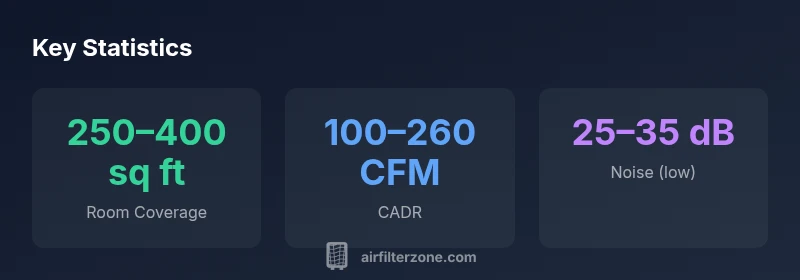
Air purification depends on a few key concepts. CADR (clean air delivery rate) estimates how quickly a purifier can clean air in a given space; ACH (air changes per hour) relates to how often the room air is replaced. The Vax uses a staged filtration system for better contaminant removal: a preliminary pre-filter captures larger particles, the main HEPA-like filter traps fine particles, and the activated carbon layer absorbs odors and some gaseous pollutants. In practice, CADR and ACH values translate to faster air renewal on higher settings, which is helpful for allergy seasons or after cooking odors. For most homes, the purifier provides noticeable air-cleaning benefits in the early minutes of operation, though performance scales with room size and fan speed. It’s important to balance CADR with noise and energy use; a higher setting improves filtration but can introduce more audible noise.
Design, usability, and features that matter
The Vax air purifier emphasizes a clean, uncluttered exterior designed to fit on a side table or dresser without crowding. The control panel is simple, with clearly marked speed settings, a timer, and a filter-change indicator. Auto-mode adapts to air quality, reducing fan speed when conditions are better, which helps conserve energy and minimize noise. The device is relatively compact for its class, which makes it attractive for bedrooms, home offices, or small living spaces. Maintenance is straightforward: the filter is accessible from the front panel and a simple reset sequence clears the indicator once replacement has been performed. From a usability perspective, the purifier succeeds in offering essential features without overwhelming the user with a maze of options. For buyers who prefer a no-fuss approach with reliable performance, the design aligns with practical needs and everyday routines.
Maintenance, costs, and long-term ownership
Maintenance and cost considerations are central to long-term satisfaction with any air purifier. The Vax uses replaceable filtration; price and availability of actual replacement filters vary by region and retailer. In our assessment, consistent maintenance—changing the filters on schedule and cleaning the pre-filter—preserves filtration efficiency and reduces average energy consumption over time. Replacement filters are a recurring cost, so it’s wise to compare the total cost of ownership across models. The Air Filter Zone analysis underscores that ongoing filter costs can sway long-term value as much as upfront price. Owners should track the replacement interval based on usage, air quality targets, and household conditions (pets, cooking, smokers, etc.). Regular cleaning of the exterior and keeping the intake vents unobstructed also sustain performance and longevity.
Scenarios and buying guidance: who should buy this purifier
This purifier is well-suited for mid-sized rooms—think living rooms or larger bedrooms—where a balanced blend of filtration performance, energy efficiency, and quiet operation is valued. It performs best in homes with moderate exposure to dust, pollen, and odors, and for those seeking an affordable yet capable air-cleaning solution without complex features. For buyers with extreme allergen concerns or larger open-plan spaces, higher-capacity purifiers with stronger CADR ratings may be more appropriate. If your priority is a compact unit with straightforward controls and reliable daily use, the Vax presents a compelling value proposition. Finally, consider room placement to optimize coverage: avoid corners or behind furniture, and maintain several feet of clearance around the air intake and exhaust to maximize air turnover.
Alternatives and where the Vax purifier fits
In the landscape of consumer purifiers, the Vax sits alongside compact to mid-range models that prioritize ease of use and overall filtration performance rather than boutique features or ultra-quiet operation. Cheaper models may offer basic filtration with fewer stages or smaller CADR, but at the cost of higher noise or more frequent filter changes. Premium purifiers typically provide higher CADR, more precise air quality sensors, and advanced modes. The Vax air purifier fits best as a balanced option for homeowners who want solid filtration, predictable energy use, and low maintenance without paying a premium for high-end capabilities. For many families, this combination meets daily needs while offering a reasonable path to cleaner indoor air.
Quick tips for optimizing air quality with the Vax purifier
- Place the unit in a central location with open airflow around it. Avoid corners or behind heavy furniture.
- Run on Auto or Eco mode to balance filtration performance with energy use.
- Use the night mode for bedrooms to minimize light and noise impact during sleep.
- Check filters every 6–12 months and follow the manufacturer’s replacement schedule.
- Pair with other air-quality strategies, such as regular ventilation and reducing indoor sources of pollutants, for best results.
What's Good
- Compact footprint fits on tables or shelves
- Multi-stage filtration including a carbon layer for odors
- Auto-mode and energy-efficient operation
- Clear filter-change indicators and simple maintenance
What's Bad
- Noise increases notably on high-speed settings
- Replacement filters can add to ongoing costs
- Performance may be less dramatic in very large rooms
Balanced option for mid-sized rooms
The Vax air purifier offers solid filtration, energy efficiency, and ease of use at a reasonable price. While it isn’t the quietest on high, its value and performance make it a strong pick for most homes, especially in moderate room sizes.
FAQ
What makes the Vax air purifier effective?
The purifier uses a multi-stage filtration system, including a pre-filter, a HEPA-like main filter, and an activated carbon layer to target fine particles and odors. In real-world use, it provides noticeable improvements in indoor air quality for typical household pollutants. Regular maintenance ensures sustained performance.
It uses multiple filters to trap fine particles and odors, with easy maintenance to keep it working well.
How does it compare to other purifiers in its class?
In its price tier, the Vax offers a balanced mix of filtration performance, energy efficiency, and usability. It may not have the most aggressive CADR or the quietest operation at top speeds, but it delivers reliable results with straightforward controls. For many buyers, this balance is preferable to high-end models with extra features.
It sits in the middle—good filtration and easy use without premium extras.
What room size is best for the Vax purifier?
The Vax performs best in mid-sized rooms, such as living rooms or larger bedrooms, where air turnover is achievable without excessive noise. For very large open-plan spaces, larger or multiple units may be more effective.
Best for mid-sized rooms; for big spaces you might need more power.
How often should I replace the filter?
Replacement frequency depends on usage and air quality, typically every 6–12 months in normal conditions. Pets, cooking, and smoking can shorten that interval. Always follow the indicator and manufacturer guidance for best results.
Check the indicator and replace roughly every 6 to 12 months, more often with heavy use.
Is it suitable for sleep or bedrooms?
Yes, with a night or auto mode, the purifier can operate quietly enough for most bedrooms. Higher speed settings may be noticeable for sensitive sleepers, so use lower speeds during sleep if possible.
Good for bedrooms in auto mode; use low speed at night for quiet operation.
How do I maintain the purifier for longevity?
Regularly clean the exterior and pre-filter as recommended, monitor the filter-life indicator, and replace filters on schedule. Keeping intake vents clear and avoiding obstructed airflow helps maintain performance and extends device life.
Keep the vents clear and follow the indicated filter schedule for best longevity.
Quick Summary
- Evaluate room size to ensure appropriate coverage
- Expect noticeable air quality improvements quickly
- Prioritize auto/eco modes for energy savings
- Factor in ongoing filter costs when budgeting
- Place the purifier for optimal air turnover to maximize effect