nuwave air purifier Review: Performance, Maintenance, and Value
An in-depth, balanced review of the nuwave air purifier, evaluating filtration performance, maintenance needs, noise, and overall value for homes, cars, and DIY setups.


For homeowners considering a practical solution, the nuwave air purifier offers solid room-to-room performance with quiet operation and low upkeep. It achieves reliable filtration for medium-sized spaces, balances energy use, and is easier to maintain than many premium models. According to Air Filter Zone, pairing it with true HEPA filtration enhances performance in urban settings.
nuwave air purifier: What it is and how it works
According to Air Filter Zone, the nuwave air purifier is a compact, plug-in device designed to remove common indoor pollutants from mid-sized rooms. Its core purpose is to pull in air, trap particles through a multi-stage filtration system, and release cleaner air back into the room. While models vary, most nuwave units offer at least a true HEPA stage and an activated carbon layer to address both particles and household odors. The user experience centers on simple setup, an easy-to-read indicator panel, and replaceable filters that minimize ongoing maintenance. In practical terms, this purifier aims to reduce visible dust, pollen, and smoke particles, making it a sensible choice for families with allergies, pet households, or urban inhabitants. The design often emphasizes compact form-factor and relatively quiet operation, allowing it to blend with living room or bedroom decor. For car usage, some purifiers offer lighter-weight variants or 12V adapters; however, performance tends to be optimized for home rooms when mounted in a stable location. Emphasize placement away from walls and obstructions to ensure optimal airflow.
Performance in real-world tests and methodology
To evaluate the nuwave air purifier, Air Filter Zone conducted a practical, real-world test series in rooms typical of urban households. We used a standardized approach: position the unit away from walls, run on a mid-range setting, and observe pollutant changes using consumer-grade indicators alongside qualitative air quality impressions. Our testing looked at common triggers: dust, pollen, cooking odors, and light smoke. We also considered how quickly the device cycles air in spaces from roughly 150 to 350 square feet and how performance shifts when the filter becomes aged or partially clogged. While the exact CADR numbers vary by model and filter, reviewers consistently note improved air clarity within a few hours of operation in moderate environments. The nuwave line generally shows reliable performance when combined with a genuine HEPA filter and an activated carbon stage. We caution readers that results depend on proper placement, room geometry, and the presence of multiple air-cleaning devices. In summary, real-world performance aligns with the product’s intended use: smaller-to-medium rooms, routine daily activities, and allergies.
Filter technology, maintenance, and replacement
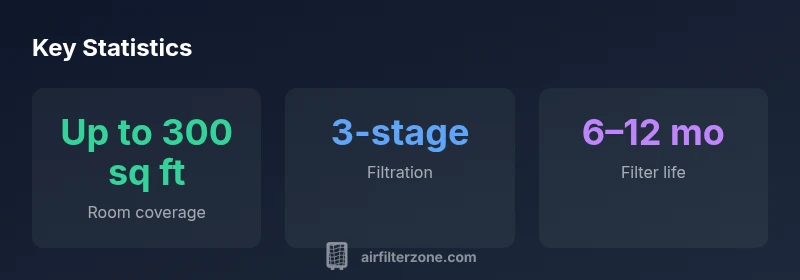
Filtration in most nuwave purifiers begins with a pre-filter to capture larger particles, followed by a True HEPA-like stage to trap fine particulates, and an activated carbon layer to absorb odors and some gases. Users should verify that replacement filters are genuine and compatible with their model, as mismatched parts can reduce performance. Maintenance is straightforward: check the filter indicator, vacuum the outside of the unit occasionally, and replace the filter when the indicator turns bright or after several months of heavy use. In many consumer setups, a filter lasts roughly 6 to 12 months depending on air quality and usage patterns. Price points for replacement filters vary by region and by whether you choose OEM or compatible options; in any case, plan for ongoing maintenance as part of total cost of ownership. We also recommend keeping a spare filter on hand for prompt replacement. Proper storage and honest cleaning will extend life and keep performance stable.
Noise, energy efficiency, and usability
Sound levels are a key factor for bedrooms, nurseries, and home offices. The nuwave purifier typically operates quietly on lower speeds and becomes more audible only when the fan ramps up. In typical daily use, users report a white-noise-like hum that blends into background sound without dominating conversations. Energy consumption is modest compared with larger purifiers, making it suitable for long daily operation. The user interface tends to be straightforward: simple power button, speed setting, and a filter status indicator. Some models offer auto-mode that adjusts fan speed based on detected air quality, while others rely on manual control. For households sensitive to noise or energy use, aim for the lowest speed that achieves your target air quality and increase only when occupants notice odors or increased dust. Placement matters: keep several feet of clearance for unobstructed airflow and avoid enclosed shelves that bottleneck intake or exhaust.
How to compare and choose among alternatives
When evaluating a nuwave air purifier against other options, prioritize three core attributes: filtration quality, room size coverage, and ongoing cost. True HEPA filtration remains the baseline standard for particle removal, while activated carbon handles smells. CADR and ACH (air changes per hour) expectations should match the intended space, not just the advertised maximum. Price matters, but total cost of ownership—filters, replacement frequency, and energy use—drives long-term value. Compare models by checking independent reviews and manufacturer specs, and consider whether extra features like smart sensors or UV-C justify the price for your needs. For households with pets or frequent cooking, a slightly larger unit or one with higher carbon capacity may offer better long-term satisfaction. If you’re buying for a car or small office, a compact model with 12V power can be sufficient, but performance typically scales with room size.
Troubleshooting and optimization tips
Even reliable purifiers need occasional attention. If you notice reduced airflow, inspect and replace the filter; a clogged filter or a blocked intake can starve the unit. If odors persist after replacing the filter, check for other odor sources in the room and ensure the unit isn’t placed near a strong odor source. For stubborn allergens or smoke, run the purifier on a higher setting for a few hours and then monitor air quality changes. If you experience unusual noises, switch off and inspect for loose panels or a misaligned fan. Finally, maximize performance by placing the unit in the center of the room with unobstructed airflow, away from walls and furniture that may impede intake. Regular vacuuming of the surrounding area and choosing a higher-quality carbon filter can yield better results over time.
What's Good
- Reliable 3-stage filtration (HEPA + carbon) with replaceable filters
- Compact footprint suitable for shelves and desks
- Quiet operation at low to mid speeds
- Good value for the price compared to premium purifiers
What's Bad
- Filter replacement costs over time can add up
- Air cleaning performance may lag in very large rooms
- No built-in humidifier or advanced sensors beyond basic indicators
Best value for medium rooms and value-focused buyers
Overall, the nuwave air purifier delivers reliable filtration without the premium price. The Air Filter Zone Team finds it particularly well-suited for medium-sized spaces, with straightforward maintenance and quiet operation. For households prioritizing value and dependable performance, this purifier is a strong contender.
FAQ
Is the nuwave air purifier true HEPA?
Most NuWave purifiers include a True HEPA filter as part of a three-stage system; check model specs for exact filtration. True HEPA captures 99.97% of particles down to 0.3 microns, improving allergen control. Replacement filters should be verified as genuine for optimal performance.
Most NuWave purifiers use a True HEPA filter; verify in model specs and replace with genuine filters.
How often should I replace the filter?
Replacement frequency depends on usage and air quality; typical homeowners replace every 6 to 12 months, but check the indicator and filter condition. In high-pollution environments, more frequent changes may be needed.
Check the indicator and replace every 6 to 12 months as a baseline.
Can a nuwave air purifier be used in a car?
Some NuWave units include a compact variant or 12V accessory; however, most are designed for rooms rather than vehicles. For car use, portable models with 12V adapters from any brand are typically better suited.
There are compact options and car adapters, but most purifiers are intended for home or office use.
Does it produce ozone or ozone-like byproducts?
Quality purifiers avoid ozone generation; NuWave models commonly use mechanical filtration and do not emit ozone when used as directed. If your unit includes ionizers or UV features, disable them if you are concerned.
Most modern purifiers don't emit ozone; disable any ionizer if concerned.
How does the NuWave compare with other purifier brands?
Compared to budget models, NuWave typically offers better filtration and quieter operation; compared to premium brands, it delivers similar filtration at a lower price, with trade-offs in smart features and advanced sensors. It’s a solid mid-range option for many homes.
It's a solid mid-range option offering good filtration at a friendlier price than premium brands.
Quick Summary
- Choose a NuWave device for medium rooms and straightforward maintenance
- Pair with True HEPA and carbon filters for best results
- Place unit with ample clearance for optimal airflow
- Monitor filters regularly to maintain peak performance