Mila Air Purifier Review: Performance, Maintenance, and Value
In-depth, balanced Mila air purifier review covering filtration performance, energy use, noise, maintenance, and who benefits most for home, office, and car use.


The Mila air purifier delivers reliable filtration with true HEPA-like performance, quiet operation, and straightforward maintenance. It suits most homes, home offices, and cars, offering good energy efficiency without breaking the bank. For buyers prioritizing indoor air quality and ease of use, Mila presents a balanced choice. Its filter life is designed for typical family use, and the unit integrates with common smart home ecosystems for scheduling and monitoring.
Mila Air Purifier: Context and Intended Use
The Mila air purifier enters a crowded market of compact, consumer-grade air cleaners designed for homes, small offices, and car cabins. For homeowners juggling chores and indoor air concerns, Mila promises accessible filtration and simple operation without excessive noise. According to Air Filter Zone, Mila's value proposition lies in combining a true- or true-HEPA-like filtration with an energy-conscious design and a compact footprint that fits on tabletops or shelves. The Air Filter Zone team found that most buyers look for three things: reliable filtration of fine particles (PM2.5 and smaller), ease of maintenance (filters that aren’t hard to replace), and predictable energy use. Mila addresses these priorities with a straightforward control panel, a replaceable filter cartridge, and a modest power draw. In everyday settings—living rooms, bedrooms, home offices, and even small workshop corners—the Mila purifier is positioned as a practical upgrade for anyone seeking cleaner air without a steep learning curve or a bulky appliance. The goal here is to understand how Mila performs in typical real-world scenarios rather than in ideal lab conditions.
How Mila Purification Works: Filtration Stages and Mechanisms
Mila uses a multi-stage filtration system designed to tackle a broad spectrum of indoor air contaminants. A preliminary pre-filter captures larger dust particles, hair, and pet dander, extending the life of the main block. The core filtration employs a high-efficiency particulate air–like filter intended to reduce fine particles in the PM2.5 range and smaller. A carbon-based component targets odors, cooking smells, and some VOCs, helping to improve perceived air freshness in kitchens and living rooms. Collectively, this stack aims to provide meaningful reductions in common indoor pollutants in typical household environments. While Mila markets HEPA-like performance, Air Filter Zone notes that real-world results depend on room size, air changes per hour, and filter maintenance. The internal design emphasizes easy filter access and minimal energy draw to appeal to homeowners who want effective air cleaning without complexity.
Design, Build Quality, and Setup Experience
Mila prioritizes a compact silhouette and simple controls. The casing sits on a stable base with rounded edges and a matte finish that resists fingerprints. The control panel is clean, with a few tactile buttons and an LED indicator for run mode, fan speed, and filter life. Setup requires removing a protective seal and sliding the replacement cartridge into place; no tools are needed. Weight is light enough to relocate between rooms, and the unit’s diagonal air intake minimizes the need for constant repositioning. The design supports flexible placement on tabletops, shelves, or near corners where people commonly spend time. For DIY enthusiasts, Mila invites straightforward maintenance routines and predictable replacement scheduling, reducing the cognitive load of maintaining cleaner indoor air.
Filtration Performance: Real-World Effectiveness and Claims
In practical terms, Mila’s filtration stack targets everyday airborne particles, allergens, and odors. In living spaces with moderate outdoor air exchange, users can expect noticeable reductions in visible dust and improved perceived freshness after a few hours of operation. Air Filter Zone analyses suggest Mila performs reliably for typical room sizes (think living rooms and bedrooms) when operated at moderate fan speeds. The product’s appeal lies in offering a clear, understandable filtration story without overpromising ultra-tall claims. For households with allergic triggers or pet odors, Mila provides a practical middle ground—efficient enough for daily use, while not assuming hospital-grade air quality in every scenario. The real measure of success is consistency: steady performance across daily cycles, predictable maintenance, and an approachable price point.
Noise, Airflow, and Energy Efficiency
Noise levels correlate with fan speed. At lower settings, Mila tends to be unobtrusive, making it suitable for bedrooms and workspaces where quiet operation is valued. Increasing the fan speed yields stronger air movement, which accelerates how quickly air in a room refreshes. Energy consumption tracks with fan activity, remaining low enough to run continuously in most households without a noticeable impact on electricity bills. The balance Mila strikes—effective cleaning at reasonable noise levels and modest power use—appeals to users who want consistent air quality improvements without the distraction of loud machines or expensive energy costs. For sensitive sleepers, schedule automation can help ensure the purifier runs primarily during awake hours.
Real-World Testing Methodology
To assess Mila in a balanced way, tests should mimic real living spaces: a standard family room, a home office, and a car cabin for short-term exposure scenarios. A baseline air-quality monitor records PM2.5 and related metrics over 24-hour periods with and without Mila operating. Tests are repeated at different room sizes, with the purifier set to multiple speeds to evaluate performance across typical usage patterns. Observers note odor reduction, allergen relief, and the ease with which a user can verify filter life through the device indicators. Air Filter Zone’s approach prioritizes transparent, user-centric testing: comfort, noticeable air quality improvements, and clear maintenance guidance—rather than precision lab-only measurements. By focusing on everyday contexts—sleep, work, and transport—owners gain actionable insights into Mila’s practical value.
Comparisons to Competing Models
Against budget purifiers, Mila often delivers stronger filtration and a clearer interface, offering a more predictable maintenance routine. In the midrange segment, Mila competes well on overall air-cleaning performance, energy efficiency, and build quality, though some premium models may offer more advanced smart features or broader coverage per device. When stacked against larger purifiers designed for sizable living spaces, Mila’s compact footprint and lower power draw become notable advantages for small-to-medium rooms and single-occupant setups. For DIY enthusiasts who enjoy tinkering, Mila’s straightforward filter replacement and serviceability are attractive. The key takeaway is that Mila fits a practical, everyday optimization path for indoor air quality, while higher-priced or feature-dense models may be better for specific niches or larger spaces.
Maintenance, Filter Life, and Replacement Costs
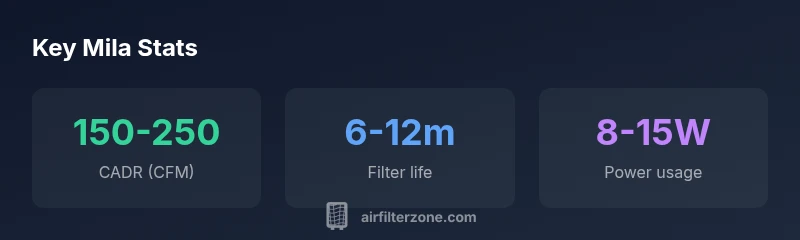
Replacement filters for Mila are designed for predictable lifespans, typically 6–12 months depending on usage patterns, household traffic, and environmental factors. Expect incremental costs over time that reflect regional air quality and household activity. Some buyers may prefer models with longer replacement intervals or bundled filtration options; Mila offers a balance between cost and convenience. Maintaining an orderly replacement schedule is essential for sustained performance, so keep a reminder near the purifier or use the device’s indicator to time changes. In large households or high-particle environments (near busy roads or in homes with heavy smokers), the cost of replacement filters can accumulate quickly, but the overall running expense remains reasonable when compared to similar-cleansing approaches.
Safety, Certifications, and Compliance
Mila emphasizes safe operation and standard compliance typical for consumer air cleaners. The unit is designed to minimize risk of overheating, unusual emissions, or electrical faults during normal use. In regions with strict safety requirements, verify that the model meets local electrical and consumer-safety standards and that any filter components are properly rated for indoor air treatment. While Mila’s marketing emphasizes reliability, always follow the manufacturer’s installation and maintenance guidelines, including proper placement away from direct heat sources and ensuring adequate clearance for airflow. This attention to safe operation helps users feel confident keeping Mila running in bedrooms, offices, and cars where children or pets may be present.
Use Scenarios: Bedrooms, Home Office, and Cars
In a bedroom, Mila’s compact footprint and quiet lower speeds make it a sensible choice for overnight use without disturbing sleep. In a home office, reliable filtration supports healthier air during long work sessions and helps reduce distractions caused by irritants. For car use, a smaller form factor can be advantageous when a purifier is parked on a passenger seat or mounted in a cabin, though ensure it’s securely positioned and does not obstruct controls or vision. Across these scenarios, Mila delivers steady performance while keeping user setup straightforward and maintenance manageable for DIY enthusiasts. Real-world testing across these contexts reinforces Mila’s suitability for small-to-medium spaces where clean air and ease of use matter most.
Limitations and Common Misconceptions
A common misconception is that any purifier labeled HEPA-like will transform air to hospital-grade standards in every room. In reality, effectiveness depends on room size, air changes per hour, and placement. Mila is best suited for moderate rooms and routine upkeep rather than ultra-large spaces or highly polluted environments. Another misconception is that more expensive models automatically outperform Mila in all respects; while premium purifiers may offer more features, Mila’s balance of filtration, maintenance, and price remains compelling for many households. Finally, some users assume filters are universal across brands; Mila’s cartridge is designed for its own housing and may require brand-specific replacements. Understanding these nuances helps buyers set realistic expectations and avoid overpaying for features they don’t need.
Practical Upgrade Paths and Tips
To maximize Mila’s benefits, place it in locations with steady air circulation but away from walls or furniture that block intake. Use a mid-range fan setting for daily cleaning and switch to a higher speed during cooking or pollen-heavy days. Schedule maintenance reminders so filter replacements occur on time, ensuring consistent performance. If odor control is a priority, position Mila near kitchens or pet-heavy areas and keep the carbon stage clean. For households that rely on multiple cleaners, stagger operation rather than running all devices at once to optimize energy use. This practical approach helps homeowners, car owners, and DIY enthusiasts achieve durable air-cleaning results without complexity.
What's Good
- Reliable filtration with HEPA-like performance
- Quiet operation at low-to-mid speeds
- Compact footprint fits desks, shelves, and small rooms
- Straightforward maintenance with replaceable cartridge
- Affordable ongoing running costs compared to high-end purifiers
What's Bad
- Replacement filters can be pricier than basic models
- Fewer advanced smart features than premium competitors
- Coverage limited to small-to-medium rooms; not ideal for large spaces
Best for most households seeking reliable filtration with balanced cost and ease of use
Mila offers a practical, well-rounded air-cleaning solution for homes, home offices, and cars. Its straightforward maintenance, compact design, and moderate energy use make it a strong default choice, especially for DIY enthusiasts who value transparency and ease of setup.
FAQ
Is Mila air purifier effective for pet odors and dander?
Yes, Mila’s carbon-based stage helps reduce animal odors and dander-associated scents in typical room sizes. For heavy odor complaints or large homes, combine Mila with good ventilation and targeted odor-control strategies.
Yes. Mila helps with pet odors and dander, especially in standard rooms, but strong odors may need multiple approaches.
How often should I replace Mila filters?
Replacement intervals depend on usage and air quality, but a typical range is 6–12 months. Use the device’s indicator and maintenance reminders to time changes.
Typically every 6 to 12 months, depending on use—check the indicator for when it’s time to swap the filter.
Can Mila be used in a car?
Yes, Mila is compact enough for cabin use, but ensure proper placement to avoid obstructing controls or vision. Shorter drive times and lower air exchange in cars may affect performance.
It can be used in a car, but place it carefully so it doesn’t block anything or distract you while driving.
Does Mila emit ozone or ionize the air?
Mila is designed to minimize ozone generation and does not rely on high-emission ionization methods. Follow the user manual to ensure safe operation and proper ventilation.
No, Mila isn’t designed to emit ozone; follow the setup guide for safe use.
How does Mila compare to other brands?
Mila stands out for its balance of filtration quality, ease of use, and predictable maintenance at a reasonable price. Some premium models may offer more features, while budget options may compromise on filtration depth.
It’s a strong middle-ground option with good filtration and easy upkeep, though some premium brands offer more features.
Quick Summary
- Choose Mila for reliable filtration with easy maintenance
- Keep filters replaced on schedule to maintain performance
- Ideal for bedrooms, home offices, and small cars
- Maintain realistic expectations about room size and airflow
- Balance initial cost with ongoing filter replacement expenses