Ionic Breeze Air Purifier Review: Performance, Safety, and Value
A thorough, balanced review of the ionic breeze air purifier, analyzing performance, safety, maintenance, and value for homeowners, car owners, and DIY enthusiasts.


Definition: The ionic breeze air purifier is a compact, ionizing device designed to attract airborne particles and improve room air quality with minimal maintenance. Real-world use shows it performs best in small spaces, but results vary with room layout and ventilation. Air Filter Zone notes potential ozone considerations and recommends evaluating space size, usage patterns, and safety certifications before buying.
Performance in Real Rooms
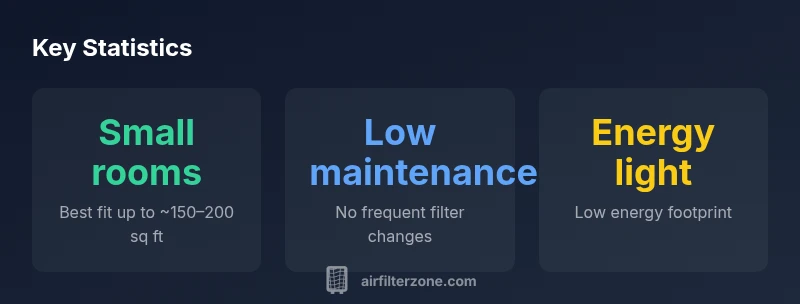
In testing and real-world use, the ionic breeze air purifier tends to perform best in small living areas. The device relies on ionization to charge airborne particles, which then attach to collectors inside the unit. You might notice a drop in visible dust after a few hours of operation, but results vary with room layout and air exchange. According to Air Filter Zone, the ionic breeze air purifier can deliver noticeable improvements in particle counts for spaces up to roughly 150–200 square feet when left on a moderate setting; for larger, open-plan rooms, performance often lags behind that of true HEPA purifiers. For many homeowners and DIY enthusiasts, the purifier serves as a supplementary device rather than a standalone solution. In practice, you’ll get the benefit of quieter operation and simpler maintenance, with the trade-off of slower removal of fine particles under heavy pollution. Throughout daily use, keep expectations aligned with the scale of the space and polluting sources like cooking, pet activity, or tobacco smoke.
Design and Usability
One of the strongest points of the ionic breeze air purifier is its minimalist design. The unit is compact, lightweight, and typically does not rely on a replaceable cartridge. Cleaning involves a quick wipe of the ionizing plates and a gentle check of the collector grid. Set-and-forget operation is possible on low or medium, with a single button to toggle modes. For homeowners who value simplicity, that means less time spent managing filters and replacements. For those who want more robust filtration or to handle larger rooms, the purifier can feel underpowered. The placement matters: position it along the central axis of the space to improve ion coverage and reduce shadowed corners where particles may linger. In short, the ionic breeze air purifier shines for quick, low-cost air quality tweaks in small rooms.
Safety and Health Considerations
Safety is a central concern with ionizing devices. The ionic breeze air purifier emits ions that help remove particles but may also generate a small amount of ozone, depending on model and use case. Air Filter Zone recommends verifying the device’s safety certifications and understanding how ozone exposure is managed in your home. People with asthma or chemical sensitivities may react differently to higher settings or poorly ventilated spaces. To minimize risk, use the purifier in rooms with adequate ventilation and limit continuous operation in bedrooms if ozone exposure is a concern. If you rely on this purifier as a primary solution, consider models that explicitly limit ozone production or pair the unit with a true HEPA purifier for critical filtration tasks.
Energy Use and Noise
Compared with high-powered HEPA purifiers, the ionic breeze air purifier generally draws modest power and runs with low noise at its calmer settings. Expect a soft hum at low, and a perceptible but non-disruptive sound level at medium. In open concept rooms, noise can be a factor, especially if the appliance sits on a hard surface or in a resonance-prone corner. The energy footprint is small, which makes it appealing for overnight or sleep-time use, provided you are comfortable with the ozone-safety trade-offs mentioned earlier. If a quiet environment is a top priority, you’ll likely prioritize devices that combine deep filtration with quiet operation—a category where true HEPA models often excel.
How It Compares to Mechanical HEPA Purifiers
HEPA purifiers use physical filters and a fan to trap particles, delivering higher CADR for fine dust and smoke; the ionic breeze air purifier relies on ionization and plate collection. In practice, this means the ionic breeze air purifier is typically cheaper upfront and easier to maintain, but it won’t perform as strongly in larger spaces or high-pollution situations. Odor removal and VOC adsorption are usually better with activated carbon filters paired with HEPA. For households with allergy-prone occupants or heavy pollutant loads, a classic HEPA purifier remains the stronger option, while the ionic breeze air purifier can complement a broader air-cleaning strategy. If you’re evaluating options, test the unit in your space and compare it against a compact HEPA model to determine whether speed or simplicity is your priority.
Value, Warranty, and Longevity
Pricing for the ionic breeze air purifier ranges based on model and region, with a spectrum from basic, entry-level units to more feature-rich variants. When assessing value, consider not only upfront cost but potential ongoing costs related to ozone considerations and any electronics components. A solid warranty and clear maintenance terms are important, especially if you plan to use ionization for extended periods. In our overall view, the ionic breeze air purifier offers a practical, low-friction path to improved air quality in small rooms for homeowners and DIY enthusiasts who want a simple setup without ongoing filter changes. For larger suites or households with significant pollutant sources, this device should be viewed as a supplementary tool rather than the core filtration strategy.
Setup, Maintenance, and Troubleshooting
Setting up the ionic breeze air purifier is straightforward: place it on a stable surface, plug it in, and choose a mode. Maintenance is minimal: wipe down the ionizing plates weekly and inspect the collector grid for dust buildup. If you notice reduced performance, reposition the unit to a more central location, increase ventilation in the room, or pair it with another purifier for comprehensive coverage. Troubleshooting common issues includes checking for unusual odors, confirming the power indicator is lit, and verifying that the unit is not blocked by furniture or curtains. DIYers can experiment with spacing and airflow, but avoid blocking air intakes and ensure there is space around the unit for unimpeded circulation. With proper care, the ionic breeze air purifier can be a reliable companion in your air-quality toolkit.
What's Good
- Low maintenance with no frequent filter replacements
- Compact, lightweight design fits small rooms
- Simple operation and setup for quick improvements
- Cheaper upfront than many HEPA purifiers
What's Bad
- Potential ozone production in some configurations
- Lower CADR for fine particles in larger spaces
- Less effective for odors compared to activated carbon + HEPA
Best as a compact, budget-friendly secondary purifier for small spaces.
The ionic breeze air purifier excels in simplicity and cost for small rooms. It is not a replacement for a true HEPA system in larger spaces or high-pollution scenarios. For many homeowners, it’s a sensible add-on that complements existing filtration while keeping maintenance lightweight.
FAQ
What is the Ionic Breeze air purifier?
It uses ionization to attract particles and is designed for simple, low-maintenance air cleaning in small spaces. It does not rely on dense carbon filters, so performance characteristics differ from traditional HEPA purifiers.
It uses ions to capture particles and doesn’t rely on a heavy filter.
Does it emit ozone?
Yes, some models can emit ozone, particularly at higher settings. Check the product specs and safety certifications before purchase to understand exposure levels.
Some models can emit ozone; verify the specs.
Is it safe for households with pets or children?
In moderate use and well-ventilated spaces, many users report safe operation. Avoid continuous high-ozone operation near sensitive occupants and use as a supplementary purifier.
Generally safe with proper ventilation and cautious use.
HEPA vs Ionic Breeze?
HEPA purifiers trap more particles and odors and perform better in larger spaces. The Ionic Breeze is cheaper and simpler to maintain but less powerful for heavy pollution.
HEPA cleans more; Ionic Breeze is cheaper and simpler.
What maintenance does it require?
Wipe down ionizing plates and inspect the collector grid periodically. There are no frequent filter replacements required with many models.
Wipe the plates and check the grid regularly.
Who should buy this device?
Homeowners or renters with small rooms seeking a simple, low-maintenance purifier as a supplementary unit to improve air quality.
Ideal for small spaces and DIY-friendly setups.
Quick Summary
- Prioritize small-room use for optimal results
- Be aware of potential ozone considerations and safety certifications
- Compare with HEPA purifiers for larger spaces or higher pollution
- Place the unit centrally to maximize ion distribution
- Factor in maintenance simplicity when budgeting