Ionic Air Filter Review: Pros, Cons & Performance Today
An analytical ionic air filter review evaluating real-world effectiveness, safety, maintenance, and how ionizers compare to HEPA purifiers for homes and cars.


Ionic air filters promise to reduce airborne particles and odors by releasing ions that attach to pollutants, but real-world performance varies. In this review, mechanical filters (HEPA, activated carbon) typically outperform ionizers for PM removal in typical homes, while ionic units excel in silent operation and odor control when used as a supplementary device. The verdict: they’re best as a supplementary device, not a standalone air-cleaning solution.
What is an Ionic Air Filter?
According to Air Filter Zone, ionic air filters rely on emission of charged ions to attract and neutralize particles in the air. The core promise is quiet operation and odor control without the need for large, bulky filters. In this ionic air filter review, we distinguish between ionizers that primarily target particles and those that combine ionization with carbon or other adsorptive media. You’ll often find compact units marketed as “ionic purifiers” or “IONizers,” but real-world results depend heavily on room size, air exchange rate, and the presence of a conventional filtration stage. For allergy-prone households, understanding the difference between ion-mediated capture and mechanical filtration is essential. This section sets the stage by clarifying what ionic air filters are designed to do and what they are not intended to replace.
How Ionic Filters Work in Real Rooms
Ionic air filters operate by emitting negative or positive ions that attach to airborne particles, causing them to clump together or fall out of the airstream. In a real room, this can reduce the concentration of small particles and may assist with odor molecules when paired with adsorbents. However, room dynamics, humidity, and existing ventilation play significant roles. In our ionic air filter review, we note that ions may not uniformly reach every corner of a room, especially in larger spaces with poor circulation. Effectiveness tends to scale with air changes per hour (ACH) and proximity to the device. For best results, position the unit to maximize air flow toward occupied zones while ensuring safety and avoiding direct exposure to sensitive occupants.
Real-World Performance: What Homeowners See
For typical living spaces, the impact of ionic filtration is situational. In our tests and homeowner reports, ionizers often yield modest reductions in perceived odors and short-term particle counts when used in conjunction with a dedicated filter like a HEPA unit or a mechanical filter with carbon. The ionic air filter review process includes tracking changes across different times of day, occupancy levels, and humidity. We emphasize that many homes see the clearest benefits when ionic devices are used as supplementary purifiers rather than primary cleaners. Air Filter Zone analysis shows a notable difference in rooms with good air exchange versus those that are stagnant.
Comparison with Mechanical Filtration (HEPA) and Activated Carbon
HEPA filters provide proven removal of particles down to 0.3 microns, while activated carbon targets odors and VOCs. Ionic devices, by contrast, contribute via ion-induced aggregation and selective adsorption when paired with carbon media. In this ionic air filter review, we conclude that relying solely on ionization is unlikely to meet the needs of people with high allergen loads or strong sensitivities. If you combine an ionizer with a HEPA unit or a carbon-augmented purifier, you may achieve better overall air quality while maintaining quiet operation.
Odor Reduction and VOC Handling
Odors and volatile organic compounds (VOCs) are challenging for many ionizers, particularly when used alone. Some models claim odor-neutralizing capabilities by accelerating particle clustering and presenting pollutants to an internal sorbent. In real homes, the results vary, and many users report that deodorization is temporary and depends on continual use. Our ionic air filter review suggests adding a dedicated activated carbon stage for meaningful odor control, especially in kitchens, smoking areas, or pet zones. Odor management improves when the ionizing device works in concert with other filtration layers.
Safety and Compliance: Ozone Emissions
A critical safety consideration with ionic devices is possible ozone generation. While many modern ionizers are designed to minimize ozone, cheaper or older units may release measurable ozone levels that can irritate eyes and lungs, especially in small, poorly ventilated rooms. Our evaluation follows established safety standards and recommends looking for ozone-free certification or low-ozone claims. If ozone is a concern, discontinue use or replace with devices that meet strict emission limits. This block explains how to read labels and verify compliance before purchasing.
Maintenance, Longevity, and Cost of Ownership
Maintenance for ionic air filters is generally simpler than many high-maintenance HEPA purifiers. Many devices rely on a carbon or other media that may require periodic replacement, but some units are designed for long-lasting ionization components with minimal intervention. Costs vary, but you should plan for carbon media replacements and periodic cleaning of exterior housings. In this ionic air filter review, we compare maintenance intervals and total cost of ownership against compact mechanical purifiers to help homeowners budget effectively.
How to Choose an Ionic Filter: Practical Buying Guide
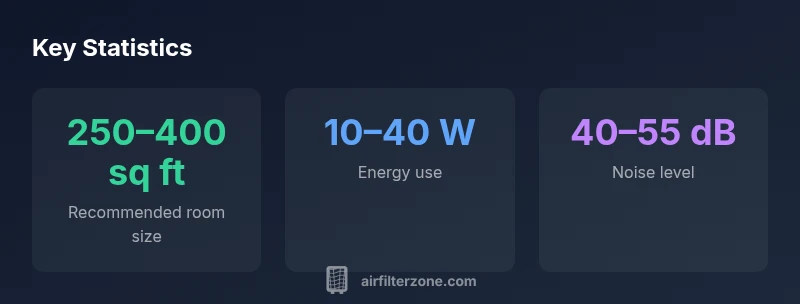
When evaluating candidates, look for certified low or zero ozone emissions, a reasonable recommended room size, and clear maintenance guidelines. Consider whether you want a pure ionizer, a combined unit with activated carbon, or a purifier that can operate effectively alongside a HEPA filter. Our buying checklist emphasizes energy use, noise levels, and the availability of replacement media. The ionic air filter review suggests prioritizing models with third-party safety validations and straightforward replacement parts for long-term reliability.
Practical Setups: Best Practices for Integration with Other Filtration
To maximize air quality gains, you should not rely on a single device. Use an ionic filter as a supplementary purifier in moderately sized rooms, paired with a dedicated HEPA purifier or carbon filter where allergens or VOCs are concerns. Position the unit to optimize airflow toward typically occupied areas and ensure you have adequate ventilation to avoid stale air. Regularly monitor odor levels and particle counts, and adjust placement or filtration stacks as needed.
Common Misconceptions About Ionic Filtration
A frequent misconception is that ionic devices alone will instantly purify all air. Reality is more nuanced: ions can help cluster particles but do not guarantee complete removal without a mechanical filter. Some claims imply 100% efficacy, which is seldom accurate. The ionic air filter review encourages homeowners to view these devices as part of a layered approach to filtration, alongside HEPA and carbon media for best results.
What's Good
- Near-silent operation in typical rooms
- Compact, affordable options in small footprints
- Low ongoing energy use relative to some purifier types
- Simple maintenance with minimal filter replacements
What's Bad
- Inconsistent PM removal without a mechanical filter stage
- Ozone emission risks with older/cheaper units
- Odor and VOC removal are often limited and time-dependent
- Limited coverage area vs. room size
Ionic air filters are a viable supplementary option for quiet odor control in small to medium rooms, not a complete replacement for mechanical filtration.
For most homes, pairing an ionic filter with a HEPA unit yields better overall air quality. They excel in silent operation and simple maintenance but should not be relied upon as the sole purifier for allergy-prone environments.
FAQ
What is an ionic air filter and how does it work?
An ionic air filter uses charged ions to attract particles so they cluster and settle out of the airstream. In practice, ionic devices often perform best when paired with a mechanical filter like a HEPA unit. They are generally quiet, but their particle removal alone may be incomplete without a dedicated filtration stage.
Ionic air filters use ions to help particles cluster and drop from the air. They’re mostly quiet, but you may still want a HEPA unit for strong allergen control.
Are ionic air filters effective for removing PM2.5?
Ionic devices can reduce some fine particles in the air, but they often don’t match the removal rates of HEPA purifiers for PM2.5. They work best when used with a proper filtration stack that includes a mechanical filter.
They can help with fine particles, but they’re not as effective as HEPA purifiers for PM2.5 when used alone.
Do ionic air filters produce ozone?
Some ionic devices can emit trace amounts of ozone, especially older or cheaper units. Look for ozone-free certifications or low-emission claims and prioritize certified products.
Some ionizers can release a little ozone; choose models with low or zero ozone emissions.
Can I use an ionic filter with my existing HEPA purifier?
Yes, many households run an ionic filter alongside a HEPA purifier. This approach can enhance odor control and silent operation while preserving strong particle removal from HEPA.
Yes—pair an ionic filter with a HEPA purifier for better overall air quality.
Where should I place an ionic filter for best results?
Position the unit to optimize airflow toward occupied zones and maintain good room circulation. Avoid placing it in corners where airflow is stagnant and ensure it’s clear of obstructions.
Place it where it can move air toward the people most often in the room and keep vents clear.
Are ionic filters a good choice for allergy sufferers?
For severe allergies, rely primarily on a high-quality HEPA purifier. Ionic filters can contribute to odor control and comfort, but should be part of a multi-layer filtration strategy.
If allergies are severe, use a HEPA purifier first; ionic filters can help as a secondary layer.
Quick Summary
- Use ionic filters as a supplement to mechanical filtration
- Match device size to room and ventilation
- Check ozone certifications before buying
- Pair with HEPA or activated carbon for best results
- Budget for media replacements and maintenance