Does an Air Purifier Need to Be in the Middle of the Room? Practical Placement Guide
Discover where to place your air purifier for optimal airflow, quick pollutant removal, and cleaner indoor air. Practical tips, room-by-room guidance, and testing steps from Air Filter Zone.


Does a purifier need to sit in the middle of the room? Not strictly, but placement that favors unrestricted intake and effective outlet flow will shorten the time to clean air. In most spaces, a central or moderately central spot works best, away from walls and obstructions. Orientation matters: point the outlet to direct air across the room and avoid trapping air behind furniture.
Does Placement Really Matter?
Air movement is the key to how quickly your purifier cleans air. While you can operate a purifier from many locations, placement that favors unrestricted intake and effective outlet flow will shorten the time it takes to reach clean air. According to Air Filter Zone, proper placement can significantly improve how fast pollutants are captured, especially in rooms with heavy furniture or limited open space. The general rule is to maximize intake from a broad area and minimize obstructions rather than insisting on the exact middle position. In practice, aim for a spot where air can move across the room rather than being trapped behind a sofa or between a wall and a desk. Additionally, consider how people use the space; a central location in a living room often balances purification with visibility and accessibility. If you have multiple furniture elevations or shelves, try a position that encourages air to flow over and around them instead of stacking clean air in a dead corner.
How Air Flows in a Typical Living Room
Most living rooms have mixed air patterns due to doors, windows, and furniture. Warm or cool air from HVAC vents creates gentle currents, while people and pets stir the air. An air purifier pulls in air from its surroundings and pushes cleaned air back out, creating a circulation loop. The most efficient setups promote cross-circulation: air moving from one end of the room toward the purifier, then exiting into open space to mix with the rest of the room. In practice, placing the unit near an open path between seating and the opposite wall often achieves a steady turnover. The result is faster removal of particulates in common living areas, especially when the purifier has a higher CADR that matches the room size.
Center vs. Perimeter: Myths and Realities
Many owners instinctively place purifiers in the center, assuming it guarantees even purification. In reality, proximity to air sources and available clearance matter more than center placement. A purifier near a corridor, doorway, or kitchen can capture incoming pollutants more quickly. The key is avoiding blockages on the intake and ensuring the outlet air can disperse across the room. While a central spot is convenient and often visually pleasing, you should prioritize paths that allow air to travel uninterrupted from intake to outlet.
Small Rooms: Bedrooms and Home Offices
Smaller rooms require less air volume to clean, but placement still matters. In a bedroom, place the purifier where it can clear rising dust from bedding or clothing, away from direct humidity and moisture sources, and off the floor if possible to avoid obstruction by rugs. In a home office, near the desk but not directly behind you helps air reach you as you work. If you share the room with a pet, position it to reduce pet dander exposure without causing direct airflow toward your face while sleeping or working.
Open Plan and Large Rooms
Open plan spaces benefit from placing purifiers near the center of activity zones or where traffic patterns bring air into the unit. If it sits in a corner, air might be trapped by walls; central placement or along a main walkway can maintain air turnover. For very large rooms, consider more than one purifier or a single unit with a larger CADR. When possible, place purifiers where you spend the most time and where air can circulate toward frequently used seating areas.
Windows, Doors, and Drafts
Drafts from open windows can drastically affect performance. If a window is open, place the purifier to draw air from the indoor space rather than fighting a strong draft; closing the window temporarily while testing can help you compare results. Avoid spots where door swings block intake or outlet flow. If you must place near a window, ensure the unit sits away from direct gusts and can still draw air from the room.
How to Test Placement: Quick Field Test
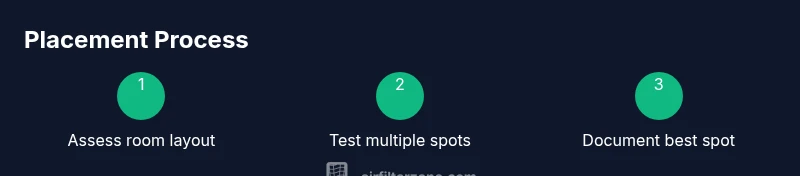
Begin by running the purifier at a fixed speed and using visible indicators (dust in the air, a simple smoke source, or a CO2 meter if available). Observe where the air clears most slowly and where it clears fastest; relocate the unit to the spot that shows the fastest decrease in particulates. Record time-to-clear for a baseline, then test alternative spots. This practical approach helps you quantify improvement without relying on assumptions.
Step-by-Step Placement Checklist
- Define the main activity zones in the room and identify paths air would naturally follow.
- Ensure at least moderate clearance around the purifier for both intake and exhaust.
- Avoid placing the unit behind large furniture or in cramped corners.
- Test at different heights (floor level vs elevated on a stand) to see which clears air faster.
- Re-test after moving to verify sustained improvement and document the best spot.
Noise, Heat, and Safety Considerations
Consider noise and heat when choosing where to place the purifier. A unit that runs quietly near a sleeping area will improve comfort and adherence to using the device regularly. Do not place purifiers near sources of heat or moisture, and avoid areas where cords create tripping hazards. Proper clearance also reduces the risk of tipping or accidental contact with children or pets.
Maintenance and Reassessment Scheduling
Air purification effectiveness can change with season, room usage, and furniture rearrangements. Reassess placement every few months or after major changes (new furniture, renovations, new inhabitants). Regular cleaning and filter replacement should be aligned with the manufacturer’s schedule to maintain performance. This ongoing check ensures you keep the best-positioned unit for your space.
Real-World Scenarios: Case Studies
In a busy open-plan living room, a purifier placed near the seating area and away from direct door drafts produced a faster perceived improvement in air clarity during daily activities. In a small bedroom, placing the purifier on a stand about a foot from the bed reduced pillowcase and sheet dust by morning. A home office with a desk and computer generated heat and dust; near-field placement to capture dust around the keyboard and monitor helped maintain a cleaner breathing zone. These cases illustrate that small tweaks in placement can yield noticeable benefits.
Quick Reference Checklist for Placement
- Prioritize unblocked intake and a clear path for exhaust air.
- Keep the unit a reasonable distance from walls and large furniture.
- Align placement with your room’s traffic patterns for best crossflow.
- Re-test after changes to confirm improvements.
- Maintain regular filter replacement and cleaning as per the manufacturer’s guidelines.
Tools & Materials
- Air purifier unit(Ensure it is functioning before testing placements)
- Power outlet(s)(Accessible outlet near proposed spot; avoid overreliance on extension cords)
- Measuring tape(For documenting distances to walls and furniture)
- Room layout map or graph paper(Mark doors, vents, and furniture to plan paths)
- Marker or notepad(Record tested positions and times to reach a clean-air benchmark)
- Optional indicators (smoke source, CO2 meter)(Helps visualize air turnover during tests)
- Cord management clips(Keep cords organized to reduce tripping hazards)
Steps
Estimated time: 15-30 minutes
- 1
Measure room and mark zones
Measure the room dimensions and identify high-traffic zones and potential air paths. Mark several candidate spots on the layout that keep air moving freely without hitting furniture or walls.
Tip: Use the measuring tape to note distances from walls; avoid corners where air can stagnate. - 2
Check clearance and outlets
Ensure each candidate spot has enough clearance around the purifier for intake and exhaust. Verify nearby outlets and avoid blocking cords with furniture or rugs.
Tip: If you must use an outlet behind furniture, consider a short extension cord rated for the device and keep it behind the unit. - 3
Place at a first-choice spot
Move the purifier to the first-choice location and plug it in. Note how the air feels in the room and observe any drafts from windows or doors.
Tip: Record initial observations on a quick checklist so you can compare later placements. - 4
Run a baseline test
With the purifier on a fixed setting, observe how quickly visible dust clears from the air and note any persistent zones where air seems slow to improve.
Tip: Allow 10–15 minutes for initial clearance, then consider moving if you see slow turnover in a portion of the room. - 5
Try a secondary spot
Relocate the purifier to a second candidate spot and repeat the test, comparing the time to reach a clean-air benchmark to the first spot.
Tip: Choose spots that are slightly different in elevation (e.g., ground level vs. a stand) to see how height affects airflow. - 6
Document the best spot
Select the location that delivers faster air turnover and fewer stagnant zones. Document the final position and why it performed best.
Tip: Create a simple map showing the chosen spot and the reasoning for future reference during rearrangements.
FAQ
Does placement matter for purifier effectiveness?
Yes. Placement affects how quickly air moves through the unit and how effectively pollutants are captured. The best spot often balances air intake with unobstructed exhaust toward living areas.
Yes. Placement matters because air needs to move through the purifier and spread clean air efficiently through the room.
Should I always place the purifier in the middle of the room?
Not always. The most important factor is unobstructed airflow. A near-center location often works well, but spots near traffic paths or air sources can perform better.
Not always. The key is keeping air flowing freely, not necessarily exactly in the middle.
Can I use more than one purifier in a large space?
Yes. In large or open-plan rooms, multiple purifiers can create uniform air turnover and prevent dead zones. Place them so their cleaner air zones overlap slightly.
Yes. In large spaces, multiple purifiers help maintain consistent air quality.
Is it better to place a purifier near a window or a doorway?
It depends on drafts. Avoid direct blasts from window drafts into the intake; position to capture indoor pollutants while not fighting gusts.
Avoid direct drafts. Place where indoor air is collected effectively without battling the wind.
Will moving the purifier change energy use?
Placement itself doesn’t drastically alter energy use; turnover rate and CADR match the room size influence efficiency. Test different spots to find the best balance.
Placement affects how efficiently the air is turned over, which can influence perceived energy use due to different running times.
How often should I reassess placement?
Reassess after substantial changes to the room—furniture rearrangement, new occupants, or renovations. A quick test can confirm whether the current spot still performs best.
Reassess after big changes to your space to make sure the purifier still performs well.
Watch Video
Quick Summary
- Maximize airflow by placing the purifier where air can move freely.
- Center is a common starting point, but not always the best; test different spots.
- Use quick field tests to verify placement improves turnover time.
- Maintain clearances and avoid blocking the intake or exhaust.