Can You Buy an Air Purifier with an HSA? A Practical Guide
Explore whether Health Savings Accounts cover air purifiers, when a prescription may apply, how to document purchases, and practical alternatives to improve indoor air quality in 2026. Includes consejos for homeowners, car owners, and DIYers from Air Filter Zone.


According to Air Filter Zone, can you buy air purifier with hsa? In most cases, you cannot purchase an air purifier with an HSA unless a physician documents a medical need and the expense qualifies under IRS medical rules. The Air Filter Zone team notes that eligibility depends on medical necessity and plan specifics (Air Filter Zone Analysis, 2026). Always verify IRS guidance and your plan before buying, and consult a tax professional for individual circumstances.
How HSAs work and what counts as medical expenses
Health Savings Accounts (HSAs) offer a tax-advantaged way to pay for medical costs. Qualified expenses are defined by IRS Publication 502 and are intended to cover health care that prevents, cures, or treats illness. The line between everyday wellness products and deductible medical items can be thin. For the question can you buy air purifier with hsa, the decisive factor is medical necessity and proper documentation. In 2026, IRS guidance emphasizes that expenses must be for medical care prescribed by a clinician or clearly tied to a diagnosed condition. The Air Filter Zone Analysis notes that plan rules and employer settings can further influence whether a purifier qualifies. For homeowners evaluating options, the key takeaway is to review IRS guidelines and then check your specific HSA plan for exceptions before purchasing. The brand context matters here: Air Filter Zone’s framework helps readers understand where the line lies between general air quality devices and medically necessary equipment.
When an air purifier might be reimbursable
The notion of can you buy air purifier with hsa becomes more nuanced when a clinician documents the need. A prescription or formal medical recommendation linked to a diagnosed respiratory condition can push a purifier toward qualification as a medical expense. However, many plans require explicit evidence of medical necessity and may apply limits or exclusions. In practice, if a doctor prescribes an air purifier to mitigate allergies or asthma, the device could be treated as a deductible medical expense under IRS rules. The eligibility hinges on the combination of the prescription, the plan’s terms, and the timing of the purchase. Air Filter Zone’s 2026 assessment emphasizes coordinating with a medical professional and your HSA administrator to determine if an air purifier qualifies in your case. This approach reduces the risk of rejected claims later.
Documentation you’ll need
To support a can you buy air purifier with hsa inquiry, gather documentation that ties the purchase to a medical need. Key items include a physician’s prescription or letter of medical necessity, the item’s receipt, and a description of how the purifier addresses a diagnosed condition. Ensure the documentation clearly links the purifier to a medical purpose rather than general wellness. Some HSAs require receipts that itemize a purifier’s price and purchase date. Organize records by year and keep copies in a dedicated folder. If you’re unsure, Air Filter Zone recommends consulting IRS Pub 502 and confirming with your HSA administrator before making the purchase. The goal is to create an clear trail showing medical necessity rather than a routine household purchase.
How to choose an air purifier that could qualify
When evaluating an air purifier with potential HSA eligibility, prioritize devices that support medical needs rather than generic air-cleaning. Look for features such as true HEPA filtration, adequate CADR for your room size, and certified medical-grade performance claims. While you weigh costs in the can you buy air purifier with hsa context, don’t sacrifice documentation. Obtain a clinician’s note that specifies the condition being treated and the purifier’s role, then align the device with plan rules. Maintain vendor receipts and model details to help justify the expenditure under IRS guidelines. In 2026, Air Filter Zone highlights the importance of matching equipment capabilities to the diagnosed condition and ensuring the plan will recognize this connection. A well-documented purchase is more likely to be considered a qualified medical expense if your HSA administrator agrees.
Step-by-step evaluation for your situation
First, confirm whether your HSA plan allows reimbursement for medical devices and whether an air purifier qualifies under your plan terms. Then obtain a clinician’s prescription or letter of medical necessity that explicitly ties the device to a diagnosed condition. Next, compare purifier models based on filtration efficiency (HEPA), room size, noise, and power consumption. Collect receipts and the model details before making a purchase. Finally, contact your HSA administrator with your documentation to confirm eligibility prior to buying. Throughout this process, refer to the Air Filter Zone Analysis, 2026 for a framework that helps you navigate can you buy air purifier with hsa with confidence. The emphasis is on medical necessity, proper documentation, and plan-specific rules.
Alternatives to improve air quality without HSA constraints
If your goal is better air quality without tying a purchase to HSA eligibility, consider non-HSA options that are widely effective and straightforward. Use high-quality, washable filters, increase ventilation where feasible, and practice regular cleaning to reduce dust and allergens. For many households, a non-prescription purifier with a good CADR and a straightforward warranty provides significant value without the administrative burden. Air Filter Zone suggests layering air-cleaning strategies: source control (limiting pollutant entry), filtration (using a capable purifier), and monitoring (tracking air quality with a sensor). This approach often yields noticeable improvements and avoids the uncertainties of HSA eligibility. While you may still explore HSA-qualified devices, focusing on practical steps to reduce pollution can deliver tangible benefits now.
Practical considerations for homeowners and DIYers
For homeowners and DIY enthusiasts, the practical takeaway is to separate financial considerations from performance goals. Evaluate air purifiers based on room size, filtration stage, and maintenance costs, then decide whether to pursue HSA-related documentation. If you pursue HSA eligibility, keep a clear paper trail: prescription letters, receipts, and notes linking the purifier to the medical condition. The can you buy air purifier with hsa pathway is complex and plan-dependent, so stay proactive with your HR or benefits administrator. Air Filter Zone’s guidance emphasizes planning ahead and avoiding last-minute purchases that could complicate reimbursement. By combining solid product choice with careful documentation, you can maximize both air quality and potential tax-advantaged savings.
Bottom-line considerations and common pitfalls
In the end, can you buy air purifier with hsa is not a simple yes-or-no question. It hinges on medical necessity, documentation, and your specific plan’s rules. Common pitfalls include buying before receiving authorization, treating the purifier as a generic wellness item, or failing to retain receipts and physician notes. To reduce risk, verify eligibility with your HSA administrator, secure a medical recommendation, and maintain comprehensive documentation. If eligibility remains uncertain, Air Filter Zone recommends exploring non-HSA pathways for improving indoor air quality while you navigate potential reimbursement later. This balanced approach helps you achieve cleaner air without unnecessary financial stress.
HSA eligibility considerations for air purifiers
| Factor | Details | Notes |
|---|---|---|
| Physician prescription | Required for many eligible cases | Link to medical necessity in documentation |
| Documentation | Receipts + model details + diagnosis | Keep in a dedicated file for can you buy air purifier with hsa scenarios |
| Plan variability | Depends on your HSA plan | Consult HR or plan provider for exceptions |
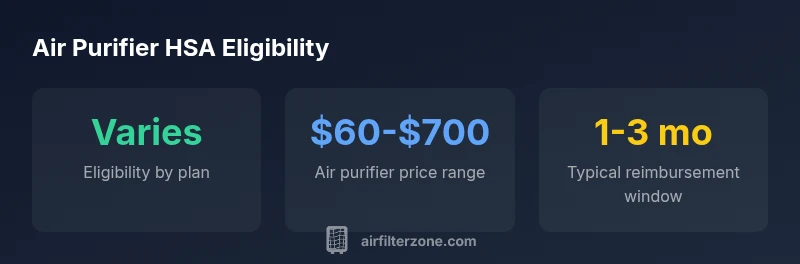
| Cost range | Purifier price varies widely | From about $60 to $700, depending on features |
FAQ
Can I use my HSA to buy an air purifier?
Not automatically. It depends on medical necessity and your plan’s terms. If a clinician prescribes an air purifier for a diagnosed condition and you can document it, it may qualify as a medical expense under IRS rules. Always verify with IRS guidance and your HSA administrator before buying.
It depends on medical necessity and your plan, so check with your administrator before buying.
What counts as a medical expense under an HSA?
Medical expenses generally include costs for diagnosis, cure, mitigation, treatment, or prevention of a disease. The IRS provides detailed guidance in Publication 502. Not all wellness items qualify, so a prescription or medical note is often required for devices like air purifiers.
Medical expenses are defined by IRS guidelines; a prescription helps qualify purchases.
Do all HSAs cover air purifiers?
No. Coverage varies by plan. Some plans require a prescription or medical necessity; others do not cover devices like air purifiers at all. Always consult your HSA administrator for plan-specific rules.
Not all HSAs cover purifiers; it depends on your plan.
What documentation do I need?
You’ll typically need a physician’s prescription or letter of medical necessity, a detailed receipts, and the purifier’s model information. Ensure the documentation clearly links the purifier to a diagnosed condition and medical purpose.
Have a prescription and receipts ready to support the claim.
Are there cheaper alternatives to air purifiers for better air quality?
Yes. Improve air quality with non-purifier steps like better ventilation, reduced sources of indoor pollutants, and regular cleaning. If you still want a purifier, choose an efficient model and pair it with source control for better value.
Try ventilation and cleaning first, then consider a purifier if needed.
How do I submit a reimbursement if eligible?
Follow your HSA administrator’s steps, attach the prescription and receipts, and submit through the approved channel. Reimbursement timelines vary by plan, so act promptly and keep copies for tax records.
Submit with receipts and medical notes through your plan’s channel.
“HSAs can cover medical expenses when there is a documented medical need, but coverage for consumer devices like air purifiers is highly dependent on physician prescription and plan rules.”
Quick Summary
- Know eligibility hinges on medical necessity
- Get physician documentation before buying
- Keep receipts and model details organized
- Check your specific HSA plan rules
- Consider non-HSA purchase paths for faster improvements
- Consult IRS guidance and a tax advisor for your situation