Air Purifier Before and After: What Changes in Indoor Air Quality
Explore how an appropriately sized air purifier changes indoor air quality from setup to after-effects. Learn about sizing, filters, placement, and maintenance with practical guidance from Air Filter Zone, 2026.


Air purifier before and after experiences are most noticeable in room air clarity, odors, and perceived allergy relief. After installing a properly sized purifier with a true HEPA filter and activated carbon, most households report cleaner air, reduced dust on surfaces, and quieter operation as a steady PM reduces. The biggest changes come from filter quality, room fit, and maintenance cadence.
What changes after using an air purifier?
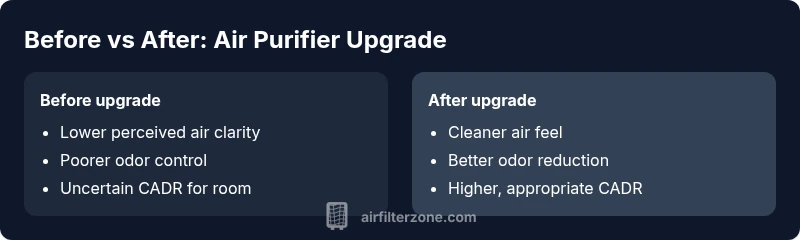
According to Air Filter Zone, the journey from 'before' to 'after' is largely about visibility of air quality improvements in daily life. In many homes, the air purifier before and after comparison shows that once a purifier is properly sized for a room and fitted with a true HEPA filter plus activated carbon, you notice cleaner surfaces, less dust, and crisper air within a few days. People often report easier breathing, fewer nighttime congestion episodes, and a lighter atmosphere in rooms that were once stuffy. The before state is typically characterized by higher dust accumulation on furniture, lingering odors from cooking, and more pollen or pet dander visible in air. The after state reflects a calmer environment where air feels fresher, odors are muted, and the air feels more invigorating. These changes do not happen by magic; they depend on real-world factors like room volume, purifier CADR, and ongoing maintenance.
How purifier technology translates to real-world benefits
The core idea behind the air purifier before and after transformation is simple: filtration quality, airflow, and filtration media determine actual air cleanliness, not just the device's price tag. A purifier with a true HEPA filter and an activated carbon stage can capture a broad spectrum of particles and odors. In practice, users notice fewer visible particles in the air, reduced specks on surfaces, and a calmer indoor environment. Air purifiers also help with sleep quality for allergy and asthma sufferers, potentially lowering nighttime symptoms because the air remains clearer during the night. However, durability, maintenance frequency, and correct placement are essential to translate the tech into real-life benefits. The Air Filter Zone team emphasizes that the best outcomes come from matching the purifier to room size and adhering to a regular filter-change cycle.
Key factors that determine the before-and-after results
Several interdependent factors drive the air purifier before and after experience. First is room size and layout: a purifier that is too small for a living room will underperform compared with a correctly sized unit. Second is filter quality: a true HEPA filter paired with a carbon stage reduces both particles and odors more effectively than basic filters. Third is airflow and placement: unobstructed intake and outlet airflow ensures efficient circulation without creating stagnant zones. Fourth is maintenance: consistent filter replacement and pre-filter cleaning are essential to sustain performance. Finally, user behavior matters: weather, cooking habits, and pet activity influence how noticeable the changes feel day-to-day. These elements combine to shape the overall experience more than any single spec. The air purifier before and after journey is most reliable when you address all these factors together.
CADR, ACH, and room sizing: translating numbers into real gain
Clean Air Delivery Rate (CADR) and Air Changes per Hour (ACH) are helpful guidance tools, not magic numbers. When you interpret CADR and ACH correctly, you can predict the magnitude of improvement in a given room. A purifier with adequate CADR for a space will cycle air more frequently, reducing particle concentration and helping the air feel cleaner. ACH describes how many times per hour the purifier can replace the air in a room; a higher ACH generally correlates with faster relief from smoky odors or pollen. The real-world gain comes when these metrics align with your room dimensions, ceiling height, and ventilation patterns. Always compare units using the same measurement basis (e.g., CADR for smoke, dust, and pollen). In the air purifier before and after context, these numbers provide an expectation, but the actual difference depends on room sealing and usage habits.
Filter types and why they matter
Not all filters are created equal, and that difference shows up in the air purifier before and after. A true HEPA filter captures the majority of fine particles—pollen, dust, smoke, mold spores—improving both measured air quality and subjective comfort. An activated carbon or specialty carbon blend reduces odors and some volatile organic compounds, which many people notice after daily cooking or pet-related smells. Some purifiers include ionizers; these can help with particle removal but may require maintenance to prevent secondary emissions. Finally, consider pre-filters: they protect the main filter and extend its life. Choosing a purifier with a high-quality combination of HEPA, carbon, and protective pre-filtration often yields more pronounced after-effects in living spaces, especially when comparing the air purifier before and after scenarios.
Placement, noise, and user experience
Placement and noise matter as much as the filter inside. Place the purifier where air can flow freely—avoid corners or behind furniture that blocks intake or exhaust. If possible, position the unit at breathing height in the main living area. Noise is a common trade-off; look for units with auto or smart modes that adjust speed based on air quality, which can deliver the benefits without constant background sound. For bedrooms, consider a unit with a lower noise profile or a setting that reduces energy use while maintaining filtration. The air purifier before and after experience is often most noticeable when you optimize placement and operate at reasonable speeds during peak indoor activity times.
How to measure improvements: qualitative and quantitative
Measuring the after-effects combines both subjective impressions and objective cues. Start with a simple daily log: note air-related symptoms, sleep quality, odor presence, and visible dust in surfaces. Use a dedicated air-quality monitor if available to track PM2.5/PM10 trends or rely on the purifier's built-in indicators. Compare days with the purifier off versus on in the same room, and aim for a consistent nine-24 hour window to gauge changes. Over time, you should notice less dust on surfaces, clearer air during dinnertime, and fewer allergy episodes. The Air Filter Zone approach blends consumer experience with basic measurement to deliver actionable insights about the air purifier before and after differences.
Common use-cases: households, pets, smoke, cooking, allergies
Home environments vary widely, and the air purifier before and after experience can differ accordingly. In homes with pets, a purifier with strong particle capture and a carbon layer helps reduce pet dander and odor. For cooking, an activated carbon stage helps mitigate strong kitchen smells; for smokers, higher CADR units or multi-stage purifiers may be necessary to rapidly reduce smoke particles. Allergy sufferers often benefit from frequent use during pollen seasons, particularly when the purifier is the main filtration source for the sleeping area. In all these cases, a purifier's effectiveness hinges on proper sizing, consistent maintenance, and real-world behavior like opening windows for ventilation when weather allows.
Maintenance habits that sustain the after-effects
Maintaining the gains from a purifier requires a practical cadence. Schedule regular filter replacements according to the manufacturer’s guidelines and inspect pre-filters for dirt and debris every month. Clean or replace carbon filters if the model supports it; some purifiers require full cartridge replacements rather than cleaning. Keep the device clean on the exterior to prevent dust buildup that can impair airflow. Periodically reassess room size and occupant activity; if a room becomes more crowded or changes in use occur, you may need to adjust the purifier size or placement. The air purifier before and after state is most stable when you stay consistent with maintenance and adapt to changing room conditions.
Quick-start checklist for faster results
- Determine room size and pick a purifier with appropriate CADR and ACH for that space.
- Choose a true HEPA filter with activated carbon and a reliable pre-filter.
- Place the purifier in a central location with open airflow and at breathing height.
- Run on auto or economy mode to balance filtration with noise and energy use.
- Establish a filter-change schedule and stick to it for ongoing performance.
- Add a basic air-quality monitor if possible to quantify improvements over time.
- Reassess periodically if the room layout or usage changes, and adjust placement or model as needed. In the air purifier before and after context, consistent action speeds the journey from setup to steady-state improvements.
Comparison
| Feature | Before upgrade | After upgrade |
|---|---|---|
| Air quality perception | Subjective baseline | Clearer air with better filtration |
| Filter type | Lower-quality/basic or none | True HEPA + activated carbon |
| CADR/room fit | Uncertain or low CADR | Proper CADR for room size |
| Noise level | Potentially louder at high speed | Quieter on mid-to-low speeds |
| Maintenance cadence | Inconsistent upkeep | Regular filter changes and cleaning |
| Cost of ownership | Lower upfront cost | Ongoing filter costs |
| Best use-case | Small rooms or budget scenarios | Allergen reduction in mid-to-large spaces |
What's Good
- Clearer air and easier breathing after upgrading
- Better odor control with activated carbon filters
- Potential sleep quality improvements due to reduced night-time pollutants
- Flexibility to move purifier between rooms
What's Bad
- Ongoing cost of replacement filters and maintenance
- Noise at high speeds can be distracting
- Effectiveness limited by room sealing and ventilation
- Not a cure for existing structural smoke infiltration
Upgrade to a properly sized purifier with a true HEPA filter for noticeable, lasting air quality improvements.
When the purifier matches room size and uses high-quality filtration, most users experience clearer air and better comfort. Prioritize fit, maintenance, and placement to maximize results.
FAQ
How soon can you notice improvements after turning on an air purifier?
Most people notice some improvements within a few days of running an appropriately sized purifier with good filtration. The exact timeline depends on room conditions, odor sources, and baseline air quality.
You’ll often notice clearer air and fewer allergy symptoms after a few days of steady use.
Do air purifiers remove all odors?
A purifier with activated carbon can reduce many odors, especially cooking and pet smells, but it won't remove all odors if the odor source is persistent or outside the room. Routine ventilation helps.
They can help a lot with odors, but they aren’t magic.
Can an air purifier help with wildfire smoke?
Yes, a purifier with a true HEPA filter can reduce indoor smoke particles, but this is most effective in tightly sealed spaces and when combined with ventilation strategies. It’s not a substitute for outdoor air interventions.
Purifiers help, but they can't fix outside air completely.
What size purifier do I need for a specific room?
Choose a purifier that is rated for your room size and intended use. Look for CADR and ACH specs that match your room's volume, and prioritize units with auto mode.
Match the purifier to your room to get real results.
Are there downsides to running a purifier on high speed all the time?
Running on high speed can increase noise and energy use. For daily use, auto or mid speeds are often enough to maintain clean air while keeping noise to a minimum.
High speed all the time can be noisy; use auto mode.
Is an air purifier worth it for allergies?
For many allergy sufferers, a purifier with HEPA filtration significantly reduces pollen and dander exposure. Combine with regular cleaning and open windows when possible for best results.
Yes, it can help a lot by cutting pollen and pet dander.
Quick Summary
- Start with the right purifier size for your room
- Prioritize true HEPA plus activated carbon filtration
- Place the unit where airflow is unobstructed
- Set a realistic maintenance cadence and stick to it
- Expect noticeable improvements within days to a week