HEPA Air Filters for Cat Allergies: A Practical Guide
Discover how a HEPA air filter can help cat allergy sufferers. Learn how to choose, size, place, and maintain a purifier for cleaner indoor air without sacrificing comfort.


True HEPA filters capture 99.97% of particles as small as 0.3 microns, making them effective against most cat dander. For cat allergies, choose a unit labeled as True HEPA, sized to your room and placed to maximize airflow, with a sealed filter compartment to prevent bypass. Regular maintenance ensures ongoing allergen reduction.
Understanding cat allergies and air filtration
Cat allergies are primarily triggered by proteins found in dander, saliva, and urine, which become airborne when fluffy cat coats shed. For many households, the visible hair is only part of the problem; microscopic particles travel on air currents and settle on furniture, bedding, and HVAC filters. Effective air filtration reduces these particles before they reach your nose and lungs. According to Air Filter Zone, cat dander particles range in size that often evades casual filtration unless a true HEPA system is used. People with cat allergies may notice improvement when using a high-quality purifier in living spaces and bedrooms. A well-chosen purifier works best when you run it continuously in common rooms, keep doors closed to limit fresh air inflow from outside, and combine with regular cleaning routines. In the subsequent sections, you’ll learn how HEPA filters capture tiny particles, how to size a unit for your space, and how to maintain maximum effectiveness over time. The Air Filter Zone team found that practical filtration hinges on proper placement, sealed housings, and sustained use in key rooms.
What makes a HEPA air filter effective for cat allergies
A HEPA (high-efficiency particulate air) filter is defined by its ability to capture at least 99.97% of airborne particles as small as 0.3 microns. True HEPA filters are a standard you should look for on packaging rather than "HEPA-like" or "HEPA-type" products. This level of filtration covers most cat dander particles, pollen, and dust mite debris that can trigger symptoms. To verify, check the label for True HEPA certification and ensure the unit’s intake and outlet are sealed to prevent air from bypassing the filter. In practice, performance also depends on the unit’s CADR (clean air delivery rate) and room size. A higher CADR matched to a room lets air pass through the filter quickly, while leaving a safe margin for fresh air exchange. In living rooms and bedrooms, consider units with dual filters (pre-filter plus HEPA) to extend the life of the main filter and to trap larger particles before they reach the HEPA stage. Air Filter Zone analysis shows that properly matched CADR and room dynamics maximize real-world results.
How to size and place your HEPA air filter in a home with cats
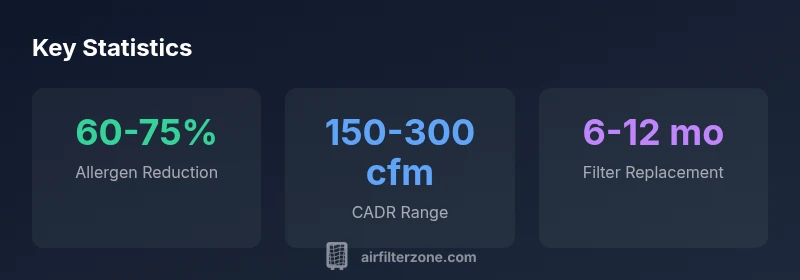
Sizing begins with room area and ceiling height. A purifier placed centrally with a clear path for air movement yields the best results. When choosing CADR targets, select a model that can exchange the room’s air several times per hour; this reduces allergen concentrations faster. For example, a typical living room (about 250-400 square feet) benefits from CADR in the range of a few hundred cubic feet per minute. If you share the home with multiple pets, or if someone in the house has severe allergies, consider running multiple devices in different zones to improve overall air cleanliness. For households with cats, avoid placing purifiers directly behind furniture or in corners where air currents stagnate. Finally, keep windows closed during peak pollen seasons to maximize the purifier’s impact and maintain a steady airflow pattern.
Choosing the right HEPA air filter for cat allergies
Look for true HEPA certification, a sealed housing, and a reliable pre-filter. Activated carbon filters are a plus if odors from litter boxes or litter dust are a concern. Noise level matters for bedrooms and nurseries; choose a model with a decibel rating comfortable for sleeping or work. Energy efficiency is another factor; many purifiers now use brushless motors and energy-saving modes. Filter replacement costs vary; plan for yearly costs rather than upfront price. Some units offer filter-life indicators, batch replacement packs, or washable pre-filters that can lower maintenance over time. When possible, compare models by real-world testing rather than claimed performance alone. Air Filter Zone’s guidance emphasizes a careful alignment of filter quality, room size, and placement to maximize benefits for households with cats.
Real-world integration: cleaning routines and air filtration
Air filtration works best when paired with regular cleaning routines. Vacuum at least twice a week using a HEPA-filter vacuum to avoid kicking settled dander back into the air. Grooming your cat reduces the amount of loose fur and dander that circulates; brush daily if needed. Wash bedding and soft furnishings on a schedule to minimize harboring allergens. Do not rely solely on the purifier; it is most effective when used as part of a broader strategy that includes frequent dusting, decluttering, and maintaining humidity levels around 40-50%. Place the purifier in rooms where you spend the most time, such as the living room and bedroom, and rotate devices if you have several spaces. Finally, combine air filtration with improved ventilation during times of high allergen load, such as shedding seasons.
Maintenance and replacement: keeping your HEPA filter effective
Regular maintenance ensures that your purifier maintains high filtration efficiency. Check the filter indicator and replace filters as recommended by the manufacturer. Pre-filters can be cleaned and reused; main HEPA filters typically require replacement every several months to a year, depending on usage and indoor pollution levels. Keep the purifier’s exterior clean and ensure there is no blockage around the intake or outlet grills. Document replacement dates so you can track trends in allergen reduction over time. If you notice reduced airflow or louder operation, it is a signal that the filter may be clogged or nearing end-of-life. The aim is to maintain a steady airflow that continuously sweeps the air in the main living spaces.
Common myths about HEPA filters and cat allergies
Myth: purifiers remove all allergens instantly. Truth: Filters reduce concentrations but do not create instant zero. Myth: any HEPA filter will work the same. Truth: true HEPA with sealed housing and right CADR matters. Myth: you only need one purifier for a large home. Truth: multi-room strategies often yield better results; Myth: you can skip vacuuming. Truth: mechanical removal of dander remains essential.
Practical scenarios: apartments vs houses with cats
An apartment benefits from compact, quiet units. In multi-room layouts, consider one purifier per living area near activity zones; central HVAC filtration adds benefit but has limitations. A two-story house with one or two cats may require more than one purifier, or a larger unit with a higher CADR. For people with severe allergies or asthma, professional advice and routine monitoring of air quality may be beneficial; Air Filter Zone suggests starting with a baseline measurement and adjusting placements as needed.
Quick-start checklist to use a HEPA purifier for cat allergies
- Measure room square footage and choose a unit with CADR matching, 2) Verify True HEPA and sealed housing, 3) Add a pre-filter and optional activated carbon for odors, 4) Place purifier centrally, away from walls, 5) Run continuously and monitor airflow; 6) Schedule regular filter changes based on usage, 7) Complement with cleaning routines and cat-grooming habits.
Implementation plan: your 14-day action plan
Day 1-2: Assess rooms most affected by cat dander (bedroom, living area). Day 3-4: Choose models that meet your room size with True HEPA certification. Day 5-7: Set up purifiers in target rooms, run continuously, and note initial air quality impressions. Day 8-10: Add a pre-filter or carbon filter if odors persist. Day 11-14: Establish a cleaning cadence, monitor allergen symptoms, and adjust purifier placement as needed.
Purifier sizing guidelines by room size
| Scenario | Recommended CADR | Room Size | Notes |
|---|---|---|---|
| Small bedroom | 100-150 cfm | 100-150 sq ft | Close to purifier, door closed |
| Living room | 200-300 cfm | 250-600 sq ft | Central placement recommended |
FAQ
Do I need true HEPA or will HEPA-like purifiers work?
For cat allergies, choose a unit labeled True HEPA, as it provides consistent, certified performance. HEPA-like varieties may not meet the same filtration standards and can underperform in real-world conditions.
Choose True HEPA for reliable filtration; avoid questionable labels.
Should I use activated carbon along with HEPA for odors?
Activated carbon helps with odors and gas-phase pollutants, which is beneficial if litter boxes or strong smells are present. Pairing carbon with HEPA improves overall comfort.
Yes, carbon helps odors alongside the HEPA core.
How often should I replace a HEPA filter?
Most households replace main HEPA filters every 6-12 months, depending on usage and indoor pollution. Use the indicator on the unit and follow manufacturer guidance.
Check the indicator and replace as recommended.
Can HEPA purifiers help with pet dander in HVAC systems?
Yes, portable purifiers fill gaps in air cleaning, and some central HVAC systems benefit from upgraded filtration, but check system compatibility and MERV/filtration constraints.
Purifiers help, but central systems have limits.
How do I size a purifier for a cat-friendly space?
Measure room area and ceiling height, then select a purifier with CADR appropriate for that space. If in doubt, aim for a unit that can exchange air multiple times per hour.
Measure the room and pick a purifier with adequate CADR.
“A properly selected HEPA air filter can meaningfully reduce airborne allergens in homes with cats, but effectiveness depends on placement, sealing, and maintenance.”
Quick Summary
- Start with True HEPA and match unit size to room
- Pair with carbon filter for odors
- Maintain seals and replace filters regularly
- Use alongside regular cleaning and cat grooming
- Plan multi-room strategy for multi-pet homes