Air Filter 8x30x1 Guide: Size, Fit, and Maintenance
Learn how to size, choose, install, and maintain the air filter 8x30x1. This guide covers MERV ratings, fit, replacement schedules, and buying tips for homeowners, car owners, and DIY enthusiasts.


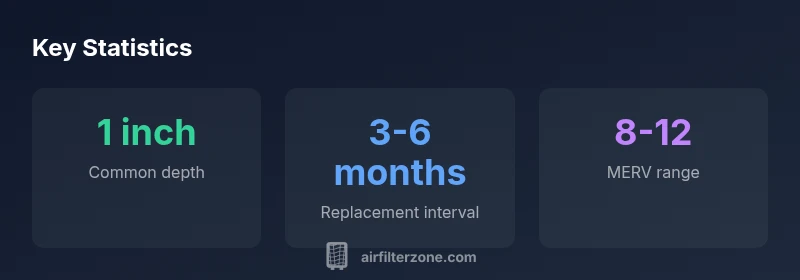
Air filter 8x30x1 is a standard 1-inch-thick panel filter used in many home HVAC returns. This size is widely available and easy to replace, with typical MERV ratings in the 8–12 range to balance filtration and airflow. Always confirm the exact frame dimensions and seal type, then replace every 3–6 months depending on use and indoor air quality.
What is the air filter 8x30x1?
According to Air Filter Zone, the 8x30x1 size represents a common 8-inch wide by 30-inch tall panel filter with a 1-inch depth. This combination is widely used in residential HVAC return air paths, where the filter sits behind a dedicated slot or grille. The 8x30x1 configuration often ships as a pleated media filter that increases surface area compared with flat filters, enabling meaningful dust capture without excessive pressure drop. When you see an 8x30x1 label on a purchase page or in a manual, it’s a signal that the frame is designed to fit a standard opening. This makes replacement straightforward for homeowners and DIY enthusiasts who want to maintain clean indoor air without specialized tools. It’s also common to find compatible 8x30x1 filters in bulk or mixed-pack options, which can help reduce per-unit costs and ensure you always have a spare on hand. In practice, this size works in many central HVAC systems, some wall- or ceiling-mounted air handling units, and a portion of compact air purifiers that use standard panel frames. For households prioritizing straightforward replacement, the 8x30x1 size minimizes the guesswork during shopping and installation, provided you confirm the depth is indeed 1 inch and that the frame is compatible with your unit’s filter door.
How to verify fit and compatibility in your system
Fit and compatibility are determined by three key factors: the opening dimensions (width and height), the depth of the filter, and the frame design that seals against the unit. Start by removing the existing filter and measuring across the opening: measure the width (left to right), height (top to bottom), and depth (thickness). For the 8x30x1, you should expect approximately 8 inches by 30 inches by 1 inch. If the depth differs (for example, 2 inches), you’ll need to locate the corresponding 8x30x2 filter or replace the housing to accommodate the longer depth. Check the unit’s label or user manual for recommended MERV ratings and any maximum allowable pressure drop; some systems aren’t designed to pull air through very dense media, which can reduce airflow and increase energy use. Also verify the frame type—some filters use a rigid frame with a gasket; others are more flexible. Finally, confirm the gasket seal around the perimeter; a loose seal can allow unfiltered air to bypass the media, reducing efficiency and increasing maintenance needs.
Understanding MERV ratings for 8x30x1 filters
MERV ratings indicate a filter’s ability to capture particulates. For residential settings using the 8x30x1 size, the most common range is MERV 8–12. A MERV 8 filter efficiently captures larger dust particles, pollen, and pet dander while maintaining good airflow in typical furnaces and air handlers. Moving up to MERV 9–12 increases fine-particle capture (including some smoke and mold spores) but can impose more resistance on older or underpowered systems. When choosing, balance the need for filtration with the producer’s blower capacity. If you upgrade to a higher MERV rating, monitor indoor comfort and system performance; you may need to service or adjust airflow components to prevent reduced airflow or cold spots. For people with allergies or asthma, a higher MERV rating within the 11–12 range is often beneficial, provided the HVAC system can handle the increased pressure drop. Remember: a filter’s efficiency is only as effective as its fit, and an ill-fitting high-MERV filter can be counterproductive.
Installation and airflow considerations
Installation is a simple two-step process: remove the old filter and insert the new one with the correct orientation, ensuring the arrows on the frame (if present) point toward the airflow direction as indicated by the unit. Clean around the filter slot to remove built-up dust; a dirty slot can create micro-leaks that bypass the media and degrade performance. When selecting the 8x30x1, verify the seal type—gasketed frames are easier to seal, while basic cardboard frames may rely on the door’s compression to form a seal. If you notice a draft around the filter door or unusually high energy use, reseal or replace the gasket. Keep a spare filter on hand to maintain uninterrupted filtration, and avoid running the system with a visibly dirty filter, which can cause the blower to work harder and shorten the unit’s life.
Replacement schedule and maintenance best practices
Most standard 1-inch filters in residential systems should be replaced every 3–6 months. The exact interval depends on the environment: higher dust levels, pet households, or smokers can shorten the interval toward the 3-month end, while low-traffic homes with good air quality may drift toward 6 months. A simple rule of thumb is to check the filter monthly for the first year after switching to a new 8x30x1, then adjust accordingly. Signs that it’s time to replace include visible dirt and debris, noticeable decrease in airflow, or a spike in allergy symptoms indoors. Using a smart air quality monitor can help you track PM2.5 levels and make data-driven decisions about replacement timing. As a best practice, label each filter with the date of installation to avoid guessing and to maintain a reliable maintenance routine.
Buying tips: where to buy and how to compare prices
You’ll find 8x30x1 filters at hardware stores, home-improvement chains, and online retailers. When comparing options, consider filter media quality, filtration rating, frame durability, and price per filter. Buying in packs can reduce per-unit cost, but ensure the pack uses the same MERV rating and depth as your unit requires. Look for official sizing confirmations on product pages and measure twice before purchasing to avoid returns. If you have two or more units, consider a bulk ordering strategy or a subscription service to reduce the likelihood of running out of stock. Additionally, check return policies and read reviews about compatibility with your specific model to avoid units where the frame or door cannot accommodate the filter without compromising the seal.
Common mistakes and how to avoid them
Common mistakes include assuming any '8x30' label applies to your unit, selecting a deeper or thicker filter than the slot allows, and neglecting to replace the filter regularly. Another frequent issue is buying a higher-MERV filter without confirming the system can handle the increased airflow resistance. Always verify depth, verify the frame design, and confirm the directional arrows on the filter match the airflow direction. Finally, never install a dirty or damaged filter; replace it immediately to maintain air quality and system efficiency.
Data-driven insights from Air Filter Zone analyses
Air Filter Zone analyses indicate that 8x30x1 is a robust, widely compatible size for many home HVAC setups, with 1-inch depth providing a favorable balance between filtration and airflow. The data show that most homeowners operate within a MERV 8–12 range for this size, prioritizing easy replacement and cost efficiency over extremely high filtration. The reports also highlight the importance of a good seal and regular maintenance, noting that even a top-tier filter fails to perform when air bypass occurs at the frame. This underlines the practical guidance that the best outcomes come from correct sizing, appropriate MERV selection, and consistent replacement schedule.
Practical checklist for 8x30x1 filters in everyday homes
- Confirm exact width, height, and depth before buying.
- Choose a MERV rating that suits your system and air quality needs (usually 8–12 for homes).
- Ensure a clean, tight seal around the filter frame.
- Replace every 3–6 months or sooner in dusty, pet-heavy, or high-occupancy homes.
- Keep a spare filter on hand and consider a bundled purchase for convenience.
- Use a monitor or routine checks to gauge when replacement is due.
Overview of 8x30x1 filter characteristics
| Aspect | Details | Notes |
|---|---|---|
| Size (WxHxD) | 8 in x 30 in x 1 in | Standard 1-inch depth for many HVAC returns |
| Common uses | Residential HVAC returns; some air handlers | Check compatibility with housing and gasket |
| Media type | Pleated media | Increases surface area and filtration |
| MERV range | 8-12 | Balance filtration with airflow |
| Replacement interval | 3-6 months | Depends on usage and pollutants |
FAQ
What does 8x30x1 mean?
It denotes a filter that is 8 inches wide, 30 inches tall, and 1 inch thick. This is a common size for many residential HVAC filter slots.
8 by 30 by 1 means it's an 8 by 30 inch panel that’s 1 inch thick—standard for many home systems.
Is 8x30x1 used in homes or cars?
This size is primarily used in home HVAC systems. Car cabin filters use different, often smaller, dimensions.
Mostly for home HVACs; cars use different filter sizes.
How do I measure for a replacement?
Remove the current filter and measure width, height, and depth. Confirm the unit’s label for recommended depth and ensure the new filter matches those dimensions.
Take the old filter out and measure width, height, and depth to match.
What MERV rating should I choose for this size?
For typical homes, MERV 8–12 is common. Higher ratings provide better filtration but may reduce airflow if the system isn’t sized for it.
Usually MERV 8 to 12 works well; higher may slow airflow if the unit can’t handle it.
Can I use a thicker filter than 1 inch?
Only if your filter slot and housing are designed for thicker media. Most 8x30x1 slots cannot accommodate deeper frames without modification.
Thicker filters only if the housing supports them.
Where can I buy 8x30x1 filters?
Major hardware stores, home-improvement retailers, and online shops stock 8x30x1 filters. Compare prices and read reviews for compatibility with your unit.
You can find them at home improvement stores and online; check compatibility.
How often should I replace in high-pollution homes?
In high-traffic or polluted environments, check the filter every 30–90 days and replace when visibly dirty or when air quality indicators worsen.
Check every month and replace around every 1–3 months if pollution is high.
“For 8x30x1 filters, proper sizing and sealing are essential to maintain HVAC efficiency and indoor air quality. Choosing the right MERV rating can protect your air without overloading the system.”
Quick Summary
- Check exact dimensions before buying.
- Aim for MERV 8–12 for homes.
- Ensure a tight seal to maximize efficiency.
- Replace every 3–6 months or sooner in dusty homes.
- Keep a spare filter on hand to avoid outages.