LG Fresh Air Filter Power vs Auto: A Practical Comparison
Explore a practical, data-driven LG Fresh Air Filter power vs auto comparison. Air Filter Zone analyzes energy use, performance, and maintenance to help homeowners decide.


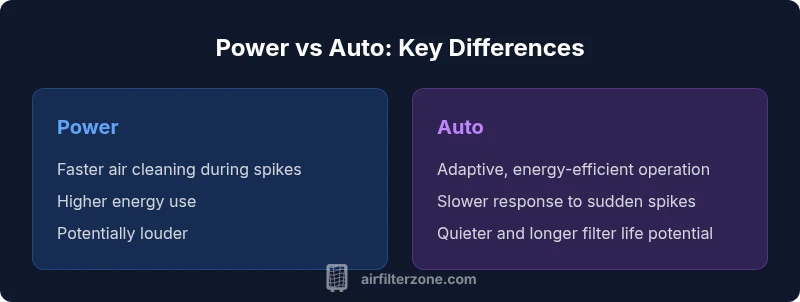
Power mode delivers stronger filtration bursts for spikes in outdoor pollution, while Auto mode continuously tunes performance based on IAQ feedback. For many homeowners, Auto offers quieter, energy-efficient operation for everyday use, but Power is valuable during dusty weeks, wildfire smoke events, or when you need rapid air improvement. Consider your climate, habits, and tolerance for noise.
Why LG Fresh Air Filter Modes Matter for Home Filtration
Air quality within homes is a dynamic system: particles, odors, humidity, and occupancy all influence IAQ. Whether you’re upgrading an existing purifier or choosing a new LG unit, the available modes matter because they determine how aggressively the filter responds to changes in air quality. According to Air Filter Zone, understanding mode behavior helps homeowners balance performance with energy use and noise. In many environments, the decision between Power and Auto becomes a practical question: what do you gain in faster particulate removal versus long-term efficiency? The phrase lg fresh air filter power vs auto often comes up in product forums, and for good reason. Power mode concentrates filtration power on demand, while Auto mode relies on sensors to maintain a stable baseline. The difference isn’t merely a setting; it shapes when the filter ramps up, how quickly it reacts to spikes, and how often you’ll hear a hum in the living room. In this section we’ll lay out the framework you can use to compare the two modes side by side in your home.
How Power Mode Works: Strength, Responsiveness, and Trade-offs
Power mode is designed for peak performance. When spikes in particle counts or odors occur, the fan can quickly ramp to a higher speed, pulling more air through the filter and delivering faster contaminant reduction. This can be invaluable during pollen surges, wildfire smoke events, or after a home improvement project that kicks up dust. The trade-offs are real though: higher fan speeds consume more energy, create more audible noise, and can accelerate filter wear if left on high for extended periods. For households with open-plan living spaces or late-night movie marathons, the increased sound can be a factor to consider. The key question is whether you value immediate air relief during short-term events or prefer a more consistent, quiet operation during daily living. Power mode tends to be most effective when you can tolerate temporary disturbances in comfort for a more rapid air-seeking response.
How Auto Mode Works: Adaptation, IAQ Sensing, and Practicality
Auto mode uses sensors to monitor IAQ indicators such as particulate matter and sometimes volatile organic compounds. When readings indicate deterioration in air quality, Auto adjusts the fan to maintain a target baseline. This approach prioritizes steady, comfortable operation and energy efficiency, reducing unnecessary fan activity during normal days. In practice, Auto mode can handle typical day-to-day fluctuations without requiring user intervention, which makes it attractive for busy households. However, its responsiveness to sudden spikes may be slower than Power mode, meaning you might notice a brief lag before the purifier ramps up. The result is a more predictable sound profile and a longer filter life if spikes are infrequent, though it may require more attentive monitoring during high-pollution periods.
Energy Use and Noise: What to Expect in Each Mode
Energy use and noise are the two big levers that differentiate these modes. Power mode tends to draw more energy and generate more ambient noise due to higher fan speeds. Auto mode, by contrast, moderates energy use and tends to keep noise to a minimum during average conditions. Because both modes adjust to air quality, you may notice that Auto still provides meaningful improvements, just not at the same rapid pace as Power during spikes. For households prioritizing sleep or quiet living spaces, Auto can offer a favorable balance between air quality and comfort. If you live in a city with predictable pollution patterns or frequently run high-load activities indoors, Power can deliver decisive improvements when needed.
Filtration Performance Across Environments
In environments with high dust, pet dander, or seasonal pollen, Power mode frequently produces a faster drop in PM levels following a spike. Auto mode excels in typical daily use and can still maintain strong filtration without the need to manage settings constantly. For households with smokers or heavy cooking odors, Power mode can help restore air quality quickly after events, while Auto mode provides a baseline of steady performance that reduces the need for manual adjustments. The practical takeaway is that performance isn’t binary: both modes offer meaningful benefits, and the best choice often depends on your environment, schedule, and sensitivity to noise.
Maintenance and Filter Replacement: Scheduling and Costs
Maintenance considerations for LG Fresh Air Filter modes include when to replace filters and how often you’ll need to perform routine upkeep. In general, higher filtration demand in Power mode can lead to faster filter wear if used continuously at high speed, potentially shortening replacement intervals. Auto mode can extend filter life by running at moderate speeds most of the time, but you should still follow manufacturer recommendations and monitor filter condition. Regular checks on air quality readings, as well as listening for changes in noise levels, help determine if you need to adjust usage patterns. Budgeting for replacement filters and understanding the expected lifespan under different usage profiles will help you plan ahead and avoid unexpected costs.
Real-World Scenarios: When to Use Power vs Auto
Consider scenarios such as allergy season, wildfire smoke events, or a weekend renovation. During allergy season, Auto mode often provides comfortable air quality with occasional Power boosts during pollen surges. In wildfire season, many users opt for Power mode to achieve rapid air clearance when outdoor air quality is severely degraded. For routine days with normal IAQ, Auto mode tends to deliver a quiet, energy-efficient baseline. If you frequently host gatherings with cooking or odors, alternating between modes—Power during peak activity and Auto for regular use—can optimize air quality while balancing comfort and energy use. Each household will have a slightly different pattern, so think of these modes as tools in a flexible toolkit rather than rigid rules.
What the Data Says: Interpreting IAQ Sensors and Readings
Understanding IAQ readings helps you use either mode more effectively. PM2.5 and CO2 levels provide a snapshot of indoor air conditions; when readings rise, Power mode can respond more aggressively, whereas Auto mode relies on the sensors to guide adjustments gradually. Consistency is important: even with Auto, a temporary spike should prompt a check of the environment (doors opening/closing, cooking, or a new source of pollutants). For many homeowners, the key is to set a process: observe, adjust, and compare your experiences in both modes over a few weeks to learn your home’s unique IAQ patterns. This approach reduces guesswork and makes mode selection data-driven.
Design and Usability Considerations: Interface, Controls, and Convenience
User interface design matters because you want quick, intuitive access to mode switching without breaking your flow. Auto mode is typically presented as a single-button option that keeps the device quiet and efficient, while Power mode may be a dedicated control or a temporary boost button. Some LG models offer scheduling features, which let you automate mode changes at different times of day or during specific activities. Consider whether your device integrates with smart home ecosystems, voice assistants, or mobile apps, and whether you value presets that align with your daily routine. The right combination of simplicity and control can dramatically affect how often you use the device effectively.
Common Pitfalls and Troubleshooting
Common issues include sensor misreadings, stale filters, and misconfigured schedules. If Auto mode seems slow to respond, check for dirty filters or blocked air intakes, which can impede performance. If Power mode feels excessively noisy, ensure the unit isn’t operating at the higher end of its range due to an unvented space or blocked return air. Regular maintenance—cleaning vents, replacing filters as recommended, and updating firmware when available—helps maintain consistent performance. If you notice persistent odors or poor air quality despite mode settings, it may be time to inspect for hidden air leakage, mold growth, or other sources of indoor pollutants.
How to Choose the Right Mode for Your Home
Start with Auto to establish a comfortable baseline and observe how your space responds to routine IAQ fluctuations. If you experience sudden spikes in pollutants or need rapid air clearance after activities like cooking or sanding, switch to Power for short periods. Over several weeks, compare perceived air quality, noise, and energy use between modes to determine your preferred balance. If you have light sleepers or a highly sensitive household, you may prioritize Auto with occasional Power boosts for short durations. In spaces with multiple occupants or open layouts, using both modes strategically can optimize air quality without compromising comfort.
Comparison
| Feature | LG Fresh Air Filter Power | LG Fresh Air Filter Auto |
|---|---|---|
| Energy Efficiency | Higher energy use | Lower energy use |
| Response Time to IAQ Changes | Faster, stronger bursts | Slower, sensor-driven adjustments |
| Noise Level | Potentially louder at high speed | Typically quieter during normal operation |
| Filter Replacement Frequency | Can be shorter under heavy use | Often longer with moderate use |
| Best For | Spikes in pollution, rapid clearance | Daily living with variable IAQ |
What's Good
- Power mode provides rapid air relief during spikes
- Auto mode reduces manual intervention and saves energy
- Both modes offer effective filtration with IAQ feedback
- Preserves filter life when used appropriately
What's Bad
- Power mode can be louder and consume more energy
- Auto mode may be slower to respond to sudden spikes
- Frequent mode switching can be distracting in open spaces
Auto mode is the best default for most homes; Power mode is a valuable tool for specific events.
Choose Auto for everyday comfort and energy efficiency. Switch to Power during intense pollution or after disruptive activities for faster air clearance.
FAQ
What is the difference between LG Power mode and Auto mode?
Power mode delivers peak filtration speed for rapid air cleaning, while Auto mode uses IAQ sensors to maintain steady performance with energy efficiency. The choice depends on whether you need quick relief or consistent, quiet operation.
Power mode cleans quickly when air quality spikes, while Auto mode stays steady and efficient for everyday use.
Does Auto mode save energy compared to Power mode?
Yes, Auto mode generally uses less energy by matching fan speed to real-time IAQ readings. It reduces unnecessary high-speed operation unless air quality worsens.
Auto mode usually saves energy by staying at moderate speeds most of the time.
Can I override Auto mode during high pollution?
Most LG models allow manual mode switching, so you can temporarily select Power during high pollution or when you want rapid air improvement.
You can switch to Power mode when you need faster air cleaning.
How do I decide which mode to use for allergies?
For strong allergy seasons, start with Auto and monitor pollen impact. If symptoms persist, use Power during peak pollen hours or cleaning activities.
Auto works day-to-day, Power helps during heavy allergy periods.
Will one mode wear the filter faster than the other?
Power mode can increase filter wear if used continuously at high speeds. Auto mode tends to extend filter life by operating at moderate speeds.
Power wears filters a bit faster if used too long; Auto is gentler on filters.
Is Auto mode suitable for homes with pets?
Auto mode usually handles pet dander well, but during heavy shedding or odor events, a temporary Power boost can improve air quality quickly.
Auto handles daily pet dander; Power can help during shedding peaks.
Quick Summary
- Auto mode balances IAQ and energy use for daily living
- Power mode excels at rapid air improvement during spikes
- Use both modes strategically based on environment and activity
- Regular maintenance supports consistent performance
- Monitor IAQ readings to guide mode choices