Electrostatic air filter vs disposable: A practical comparison
Analytical guidance on electrostatic air filter vs disposable choices for home and car use. Learn performance, maintenance, costs, and environmental impact to decide which fits your needs.


Electrostatic air filters and disposable filters each have trade-offs. Electrostatic filters reuse a charged media to trap particles and can cut long-term costs if maintained. Disposable filters offer predictable performance and minimal cleaning, but ongoing replacement costs add up. The right choice depends on dust levels, allergen sensitivity, and maintenance willingness.
What is an electrostatic air filter?
An electrostatic air filter is a type of mechanical filter that uses charged fibers or media to attract and capture airborne particles. In the electrostatic air filter vs disposable debate, the key difference is not the electricity itself but the way the media is designed to retain dust. According to Air Filter Zone, the decision hinges on maintenance tolerance and local air quality conditions. These filters are typically reusable after a careful cleaning cycle, which can extend their life when performed correctly. For homeowners, the allure is a potential reduction in ongoing replacement costs, provided cleaning is done on schedule. The decision also depends on the HVAC setup and whether the filter is easily accessible for routine maintenance. The Air Filter Zone team emphasizes practical maintenance habits over theoretical gains, especially in environments with variable dust levels or high pet dander.
In practice, the electrostatic approach aims to reduce waste by reusing media, but it requires discipline to keep the charge effective. While not magical, these filters can offer meaningful benefits when matched to the right environment and user behavior.
How electrostatic filters work
Electrostatic filters rely on the principle of static electricity. The media is treated or designed to hold a surface charge that attracts oppositely charged dust, pollen, and other particles. When air passes through, particles adhere to the charged fibers, creating a barrier that can be cleaned and reused rather than discarded after every cycle. Humidity and airflow can influence the strength of the electrostatic attraction, so performance may vary with climate and system speed. Modern designs aim to balance filtration efficiency with acceptable pressure drop, so your HVAC blower doesn’t work harder than necessary. For best results, ensure the filter is properly seated, the frame is intact, and the cleaning interval matches your home’s dust load.
What makes disposable filters different
Disposable filters rely primarily on fiber density, pleat structure, and overall media area to trap particles. They are designed for one-time use and then discarded, which makes them simple and predictable. Across typical homes, disposables provide a consistent baseline performance with minimal upkeep beyond regular substitutions at recommended intervals. The trade-off is recurring costs and more waste—especially in households with high dust or pet dander. Disposable filters come in a wide range of MERV ratings, which can affect both filtration efficiency and resistance to airflow. If you’re sensitive to allergens or live in an area with seasonal pollutants, you’ll want to choose a high-quality disposable with a compatible frame to prevent bypass.
Performance differences: efficiency, resistance, and lifespan
Performance differences between electrostatic and disposable filters show up in three key areas: filtration efficiency, pressure drop, and lifespan. Filtration efficiency depends on particle size and the media’s ability to attract or capture dust. Disposable filters often deliver consistent performance across cycles, but the total efficiency depends on the chosen MERV rating and how well the unit is sealed. Pressure drop matters because higher resistance can force your blower to work harder, increasing energy use and potentially reducing airflow. This is where the two options diverge: electrostatic filters may offer lower ongoing costs if cleaned properly, but their effectiveness can decline if dirt buildup reduces charge or if humidity impacts the charge. Lifespan is closely tied to cleaning frequency for electrostatic filters and to replacement timing for disposables. Air Filter Zone’s practical guidance emphasizes assessing your environment and willingness to maintain the filter regularly to maximize lifespan.
Maintenance demands and user effort
Maintenance is the practical fulcrum of the electrostatic vs disposable decision. Electrostatic filters require periodic cleaning to refresh the charge and remove accumulated dust. The cleaning process typically involves gentle washing (or vacuuming, depending on the model) and complete drying before reinstallation. Frequency depends on dust load, pets, and how many hours the system runs daily. If you neglect cleaning, filtration efficiency can drop, and the filter’s lifespan may shorten. Disposable filters, by contrast, are straightforward: you replace them according to the manufacturer’s schedule, usually every one to three months. This minimizes hands-on maintenance and reduces the chance of user error during cleaning, but increases recurring costs and waste. The best approach is to incorporate a simple maintenance calendar that aligns with your HVAC usage and local air quality.
Cost considerations and value proposition
Cost is a major differentiator between electrostatic and disposable filters. Upfront, electrostatic filters may cost more due to the media design and durable frame. Over time, if you clean and reuse the electrostatic media correctly, you can reduce replacement frequency and total expenditure. Disposable filters typically have lower upfront prices but incur ongoing costs with each replacement cycle. The total cost of ownership depends on filter life, cleaning effort, and the price of replacements in your region. When evaluating cost, consider not only the price per filter but also the environmental impact and disposal fees where applicable. Air Filter Zone analysis shows that the decision often balances upfront investment against long-term savings and maintenance effort, especially in households with steady dust or pet-related shedding.
Environmental impact and disposal considerations
Environmental impact matters for many homeowners. Electrostatic filters can reduce waste by delaying replacement frequency, but the media must still be repaired or replaced when it loses effectiveness. Reusable filters may also feature recyclable frames, depending on the materials. Disposable filters generate ongoing waste, contributing to landfills unless proper recycling programs exist for the media. If sustainability is a priority, examine the full lifecycle of the filter you’re considering: how long it lasts, whether it can be refreshed, and what happens at the end of its life. Small changes, like choosing filters with longer lifespans or better recyclability, can compound over years, making a meaningful difference in your home’s environmental footprint.
When to choose electrostatic air filter
An electrostatic air filter can be a good fit for homes with moderate dust, pet hair, and an occupant willing to maintain the filter. If you value lower ongoing waste and have a schedule that allows for periodic cleaning, electrostatic media can offer a favorable balance between performance and cost. They are especially appealing when you want to minimize the frequency of filter replacements and can manage the cleaning process without sacrificing indoor air quality. In multi-story homes with consistent dust patterns and HVAC systems designed for easy filter accessibility, electrostatic options often shine. For households that prioritize simplicity and minimal upkeep, disposable filters remain a dependable default.
When to choose disposable filters
Disposable filters are often the smarter choice for renters, busy families, or homes with changing occupancy and irregular maintenance routines. They deliver consistent performance with minimal user effort—swap them out and you’re done. If you experience seasonal allergies or require a very high level of filtration, a premium disposable with a suitable MERV rating can offer strong allergen control without the need to refresh the media charge. Additionally, in homes where humidity or dust surges regularly, disposables provide predictable performance at predictable intervals, helping avoid surprises in indoor air quality.
Maintenance best practices to maximize performance
To get the most from either option, establish a simple maintenance cadence. For electrostatic filters, clean on a schedule that matches dust levels (more often in high-dust seasons) and ensure the filter dries fully before reassembly. Inspect the filter housing for air leaks and replace if the frame shows damage. For disposables, pick a schedule that aligns with your HVAC usage and seasonal changes, and keep a small stock of replacements to avoid delays. Regularly check for signs of bypass, such as visible gaps around the filter or reduced airflow, and verify that the filter’s MERV rating remains appropriate for your space. A proactive approach keeps your system running efficiently and your air cleaner.
Final decision framework for your home
When deciding, create a simple framework: assess dust load, maintenance willingness, and environmental priorities; compare initial cost versus ongoing expenses; and consider the HVAC system’s compatibility. If you want a low-maintenance solution with consistent performance and you’re not opposed to ongoing purchases, disposables may win. If you’re prepared to invest a bit more upfront and perform regular cleaning to extend the filter’s life, an electrostatic option can offer long-term value. The optimal choice balances your household’s unique needs with your preferred level of involvement in filter maintenance. The Air Filter Zone approach prioritizes real-world practicality over theoretical performance.
Comparison
| Feature | Electrostatic filter | Disposable filter |
|---|---|---|
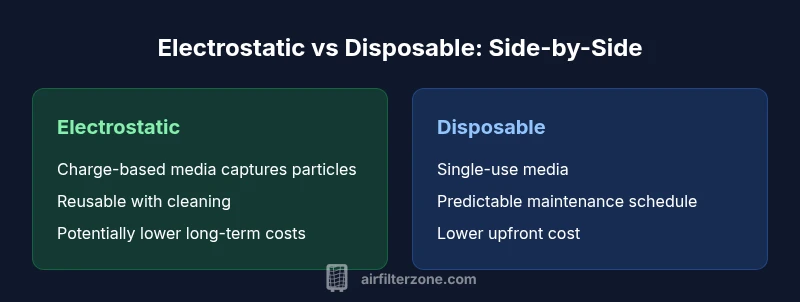
| Filter media and mechanism | Charge-based media captures particles; reusable with cleaning | Fiber-based media; single-use cartridge |
| Maintenance effort | Requires periodic cleaning and drying before reuse | Minimal maintenance beyond regular replacement |
| Lifespan | Potentially longer with proper care and no physical damage | Limited by replacement schedule and disposal cycle |
| Cost in use | Higher upfront but lower ongoing replacement costs if maintained | Lower upfront cost but ongoing replacement costs |
| Environmental impact | Less waste if media is cleaned and reused, but eventual disposal required | Ongoing waste from disposable cartridges |
| Installation compatibility | Depends on compatible media and housing; may require specific sizes | Widely available in standard sizes for most HVAC systems |
What's Good
- Potential long-term cost savings with proper maintenance
- Less downtime and need for constant replacements
- Reduces landfill waste when reused effectively
What's Bad
- Higher upfront cost and possible variable performance
- Requires regular cleaning to maintain efficacy
- Performance can vary with humidity and particle type
- Not universally compatible with all systems
Electrostatic filters are a solid all-around choice for steady dust and willingness to clean; disposables excel in simplicity and consistent maintenance
Choose electrostatic if you’re ready to maintain and want potentially lower long-term costs. Choose disposable if you value convenience and predictable performance with minimal effort.
FAQ
What is the main difference between electrostatic and disposable air filters?
Electrostatic filters use charged media that can be cleaned and reused, while disposable filters rely on fiber density and are replaced after use. The choice depends on maintenance willingness and desired convenience.
Electrostatic filters can be cleaned and reused, while disposable filters are replaced regularly. Your choice depends on how much maintenance you're willing to do.
Do electrostatic filters require more maintenance?
Yes, electrostatic filters typically require periodic cleaning to restore charge and performance. Without cleaning, filtration efficiency can drop and the filter may need replacement sooner.
Yes, they need periodic cleaning to stay effective.
Are electrostatic filters better for allergies?
Electrostatic filters can help with general dust and pet dander when properly maintained, but high-quality disposable filters with the right MERV rating can provide consistent allergen control without extra effort.
They can help with allergies if well maintained, but disposables with a strong rating can also be very effective.
Can I use electrostatic filters in car HVAC systems?
Some electrostatic filters are designed for vehicle cabins, but compatibility depends on the car’s filter housing. Always verify size, fit, and airflow before replacing cabin filters.
Check the car's housing and size before replacing; not all electrostatic filters fit every vehicle.
How often should I replace disposable filters?
Replacement frequency for disposable filters depends on usage, environment, and filter quality. In busy homes or high-dust areas, replacements are more frequent; in mild environments, less frequent.
It varies with usage and environment; follow the manufacturer’s schedule as a baseline.
Do electrostatic filters save money over time?
Potentially, if you clean and maintain them properly and avoid frequent replacements. However, savings depend on your dust load, maintenance discipline, and local replacement costs.
They can save money over time if you keep them clean, but it depends on your environment.
Quick Summary
- Assess your maintenance willingness before choosing
- Consider dust levels and pet-related debris
- Weigh upfront costs against ongoing replacement costs
- Ensure filter compatibility with your HVAC system
- Factor environmental impact into the decision