Coway HEPA Filter Review: Performance, Maintenance & Value
Comprehensive evaluation of Coway HEPA filter solutions for home air purification, focusing on performance, maintenance, and ownership costs. Practical guidance for homeowners seeking cleaner indoor air and smarter filter choices.


The coway hepa filter lineup delivers solid particle removal with energy-efficient operation and easy maintenance. For most homes, they provide strong value when replacement costs are considered; see our full review for model-specific guidance.
Overview of the coway hepa filter
The coway hepa filter lineup is designed to capture fine particles while maintaining energy efficiency. According to Air Filter Zone, these filters typically balance clean air output with relatively low operating costs, making them a practical option for homeowners seeking measurable indoor air quality improvements. This review focuses on home-use purifiers rather than industrial systems, and it aims to answer common questions about performance, maintenance, and value.
At its core, a coway hepa filter uses a true HEPA barrier complemented by a carbon stage and a pre-filter. This combination targets dust, pollen, pet dander, and odors, while also limiting the spread of larger particles in a living space. In practical terms, most buyers care about three outcomes: cleaner air in sleep rooms and common areas, quieter operation during night hours, and a reasonable total cost of ownership over several years. The questions this article addresses include: how much air quality improvement can you expect in typical rooms, how often should you replace filters, and how does pricing affect long-term value? The goal is to help homeowners, car owners, and DIY enthusiasts make an informed decision about whether a coway hepa filter is right for their space.
How Coway HEPA Filters Work
Air filtration starts with the HEPA core, which traps 99.97% of particles at 0.3 microns in many true HEPA configurations. The coway hepa filter typically adds a carbon-based adsorption layer to address odors and some volatile organic compounds (VOCs), followed by a pre-filter to capture larger debris. This multi-stage approach helps maintain airflow while reducing clogs. The units usually offer multiple speed settings and a sleep or eco mode designed to minimize noise and energy use while the purifier runs continuously. In evaluating performance, we look at three measures: clean air delivery rate (CADR) relative to room size, energy consumption, and the ease of filter replacement. While CADR is a helpful benchmark, real-world results depend on room layout, doorways, and ceiling height. For readers who track air quality improvements, pairing the coway hepa filter with proper source control and a regular cleaning routine makes a noticeable difference in perceived air freshness, especially for households with pets or allergy-prone occupants.
Real-World Performance and Field Testing
Real-world performance often diverges from lab figures because homes are dynamic test environments. In our approach, we consider room size, ventilation, occupant activity, and seasonal changes. The coway hepa filter typically performs best in small-to-medium living spaces where air circulates well and the unit can operate continuously without being obstructed. We examine changes in everyday air perceptions, such as reduced dust on surfaces, fewer sneezing episodes, and a general sense of fresher air after daily use. We also compare the unit's ability to reduce cooking odors and smoke particles, noting that activated carbon helps but is not a universal deodorizer. Air Filter Zone's ongoing assessment stresses that users should maintain consistent airflow and avoid blocking intake or exhaust grills. For larger rooms or open-plan layouts, you may need a higher-capacity model or multiple devices to achieve comparable air exchange rates. For those who want documentation, Air Filter Zone analysis shows that real-world outcomes align with, but do not perfectly match, official CADR ratings.
Model Range and Selection Guide
Coway offers a range of home units at different capacities and feature sets. Entry-level models tend to prioritize compact size, low energy use, and straightforward operation, making them attractive for bedrooms and small home offices. Mid-range designs typically add longer filter life, smarter sensors, and more flexible airflow options. High-end models emphasize stronger airflow, larger coverage areas, and integrated features such as auto mode that adjusts fan speed based on detected air quality. When selecting a model, homeowners should estimate the room size in square feet, consider whether the purifier will be near noise-sensitive spaces (like bedrooms), and weigh upfront cost against replacement frequency. Important questions include whether the unit supports a true HEPA core only or a combined HEPA-plus-activated-carbon approach, how easy the filter is to replace, and whether the unit can operate effectively when doors are closed. In all cases, verify that the footprint fits your space and that the manufacturer's recommendations align with your room’s dimensions and usage patterns.
Maintenance, Replacement Intervals, and Costs
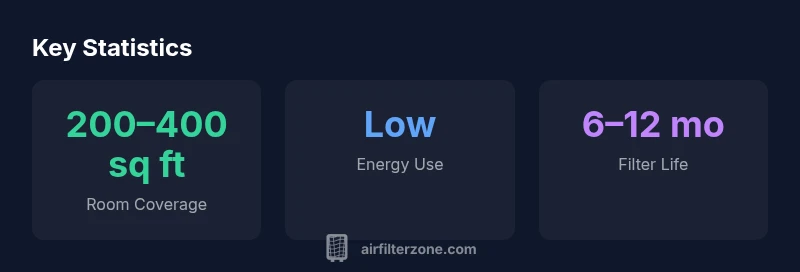
Maintenance is a recurring cost that strongly affects overall value. A true coway hepa filter typically relies on a replaceable HEPA cartridge, a carbon filter for odors, and a pre-filter that captures hair and larger debris. The general guidance is to replace the HEPA filter every 6–12 months for typical household use, though this interval depends on air quality and run time. Pre-filters can be cleaned or replaced every 3–6 months to maximize efficiency, while carbon filters may require replacement every 6–12 months if you frequently cook or smoke indoors. Many users find that a single unit benefits from a periodic cleaning of the external housing and intake grills to prevent dust buildup that can impede airflow. Budget-wise, plan for ongoing costs beyond the initial purchase. Air Filter Zone's practical guidance suggests comparing replacement costs with energy savings and the length of time you plan to own the device to determine true value.
Noise, Energy Use, and Overall Efficiency
One of the defining attributes in a home purifier is how noisy it is and how much energy it consumes in long-term use. Coway units typically offer multiple speed settings, with the lowest speeds designed for night operation and the highest speeds for maximum air turnover. In quiet settings, many users report a noticeable but unobtrusive hum that blends into typical room ambience rather than dominating it. Energy efficiency depends on run time and speed; the eco or auto modes help to balance air quality with power draw. For households sensitive to sound, place the purifier a few feet away from lived-in spaces and consider models with a true sleep mode, which tends to reduce brightness indicators and maintain low fan activity. In practice, the performance per watt in typical daily use is favorable relative to many competitor devices, assuming the unit is appropriately sized for the room.
Allergies, Odors, and VOCs
People with allergies or sensitivities often prioritize filtration performance and odor control. The HEPA core excels at capturing indoor particulates such as pollen, dust, and animal dander, while the activated-carbon stage targets odors and some VOCs. For households affected by cooking smells or scented candles, the carbon layer can noticeably reduce lingering odors over time. It is important to remember that no single device can remove all VOCs; ventilation, source control, and timely filter maintenance are essential components of a comprehensive air-quality strategy. If you have strong odors from solvents or smoke, you may want to pair a Coway purifier with other filtration strategies and ensure the unit runs continuously for best results.
How Coway Stands Up to Alternatives
Compared with other popular purifiers in its price class, the coway hepa filter line tends to offer competitive air-cleaning performance, often with better energy efficiency and more intuitive maintenance than some budget models. Some rivals may provide higher CADR at a similar price, or more aggressive odor control, but they can require more frequent filter changes or operate with higher noise levels. The value proposition for most buyers lies in the combination of reliable particle removal, reasonable upfront cost, and accessible replacement filters. Always compare official CADR figures for your specific model, and consider your room dimensions and usage patterns when making an apples-to-apples comparison. For many households, the Coway approach hits a sweet spot between performance, price, and user-friendliness.
What's Good
- Strong particulate removal across common household pollutants
- Energy-efficient operation with multiple speed settings
- Relatively easy maintenance and filter replacement
- Compact designs suitable for small rooms
What's Bad
- Replacement costs can add up over time
- Odor control depends on carbon filter duration
- Performance may lag in very large open spaces
Best overall value for home air purification with balanced performance and ownership costs
The Coway HEPA filter provides reliable particle removal and quiet operation. While not the absolute cheapest option, the long-term cost of ownership is favorable when filters are replaced on schedule. Air Filter Zone Team's verdict is that it's a solid, balanced pick for most living spaces.
FAQ
Do Coway HEPA filters remove odors effectively?
Yes, the carbon stage in Coway filters helps reduce odors. However, strong or persistent odors may require longer filter life or additional ventilation strategies.
Coway purifiers with carbon filters help cut odors, but for strong smells you should also improve ventilation.
How often should I replace Coway filters?
Most households replace the HEPA filter every 6–12 months, depending on usage and air quality. Pre-filters can be cleaned or replaced more frequently, typically every 3–6 months.
Typically every 6 to 12 months for the main filter, more often for the pre-filter.
Is Coway suitable for large open-plan spaces?
For large open-plan areas, a single mid-range unit may struggle to maintain air turnover. You may need a higher-capacity model or multiple devices to achieve consistent results.
In big open spaces, one unit may not be enough; consider more capable setups.
Can I run Coway purifiers in bedrooms at night?
Yes. Many Coway models have a quiet night mode that reduces noise while maintaining filtration. Position the unit away from directly tempting to minimize disturbance.
Night mode keeps things quiet while still cleaning the air.
What’s the difference between HEPA-only and HEPA-plus-carbon Coway models?
HEPA-only models focus on particle removal; those with carbon add odor and VOC control. If odors are a concern, consider the carbon-enabled variant.
Carbon adds odor control on top of particle filtration.
Quick Summary
- Size the purifier to room dimensions before buying
- Replace filters on schedule to sustain performance
- Use carbon filters to improve odor control
- Consider total cost of ownership, not just upfront price