Can You Put Air Filter on Floor? A Practical Guide
Learn when floor placement is feasible for air filters, how to position safely, and best practices for optimal airflow and safety with Air Filter Zone guidance.


Yes, you can place a portable air filter on the floor in certain situations, but it’s not ideal for long-term use. Floor placement can work for quick spot-purification in small rooms, provided the unit has clear air intake and there is space around it. For best performance, elevate the filter off the floor or position it near vents according to manufacturer guidelines.
Understanding why placement matters
Placement of an air filter affects airflow, efficiency, and safety. The question can you put air filter on floor is common, and the answer depends on the unit type, room size, and surface. According to Air Filter Zone, floor placement can be workable for quick spot-purification in very small spaces when you ensure unobstructed intake and clearance around the exhaust. The Air Filter Zone Team emphasizes balancing airflow with safety to avoid blocking vents or saturating the unit with dust. In practice, reading your device’s manual is essential, but the general principles below apply to most portable air purifiers and cabin filters.
When floor placement might be appropriate
In certain scenarios, placing an air filter on the floor may help when you need rapid, localized air cleaning in a small room or temporary workspace. However, this is not ideal for ongoing, whole-room filtration. The risk includes restricted intake by carpet fibers, higher dust around the filter, and potential moisture exposure. If you must place on the floor, choose a hard, dry surface, ensure the unit has adequate clearance on all sides, and avoid areas where people walk frequently.
Safer alternatives to floor placement
Elevated placements are generally safer and more efficient. Consider placing the unit on a stable shelf, a low stand, or a dedicated platform to improve airflow and reduce dust recirculation. Wall-mounts or freestanding stands can keep the intake unobstructed while still allowing your room to air out effectively. When you opt for elevation, ensure there is still enough space around the unit for intake and exhaust and that cords pose no tripping hazard.
How to position a filter on the floor safely
If floor placement is your only option, set the unit on a hard, dry surface away from moisture sources. Use a non-slip mat to keep the device stable and prevent it from sliding on slick flooring. Keep at least 1–2 feet of clearance on all sides and aim airflow toward the center of the room, not directly at walls or furnishings that could obstruct circulation. Never place the unit where liquids could spill or where children or pets might knock it over.
Choosing the right filter for floor use
Not all air filters are created equal for floor use. Favor portable units with sealed housings, clear intake/exhaust paths, and easy filter replacement. HEPA-rated purifiers with activated carbon can improve both particle removal and odor control when positioned correctly. If your setup uses a built-in filter in a larger HVAC system, consult the manual for floor-placement implications or seek professional guidance.
Common mistakes and troubleshooting
Common mistakes include placing the unit on carpet, blocking vents with furniture, or running at maximum speed in a small, poorly ventilated room. If you notice reduced airflow, excessive vibration, or unusual noises, reposition the unit, inspect the filter, and clean the intake area. Moisture from spills or humidity can degrade filter performance, so avoid damp surfaces or humid environments when floor placement is used.
Maintenance tips after floor use
After using a filter on the floor, check and replace the filter according to the manufacturer’s schedule, usually every 3–6 months depending on use and air quality. Wipe down the exterior and intake grille to remove dust buildup, and inspect the power cord for wear. Store or reposition the unit when not in use to extend its life and maintain safe operation.
Real-world setups and scenarios
In a small apartment bedroom, a compact floor placement can provide a quick uplift in air quality during peak dust days. In a garage workshop, a rugged, elevated setup with a sturdy stand can prevent splashes and dust exposure while keeping airflow directed toward the center of the space. Each scenario benefits from careful clearance, moisture control, and adherence to the device’s guidelines.
Tools & Materials
- Portable air filter unit(Choose a unit sized for the room and with adjustable airflow.)
- Non-slip mat or shallow tray(Stabilizes the unit and protects floor surface.)
- Clearance space around intake/exhaust(Maintain unobstructed air path; keep at least 1–2 feet of space on all sides.)
- Extension cord with proper rating(Only if needed; avoid cords across walkways and ensure GFCI protection.)
- Dust cloth or microfiber cloth(Use for quick exterior cleaning after use.)
Steps
Estimated time: 20-30 minutes
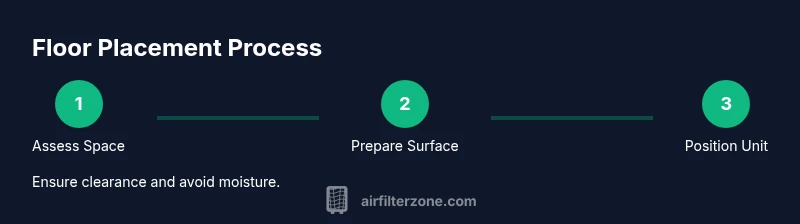
- 1
Assess the space
Evaluate the room size, existing airflow, and surface where floor placement would occur. Confirm there is an unobstructed path for air intake and exhaust, and identify any moisture sources nearby.
Tip: A quick room sketch helps visualize clearance around the unit. - 2
Prepare the floor surface
Place a non-slip mat on a dry, hard surface. Remove any loose cables or obstacles that could trip someone or block airflow.
Tip: Avoid placing directly on carpet; carpet fibers can interfere with intake. - 3
Position the unit
Center the unit in the chosen spot with a clear path for air to flow toward the room’s center. Ensure the intake is not facing a wall directly to prevent recirculation.
Tip: Face the exhaust toward open space to maximize distribution. - 4
Check wiring and moisture
Keep cords away from walkways. Do not use near water, damp basements, or high humidity areas that could affect safety and performance.
Tip: Use a grounded outlet and avoid daisy-chaining multiple devices. - 5
Plug in and test
Power the unit and observe airflow at a distance; listen for unusual noises, and ensure there is steady intake and exhaust without obstructions.
Tip: Run on a low or medium setting initially to gauge room response. - 6
Monitor and adjust
After 15–20 minutes, re-check clearance and airflow. Move the unit if you notice reduced efficiency or draft near walls.
Tip: Keep humidity in check; moisture reduces filter effectiveness.
FAQ
Can you put air filter on floor?
Yes, but it’s situational. Floor placement can work for quick spot-purification in small spaces if airflow is unblocked and the unit is on a dry surface. Always consult your manual and keep clearances.
Yes, but only in small rooms and with proper clearance; check your manual for safety guidelines.
Is floor placement safe for pets or kids?
Floor placement can pose tipping or tripping hazards and may expose pets or children to the cord or spilled moisture. Elevation and stable placement reduce risk.
Be cautious about cords and tipping; elevated placement is safer around kids and pets.
Will floor placement affect warranty?
Floor placement itself usually doesn’t void a warranty, but improper use or damage from moisture can. Always follow manufacturer guidelines to stay within warranty terms.
Follow the manual; improper use could affect warranty.
How often should I change filters when placed on the floor?
Replacement intervals depend on use and air quality. In floor-use scenarios, monitor dust buildup and follow the unit’s recommended schedule.
Monitor and replace per the owner's guide; floor use may require closer checks.
How close can the unit be to walls or furniture?
Maintain at least 1–2 feet clearance around intake and exhaust to prevent obstructions and ensure even airflow.
Keep space around the unit for best performance.
Can floor placement help with dust in a drafty room?
It can reduce localized dust, but floor placement may recirculate air if airflow isn’t well designed. Consider safer elevations for broader impact.
It can help a bit, but balance placement for full-room airflow.
Watch Video
Quick Summary
- Position matters: airflow and clearance determine effectiveness.
- Floor placement is situational; elevation is often safer and more efficient.
- Regular maintenance sustains performance and safety.