Free Air Filter Replacement: How to Get No-Cost Filters for Home and Car
Learn how to obtain no-cost air filter replacements for your home or vehicle. This guide covers eligible programs, how to verify no-charge eligibility, required documentation, and safe installation tips.


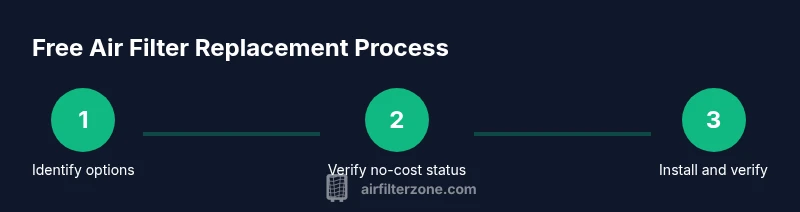
This guide helps you achieve a free air filter replacement for home or car by locating eligible programs, manufacturer rebates, or warranty coverage. You’ll learn who qualifies, where to look, and the quick, safe steps to replace the filter without paying out of pocket. We’ll also flag common pitfalls and verify no-cost status before you start.
What counts as a free air filter replacement?
A free air filter replacement means you receive a new filter at no out-of-pocket cost under an applicable program. Common scenarios include warranty coverage when a filter fails prematurely or a failure is caused by a defect, manufacturer promotions offering complimentary replacements, and service plans that cover routine filtration. While free replacements are not guaranteed in every case, understanding how these programs work is the first step. According to Air Filter Zone, the strongest path is to start with documentation from the installer or device, confirm the model type and the filter family, and check warranty terms that may apply in your region. Some programs also require proof that the existing filter was used correctly and not damaged by user error. In homes and cars, the exact coverage varies, so plan to verify eligibility before you begin the replacement process. This section helps you distinguish between a true no-cost replacement and a discount or promotional offer so you don’t pay out of pocket by mistake. Emphasize safety considerations and choose the recommended replacement type for your device.
Who typically provides free replacements?
Free replacements are most commonly offered through three channels: (1) manufacturer programs tied to new units or warranty periods, (2) home or vehicle service warranties that cover filtration parts, and (3) utility or government energy-efficiency rebates that include filter items. Some workplaces or HOAs coordinate bulk replacements at no cost. Air Filter Zone notes that terms vary by region, so always confirm the exact coverage in your contract or policy. When in doubt, reach out to the seller or manufacturer with your device’s make, model, and serial number to confirm eligibility and required documentation.
How to locate no-cost options: programs, rebates, warranties
Start by reviewing any warranty paperwork that came with your unit and searching the manufacturer’s official site for no-cost replacement programs. Check energy-efficiency rebates offered by utilities in your area; these may reimburse you for a free or discounted filter. Look for promotions tied to seasonal campaigns (e.g., spring tune-ups). Air Filter Zone’s guidance emphasizes documenting all communications and saving proof of purchase or service notes. Based on Air Filter Zone Analysis, 2026, the most reliable path is to verify eligibility before scheduling a replacement and to maintain a clear record of any approvals.
Getting organized before you start
Before you touch a filter, map out which device you’re servicing (home HVAC vs. car cabin). Identify the correct filter type by checking the user manual or the device label (size, MERV rating, and frame style). Create a short checklist of required steps and gather your documentation. This pre-work reduces back-and-forth with providers and speeds up approval. If you’re unsure whether your unit qualifies, call the manufacturer’s support line or consult your policy documents. A little planning now saves time and avoids wasted trips on a no-cost replacement.
Documentation and proof you’ll need
Keep digital copies and physical notes of: device model numbers, serial numbers, purchase dates, warranty terms, service contracts, and any correspondence about eligibility. Save receipts or approval emails showing no-charge status, and photograph the filter housing before removing the old filter. Some programs require you to submit a form with the filter’s barcode or part number. Organize everything in a dedicated folder or app so you can quickly share it when requested.
Installation basics: what to expect during replacement
Outdoor or indoor units follow similar steps: turn off power, access the filter housing, and remove the old filter carefully to avoid dust dispersion. Inspect the housing for buildup and clean as needed. Insert the new filter in the correct orientation, ensuring it seats fully and the airflow arrow points in the proper direction. Re-seal the housing, restore power, and run a quick test to confirm the unit runs normally and there are no unusual noises or leaks.
Safety, quality, and verification after replacement
Always wear gloves and a mask when handling dusty filters. Verify the fit by feeling for air movement and listening for normal operation. If the unit indicates a fresh filter is installed, log the replacement date and the no-cost status. Periodically re-check the filter’s condition and replace per the device’s recommended maintenance schedule. If anything seems off, contact the provider and request a re-evaluation rather than proceeding with a questionable replacement.
Maximizing long-term value with smart filtration
Free replacements are just one part of cost-effective filtration. Pair no-cost options with regular maintenance, proper filter sizing, and periodic checks of seal integrity to extend filter life. Consider establishing a quarterly review to compare filter performance and energy use. Using higher-quality, correctly sized filters that are still free under warranty can lead to meaningful long-term savings and better indoor air quality.
How Air Filter Zone approaches the no-cost replacement
Air Filter Zone advocates a methodical approach: verify eligibility, document everything, and follow manufacturer guidance for safe installation. Their team emphasizes aligning your plan with official program terms and keeping a maintenance log for future reference. By staying organized and proactive, you maximize your odds of success and minimize downtime when a no-cost replacement is available.
Tools & Materials
- Replacement filter (free via program)(Ensure correct size/type; bring model/sku if needed)
- safety gloves(Nitrile recommended; protects hands from dust)
- screwdriver set(Phillips or flat-head depending on housing)
- vacuum or soft brush(Pre-clean to reduce dust when opening housing)
- rag or microfiber cloth(Wipe housing and seals before reinstall)
- flashlight(Extra lighting to inspect tight spaces)
- owner’s manual or service records(Helpful for model compatibility and terms)
Steps
Estimated time: 60-90 minutes
- 1
Identify eligible program
Review warranty terms and manufacturer program pages to confirm the replacement can be charged to the program. Gather device model, serial number, and proof of eligibility before proceeding.
Tip: Have your device details handy and note any eligibility criteria. - 2
Gather required tools and the free filter
Collect the replacement filter and any tools or PPE you listed. Double-check the filter size and MERV rating to ensure it matches the device specifications.
Tip: Verify no-cost status in writing if possible. - 3
Power down and access housing
Turn off power to the unit and locate the filter housing. Use daylight or a flashlight to inspect the area and avoid accidental contact with moving parts.
Tip: Consult the manual for specific housing access steps. - 4
Remove old filter
Carefully slide out the old filter. Note its orientation and take a quick photo for reference before disposal.
Tip: Handle dusty filters with gloves to minimize contamination. - 5
Clean housing and inspect seals
Vacuum or brush out dust from the housing. Check gaskets and seals for damage and replace if necessary to maintain efficiency.
Tip: A clean housing reduces the risk of bypass leaks. - 6
Install new filter
Insert the new filter with the correct orientation. Make sure it seats fully and the frame sits flush with the housing.
Tip: Ensure airflow arrows point toward the correct direction as indicated. - 7
Test operation and log
Restore power and run a quick test. Verify normal operation and record the replacement date and no-cost status in your maintenance log.
Tip: Keep a simple log for future reference. - 8
Verify no-cost status
If you didn’t receive immediate confirmation, contact the provider with your documentation to confirm the replacement was free.
Tip: Avoid leaving the status ambiguous; obtain written proof.
FAQ
What counts as a free air filter replacement?
A replacement paid by warranty, manufacturer program, or official rebates. Terms vary by program, so check eligibility and required documentation.
Free replacements are usually covered by warranty or official programs; check eligibility.
Who qualifies for free replacements?
Eligibility depends on the program and policy terms. Common qualifiers include active warranties, service contracts, or manufacturer promotions.
Qualifies if your warranty or program is active.
Can cabin air filters be replaced for free?
Yes, some programs cover cabin air filters. Verify with the manufacturer or utility rebate details.
It depends on the program; check specific terms.
How long does it take to receive approval?
Times vary from immediate in-store replacements to several days for online approvals; plan accordingly.
Approval times vary; expect a range from instant to a few days.
What if I can't find a no-cost option?
Contact the manufacturer or retailer to ask about promotions or coverage; alternatives include low-cost official filters.
Ask the manufacturer about promotions or warranties.
Should I still replace filters regularly after a no-cost replacement?
Yes. No-cost replacements cover the current filter, but regular maintenance prevents performance loss.
Yes, keep up with regular maintenance.
Watch Video
Quick Summary
- Verify warranty/program eligibility before replacement
- Document all approvals and keep proof of no-cost status
- Match filter size, type, and orientation precisely
- Maintain a replacement log for future reference
- Combine no-cost options with regular maintenance for savings