What Oil Do You Use on a Foam Air Filter? A Practical Guide
Learn which oil to use on foam air filters, how to apply it correctly, drying times, and common mistakes. Air Filter Zone provides practical guidance for homeowners, car owners, and DIY enthusiasts.


Using the correct oil on a foam air filter improves dust capture and extends filter life. This guide explains why foam filters need oil, the best types to choose, and how to apply a light, even coat. For homeowners, car owners, and DIY enthusiasts, following the right steps reduces maintenance and keeps engines and HVAC systems breathing clean air.
What is a foam air filter and why oil matters
Foam air filters are a common choice in both automotive and small-engine equipment because of their porosity and reusability. They trap dust and particulates differently than paper or cotton filters, and their effectiveness depends on how well dust sticks to the foam. Oil is not a filler; it acts as a sticky layer that helps capture particles and prevents small dust from passing through. According to Air Filter Zone, choosing the right oil and applying it evenly are essential steps in maintaining airflow and engine longevity. Foam filters typically require a light, even coating rather than soaking, because over-oiling can clog passages and reduce airspeed. A properly oiled foam filter balances filtration with air flow, ensuring your engine or HVAC intake remains clean without starving for air. For homeowners, car owners, and DIY enthusiasts, understanding this balance is the difference between a filter you replace too soon and one that lasts through multiple service intervals. Proper maintenance saves money and reduces the risk of wear caused by dirty air.
Do you need oil on every foam air filter?
Not all foam air filters require the same treatment. Some are designed to work with oil, while others may be oil-free or use a water-based coating. Always consult the manufacturer’s guidance for your specific model. In general, a foam filter used for engines or portable equipment benefits from a light oiling, but consumer air filtration systems in HVAC may use different standards. If you replace or reuse older foam filters, inspect the foam for tears or compression; damaged foam cannot be reliably oiled and should be replaced. For car enthusiasts, it's common to find filters that specify an oiling procedure as part of service intervals. If the filter is new and dry, apply oil in a very light mist, then check for even coverage. If you can't see color on every surface after a light pass, reapply sparingly until uniform.
Choosing the right oil types for foam filters
Most foam air filters rely on a dedicated oil product rather than generic motor oil. Look for a silicone-based or synthetic polymer oil designed for foam filtration. Silicone-based oils tend to cling well to the foam, creating a thin, durable film that traps dust without pooling in corners. Some brands market 'air filter oil' specifically for foam filters; these products vary in viscosity. A low- to mid-viscosity oil generally provides good coverage without over-saturating the foam. Avoid petroleum-based or engine oils; these can degrade foam and hinder airflow. If you use a pre-mixed cleaner and oil, choose products from the same line to ensure compatibility and predictable results. Remember that foam can hold more oil than you might expect, so start with a light coat and add only if needed after the filter dries. Finally, consider the environment: if your equipment runs in dusty or dirty conditions, a slightly tackier oil may improve performance.
How to apply oil correctly and how much to use
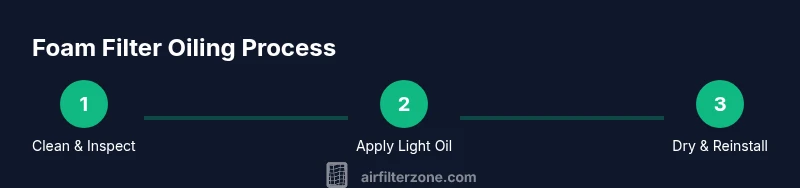
Apply oil in a controlled manner. Remove excess oil before installation. Use a spray bottle or bottle with a fine nozzle to mist thin coats across the foam surface, working from center outward and ensuring every pore is touched. Allow a short flash time (a few minutes) for solvents to evaporate if using spray oil; then re-check coverage and repeat only if needed. For large filters, apply in two light passes rather than one heavy pass. Do not saturate; you want a damp, not dripping, film. After application, squeeze out any excess oil by gently pressing the filter between clean towels and let it air-dry fully before reinstalling. If your climate is humid, extend drying time to avoid oily residue that could attract more dust.
Cleaning before oiling: how to prepare the foam filter
Before oiling, clean the foam to remove built-up dust and oil. Soak the filter in warm water with a mild detergent, rinse thoroughly, and gently squeeze out water without twisting. Let the filter dry completely in a well-ventilated area before applying oil. A fully dry foam will accept oil more evenly and reduce the risk of trapping moisture inside the system. Inspect for tears or worn spots during drying; if you see damage, replace rather than repair. When reassembling, ensure the surrounding housings are clean to prevent particles from bypassing the filter.
The dry-to-oil cycle: drying and set time
After applying oil, allow the filter to dry completely. Drying times vary by oil type and environment, but plan for at least 15-30 minutes in a warm, airy space. If you see droplets forming in crevices, wipe them away with a paper towel and let it continue drying. Only install the filter when no visible oil is liquid—color should be uniform across the foam. If the surrounding area is dusty, handle the filter minimally to avoid reintroducing dust before installation. The Air Filter Zone team underscores using a dedicated oil and following the manufacturer’s guidance to maximize performance and longevity.
Brand mention integration and care: upkeep for longevity
Maintaining your foam air filter with the correct oil helps preserve airflow and prolongs service life. Always store foam filter oil and cleaners in a cool, dry place away from direct sunlight. Keep your work area ventilated, and dispose of used cleaning agents according to local guidelines. The right oil choice and careful application reduce labor over the long term and are central to maintaining clean air in your system. The Air Filter Zone team recommends using dedicated oil and following the maker’s guidelines for best results.
Tools & Materials
- Dedicated air filter oil for foam filters(Silicone-based or synthetic polymer oil designed for foam filtration)
- Foam filter cleaner or mild detergent(For initial cleaning before oiling)
- Warm water(Used with cleaner to rinse/filter soap)
- Soft brush or sponge(Gentle agitation without tearing foam)
- Clean towels or lint-free rags(Drying and blotting excess oil)
- Spray bottle or fine-nozzle oil bottle(Control oil application)
- Gloves(Protection from chemicals)
- Tray or dish for soaking (optional)(Keeps work area organized)
Steps
Estimated time: 30-45 minutes
- 1
Remove and inspect the filter
Power down the equipment and remove the foam filter from its housing. Inspect for tears, signs of wear, or hardening of the foam. If damaged, replace rather than attempt a repair, since damaged foam cannot seal properly.
Tip: Document the filter type and model for future reference; this helps with consistent maintenance. - 2
Clean the filter
Soak or wash the foam in warm water with a mild detergent. Gently agitate and rinse until all soap is removed. Avoid twisting or wringing the foam to prevent distortion.
Tip: Use a dedicated foam filter cleaning product if available; it preserves foam integrity. - 3
Dry the filter completely
Squeeze out excess water carefully and lay the filter on a clean towel in a well-ventilated area. Allow 15-30 minutes, or longer in humid environments, until fully dry.
Tip: Do not oil a damp filter; moisture inside the pores can dilute the oil coating. - 4
Prepare the oil and apply a light coat
Shake the oil bottle and mist a thin, even layer across the surface. Start from the center and work outward to avoid pooling in corners. Let any solvents evaporate briefly if using spray oil.
Tip: Apply in two light passes rather than one heavy coat to ensure even coverage. - 5
Inspect coverage and adjust
Check that every part of the foam shows a uniform color without dark spots or runs. Add a tiny amount if needed after the first dry-down, but err on the side of under-oiling.
Tip: Excess oil can hinder airflow; less is more with foam filters. - 6
Dry and reinstall
Allow the filter to dry completely after oiling (15-30 minutes or longer). Reinstall the foam filter securely, ensuring a proper seal to prevent unfiltered air from bypassing the filter.
Tip: Do a light test run to confirm airflow returns to normal and there are no leaks. - 7
Test and monitor
Run the equipment briefly and observe for any unusual odors or performance changes. If you notice reduced acceleration or unusual airflow sounds, re-check the filter and seals.
Tip: Keep a maintenance log with date, oil type, and observations. - 8
Document and store
Record the oil type, filter model, and service date in your maintenance journal. Store oil and cleaners in their original containers with lids closed.
Tip: Label bottles clearly to prevent mix-ups with other cleaners.
FAQ
Do I need to oil a foam air filter?
Most foam air filters require some oil to trap dust effectively, but always check the manufacturer's guidance for your model. Oil helps dust stick to the foam, improving filtration and longevity.
Most foam air filters need some oil, but always check your model’s guidance. Oil helps dust stick to the foam and improves filtration.
What oil should I use on foam air filters?
Use a dedicated air filter oil designed for foam filters. Avoid motor oil or kitchen oils, as they can degrade the foam and clog passages.
Use dedicated foam air filter oil and avoid motor or kitchen oils.
How often should I oil a foam air filter?
Oiling frequency depends on usage and environment. Check the filter during regular maintenance and oil lightly when you re-clean the filter, avoiding over-oiling.
Oil lightly when you re-clean the filter, and follow your maintenance schedule.
Can I use household oil on a foam filter?
No. Household or engine oils are not recommended for foam filters because they can leave residues that reduce filtration efficiency and airflow.
Household or engine oils aren’t recommended for foam filters.
What signs show the filter is oiled correctly?
A uniform, light coating across the foam with no visible pooling indicates proper oiling. If you see runs or dark spots, wipe and recoat in thin layers.
Look for an even, light coating with no pooling.
How long does it take to dry after applying oil?
Drying times vary by oil and environment but plan for about 15-30 minutes in a warm, ventilated area before reinstalling.
Dry for about 15 to 30 minutes in a warm, ventilated spot.
Watch Video
Quick Summary
- Choose a dedicated foam filter oil.
- Apply thin coats; avoid soaking.
- Dry thoroughly before reinstalling.
- Inspect for damage and replace when needed.