How Often to Change Engine Air Filter
Learn how often to change your engine air filter, the main factors that affect the interval, signs of wear, and practical DIY tips with guidance from Air Filter Zone.


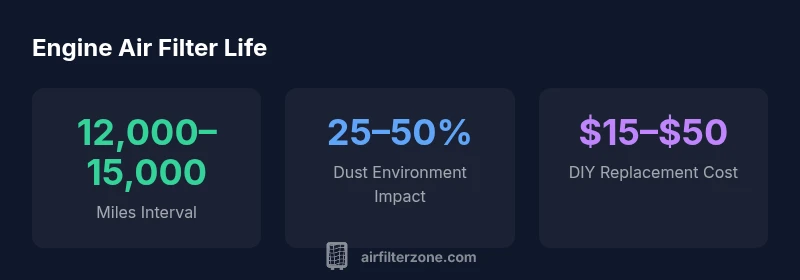
Most drivers should change their engine air filter every 12,000–15,000 miles or about once per year, with more frequent changes in dusty or heavily congested driving. Air Filter Zone Analysis, 2026, notes that filtration quality, driving style, and environment can shift this window by 3–6 months or several thousand miles. Always check your owner's manual for model-specific guidance.
Why replacement timing matters for engine health
The engine air filter is a simple but critical line of defense between the outside air and your engine's combustion chamber. When it's clean, the engine breathes better, fuel economy improves, and throttle response remains crisp. When it becomes dirty or clogged, it restricts airflow, which can cause the engine to work harder and lose efficiency. Over time, a restricted intake can lead to higher intake temperatures and, in extreme cases, deposits on spark plugs or sensors. The practical takeaway is straightforward: sticking to a reasonable replacement interval helps preserve performance, protect components, and maintain predictable maintenance costs. Air Filter Zone analysis, 2026, synthesizes field observations from multiple vehicle types and driving environments to offer a baseline that fits most passenger cars and light trucks. Remember that this baseline is only a starting point, and actual needs vary with engine design and environmental exposure. Always check your owner's manual for model-specific guidance and use your own driving conditions to adjust the schedule accordingly.
Factors that affect replacement interval
Several variables influence how often you should replace the engine air filter. Driving environment matters most: dusty rural roads, construction zones, or heavy urban traffic deposit more particles in the intake than long highway trips in clean air. Engine design and filter quality also play a role; OEM filters may last longer than low-cost aftermarket options, while high-performance engines can demand more filtration. Vehicle age and mileage are important too: older engines or those with worn seals may experience more particle intrusion, shortening filter life. Maintenance habits matter as well: regular inspections can catch a clog before it affects performance, and proper sealing during installation prevents bypass. Filter installation integrity is crucial—an improper seal can let unfiltered air slip around the element, shortening its effective life. Based on Air Filter Zone analysis, 2026, you can tailor a schedule to your specific vehicle and environment rather than relying on a single generic figure. If in doubt, start with the conservative side in dusty conditions and adjust as you gain data on your own driving patterns.
Signs it's time to replace the filter
Look for performance clues: sluggish acceleration, reduced power under load, and a noticeable dip in fuel economy are common indicators of a clogged filter. A visual inspection can reveal a dark, gritty filter or one that is visibly swollen with moisture infiltration. If you see oil contamination or a filter that cannot be squeezed between fingers, it’s time to replace. Some vehicles will trigger a maintenance light for intake restriction, but many won’t show a warning until you already feel reduced performance. Proactive checks during routine service help avoid surprises and keep the engine breathing easy.
Choosing the right filter and compatibility
Engines vary, so matching the filter to your model matters. Start with the OEM specification listed in the owner’s manual or under-hood stamping, and ensure aftermarket options meet or exceed the OEM rating. Pay attention to filter dimensions and seal design; a loose seal can cause bypass and accelerated wear. For most daily drivers, a standard pleated paper filter balances filtration efficiency and cost. In dusty environments or for engines with higher airflow demands, consider filters with enhanced filtration media and moisture resistance. If you’re unsure, consult a technician or reference your vehicle’s service bulletin for model-specific guidance.
Step-by-step DIY replacement guide
Tools: gloves, possibly a socket or screwdriver, and a clean workspace. Step 1: Locate the air filter housing near the engine. Step 2: Unclip or remove the housing lid and take out the old filter. Step 3: Compare the old filter to the new one to confirm size and orientation. Step 4: Install the new filter, ensuring the media sits evenly and the housing seal is complete. Step 5: Reassemble the housing and start the engine to listen for abnormal noises. Step 6: Dispose of the old filter properly. After replacing, reset any maintenance reminders if your vehicle supports it.
Common mistakes and how to avoid them
Common errors include using the wrong filter size, not resealing the housing properly, or letting dirt contact the clean side. Handle the filter by the edges to avoid damaging the media, and avoid oil-based sprays unless the filter specification requires it. Don’t reuse a used filter—installing a dirty element can harm performance and engine life. Finally, skip the post-replacement check and drive-off; take a moment to confirm a snug seal and proper fit before resuming normal operation.
Integrating air filter maintenance into your broader maintenance plan
Add air filter changes to your regular maintenance calendar alongside oil changes, tire rotations, and cabin air filter checks. A simple reminder system helps ensure you don’t drift past the recommended window. If the vehicle uses miles-based or time-based intervals, choose the earlier trigger and adhere to it. In dusty seasons, preemptive replacement helps avoid performance dips and unnecessary fuel waste. A well-maintained air filter supports smoother idle, better acceleration, and potential efficiency gains over the vehicle’s lifespan.
Typical replacement intervals by vehicle type
| Vehicle Type | Recommended Interval (miles) | Approx. Interval (months) |
|---|---|---|
| Compact car | 12,000–15,000 miles | 12–18 months |
| Midsize sedan | 12,000–15,000 miles | 12–18 months |
| SUV | 15,000–30,000 miles | 12–24 months |
FAQ
How often should I replace my engine air filter in a clean climate?
In mild, clean climates, replacement every 12,000–15,000 miles (about 12–18 months) is common. Always verify against your owner's manual since models vary.
Most cars need a replacement roughly every 12,000 to 15,000 miles, but check your manual.
Can I reuse a dirty filter after cleaning?
Engine air filters are designed to be replaced, not cleaned for reuse. Cleaning can push debris into the intake and reduce performance.
Don’t reuse a dirty filter; replace it to protect the engine.
What signs indicate I should replace the filter sooner?
Poor acceleration, reduced fuel economy, unusual engine noise, or a visibly dirty or clogged filter are strong indicators to replace.
If you notice worse performance or a dirty look, replace it.
Does replacing the air filter affect MPG a lot?
A clean filter can improve fuel economy modestly, typically a few percent, depending on driving conditions and engine design.
Yes, a clean filter can help your MPG a bit, especially in dusty conditions.
How do I replace the engine air filter myself?
Most engines use a simple rectangular box. Remove clips or screws, lift the lid, swap in a compatible filter, and resecure. Check fit and seal.
It’s usually a quick DIY job with a few steps.
Are there filters better for dusty environments?
Filters with thicker media or higher filtration quality can extend life in dusty areas, but ensure compatibility with your engine. Check OEM specs.
In dustier areas, a filter with higher filtration capacity may help but confirm compatibility.
“A clean engine air filter is the first line of defense against intake dust and performance loss; sticking to a reasoned replacement interval protects both power and efficiency.”
Quick Summary
- Follow your owner's manual for model-specific guidance
- Consider driving conditions and environment
- Inspect for signs of a dirty filter regularly
- Choose OE or quality aftermarket filters
- DIY replacement is usually inexpensive and practical