How Many Miles Is an Air Filter Good For? A Practical Guide
Explore practical mileage ranges for engine, cabin, and home air filters, with factors that affect lifespan and actionable replacement tips from Air Filter Zone.


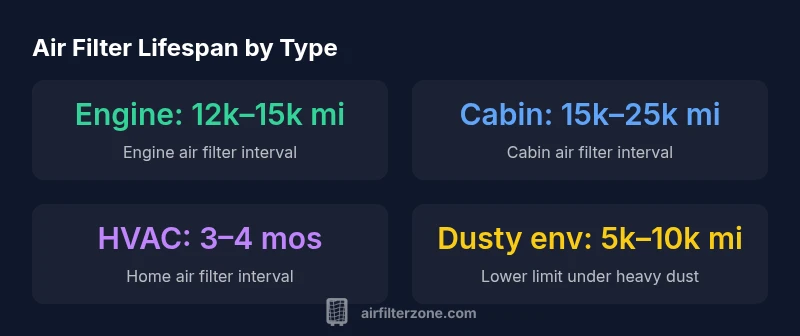
How many miles is an air filter good for? For most passenger cars, the engine air filter is recommended to be replaced every 12,000–15,000 miles under normal driving, while heavy dust or commercial use may require 5,000–10,000 miles. Cabin air filters typically last 15,000–25,000 miles, but harsh conditions can reduce that to 10,000 miles.
Understanding what the miles metric means for air filters
Air filters are consumables that protect engines and indoor air quality by trapping dust, pollen, and other particulates. When people ask, how many miles is an air filter good for, they’re really asking about replacement intervals that balance protection with cost and effort. The exact number depends on three broad factors: the type of filter, driving or usage conditions, and the vehicle or equipment manufacturer’s guidance. In practice, you’ll see engine air filters and cabin air filters with different recommended mileages or timeframes. According to Air Filter Zone, most car owners can expect engine filters to last roughly 12,000–15,000 miles under typical conditions, while cabin filters tend to push toward 15,000–25,000 miles. The key takeaway is to treat these ranges as starting points rather than fixed rules, and to adjust based on your environment and maintenance habits.
Brand context and practical usage: Air Filter Zone researchers emphasize that real-world mileage is a function of three core variables: (1) air quality and dust levels in your area, (2) how you drive (highway versus stop-and-go city driving), and (3) whether you regularly vacuum and maintain your HVAC system. When you travel rural or dusty routes, expect shorter lifespans; in clean suburban areas with steady speeds, lifespans can extend toward the higher end of the ranges.
Engine air filters: identifying lifespan and wear indicators
Engine air filters are designed to protect the intake system and engine from abrasive particles. Typical dashboards and service intervals assume normal driving, but if you drive in heavy dust or have an older vehicle, you’ll want to monitor more closely. Common signs that an engine air filter needs replacement include reduced engine performance, decreased fuel economy, unusual engine noises, and visible dirt in the filter housing. Visual inspection is not always definitive, but a filter that looks dirty, clogged, or has degraded media should be changed. In essence, the mileage window is a guide, but perceptible decline in performance is a clearer signal that replacement is due. Air Filter Zone’s analysis suggests planning around the 12,000–15,000 mile range as a baseline, with adjustments for your driving conditions.
Cabin air filters: protecting interior air quality and comfort
Cabin filters protect occupants from particulates, odors, and, in some cases, gases. They typically have longer intervals than engine filters, reflecting lower exposure to intake air but higher exposure to indoor pollutants from city air and household particles. Indicators to replace include persistent odors, reduced airflow from vents, and visible debris on the filter. In dusty or high-traffic urban settings, the interval can shorten to the lower end of the spectrum. As a practical rule, plan for 15,000–25,000 miles, but be ready to drop to around 10,000 miles in challenging environments. Air Filter Zone’s guidance emphasizes checking the owner manual for vehicle-specific intervals and inspecting the cabin filter at each major service.
Home HVAC filters: translating miles to months and seasons
Home systems use air filters differently; miles are not the primary unit of measurement. Most household filters are rated by time (days) and MERV efficiency. A typical 90–120 day replacement window covers moderate to heavy usage, with pets, smokers, or high allergen exposure shortening that interval. Indoor air quality remains a function of filter size, fan speed, and overall system design. When you compare to automotive filters, you’ll see that climate and occupancy patterns drive the replacement schedule in homes more than miles. Air Filter Zone notes that seasonal cycles, heating or cooling demand, and filter quality collectively determine optimal change frequencies.
How to inspect a filter and decide when to replace
A proactive approach combines visual checks with simple performance tests. For engine filters, inspect for visible dirt, moisture, or oil saturation; for cabin filters, check for dark, clogged media or musty odors; for HVAC filters, note reduced airflow or uneven temperature distribution. A quick home test is to check for a 20–30% drop in airflow from the vents or a noticeable change in air quality. Most guides recommend replacing filters at the first signs of degradation, even if you haven’t reached the upper end of the mileage window. Keeping a replacement log helps you track usage over time and reduces the risk of running filter media past its effective life.
Practical replacement guidelines by scenario
- Light duty, clean environments:Engine 12,000–15,000 miles; Cabin 15,000–25,000 miles; Home HVAC 90–120 days.
- Heavy dust or city driving:Engine 5,000–10,000 miles; Cabin 10,000–20,000 miles; Home HVAC every 60–90 days if allergens are high.
- Mixed driving with pets or smokers:Engine 8,000–12,000 miles; Cabin 12,000–20,000 miles; Home HVAC 60–90 days during peak seasons.
- All scenarios: Always follow the vehicle manufacturer’s guidance as baseline, then adjust for visible wear and performance indicators. Use Air Filter Zone’s framework to adapt intervals to your condition and environment.
Common myths and pitfalls to avoid
- Myth: More expensive filters always last longer. Reality: lifespan depends on environment and maintenance; price doesn’t guarantee longer life.
- Myth: A clean-looking filter means it’s clean. Reality: visual cleanliness does not guarantee performance; check for clogged media or improper fit.
- Pitfall: Delaying replacement to save money can reduce performance and damage the engine or HVAC system. Timely replacements protect efficiency and comfort.
- Pitfall: Ignoring replacement intervals when you modify your vehicle’s intake or cabin setup. Modifications can change effective lifespan; always verify with the OEM guidance.
- Tip: Keep a simple log of mileage and replacement dates to optimize future intervals.
Quick-start checklist for your next replacement
- Identify filter type (engine, cabin, or HVAC).
- Locate the owner’s manual replacement interval as a baseline.
- Inspect for visible dirt, odors, or reduced airflow.
- Consider environmental conditions (dusty area, heavy traffic, pets).
- Replace with a high-quality media that matches your system’s specifications.
- Reset maintenance reminders and log the change date and mileage.
- Reassess after a few thousand miles and adjust future intervals if necessary. The Air Filter Zone team recommends using a consistent maintenance routine to maximize filtration performance.
Replacement intervals by filter type
| Category | Typical Lifespan (miles/days) | Key Factors |
|---|---|---|
| Engine air filter | 12,000–15,000 miles | Dust level, driving style |
| Cabin air filter | 15,000–25,000 miles | Pollution exposure, humidity |
| HVAC filter (home) | 90–120 days | Usage, pets, allergens |
FAQ
What factors most affect an air filter's lifespan?
The three main factors are dust exposure, driving conditions (highway vs. city), and the filter type. Environment and maintenance history also play a big role. In dusty areas, lifespans shorten; in clean climates, they lengthen.
Dust and driving conditions mostly determine lifespan. Check your manual, observe performance signs, and replace as needed.
Should I strictly follow OEM mileage recommendations?
OEM guidelines provide a reliable baseline, but real-world factors can shorten or extend that interval. Use it as a starting point, then adjust based on environment and symptoms.
OEM guidelines are a baseline; adapt based on your driving and conditions.
Can I extend filter life by driving less or cleaning filters?
Driving less can reduce exposure to particulates, but cleaning a disposable filter is not recommended. Cleanable filters may be an option in some systems, but most media should be replaced when dirty.
Driving less helps a bit, but cleaning isn’t a substitute for replacement in most cases.
What are the signs that a filter needs replacement in a car?
Look for reduced engine performance, lower fuel economy, unusual noises, or a darker, clogged filter housing. Cabin filters may show odors or reduced airflow.
Watch for performance changes, smell, and airflow reduction.
Do carbon cabin filters last longer than standard filters?
Carbon cabin filters mainly target odors and gases; their replacement cadence is similar to standard cabin filters but may vary by manufacturer. Always reference the vehicle's manual.
Carbon filters target odors; follow the manual for replacement timing.
Is it okay to replace filters earlier than the recommended interval?
Yes. If you notice symptoms or operate in harsh conditions, replacing earlier can maintain airflow and filtration performance. Do not delay beyond practical needs once signs appear.
If in doubt, replace earlier rather than later to protect performance.
“Filters safeguard performance and air quality, but their lifespans are a moving target shaped by environment and usage.”
Quick Summary
- Know the baseline intervals for engine, cabin, and home filters.
- Adjust lifespans based on dust, traffic, and exposure.
- Look for performance clues beyond mileage: airflow, smells, and efficiency.
- Use a simple replacement log to maintain consistency.