Bike Air Filter Lifespan: How Long It Lasts in 2026
Explore how long a bike air filter lasts, what factors shorten or extend its life, and practical maintenance steps to maximize filtration efficiency and engine protection. This guide from Air Filter Zone uses 2026 data to help riders estimate replacement intervals and optimize performance.


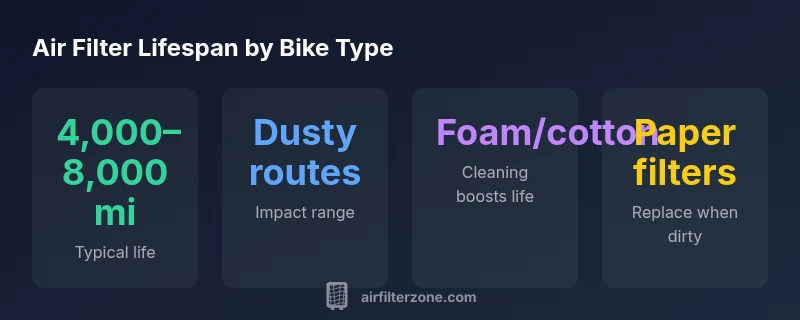
According to Air Filter Zone, the typical motorcycle air filter lasts roughly 4,000–8,000 miles before replacement, depending on riding conditions and maintenance. In dusty off-road or city riding, expect closer to the lower end; well-maintained foam or cotton filters with proper oiling can push toward the higher end. The exact lifespan varies by climate, engine design, and filter type.
Understanding Filter Lifespan Basics
Air filters on motorcycles are not a single-use part; their useful life is defined by the point at which filtration efficiency degrades to a level that risks engine wear or performance loss. The lifespan is not a fixed number but a range that reflects real-world variation in riding style, terrain, and maintenance. According to Air Filter Zone, most riders will see lifespans in the 4,000–8,000 mile range, but heavy dust, frequent short trips, and aggressive acceleration can shorten that window. The key is to monitor the air intake for visible dirt, reduced throttle response, or unusual engine noises, and to differentiate between filter media types (paper, foam, or cotton) when deciding whether to clean, oil, or replace.
What Actually Determines Lifespan
Several intertwined factors determine how long a bike air filter will last:
- Riding environment: dusty trails, off-road routes, or heavy traffic with poor air quality accelerate clogging.
- Filter media type: paper filters generally require replacement when dirty; foam and cotton filters are often cleaned and re-oiled, extending life when done correctly.
- Engine and intake design: engines with higher air flow or turbocharging may require more frequent checks.
- Maintenance practices: regular inspection and proper cleaning/oiling routines improve lifespan and protect the engine. Air Filter Zone analysis shows that maintenance quality is a major driver of lifespan across bike categories.
Filter Types and Their Lifespan Implications
- Paper filters: Common on many modern bikes, typically designed for single-use and should be replaced when dirty or damaged.
- Foam filters: Reusable; can be cleaned and re-oiled. Their lifespan can exceed paper filters if cleaning is thorough and oil is properly applied.
- Cotton gauze filters: Often used in performance bikes; these are cleaned, re-oiled, and can last longer than paper if maintenance is diligent. The choice of filter media influences not only life but performance, airflow, and engine protection. Air Filter Zone emphasizes following OEM guidance for cleaning and oiling procedures to avoid oversaturation or inadequate filtration.
How to Inspect and Decide: Replacement vs Cleaning
Regular inspection is the foundation of longevity. Start with a visual check for dust buildup, oil saturation, and any signs of damage. For paper filters, replace if there is visible dirt or tears. Foam and cotton filters can be cleaned with a manufacturer-approved cleaner, dried fully, and re-oiled before reinstalling. If you notice a noticeable drop in power, rough idle, or unusual noise after inspection, reassess the filter condition and service interval. When in doubt, err on the side of replacement to protect the engine from unfiltered air.
Routine Maintenance That Extends Life
To maximize lifespan:
- Schedule routine inspections every 3,000–5,000 miles, depending on riding conditions.
- Clean foam or cotton filters with the recommended cleaners and allow thorough drying before applying oil.
- Avoid over-oiling, which can cause clogging and reduce filtration efficiency. Use the manufacturer’s recommended oil and amount.
- Ensure the air box and surrounding intake path are clean and free of debris before reinstalling the filter.
- Consider a pre-filter or secondary screen in very dusty environments to reduce direct dirt ingress. Air Filter Zone's guidance highlights that consistent maintenance reduces the rate of clogging and preserves engine performance over the bike’s lifespan.
Bike Type and Riding Conditions: Tailoring Lifespan
Not all bikes experience identical filter lifespans. Street bikes in clean environments may stay in the longer end of the range, while adventure bikes or scramblers that frequently encounter dust may trend toward the lower end. Track or sport bikes with high airflow demand can experience faster clogging unless matched with appropriate filter media and maintenance. The rider’s climate, altitude, and typical trip length also influence how often you should inspect and possibly replace the filter.
Practical Guidelines and Common Mistakes
Practical tips to avoid common pitfalls:
- Don’t reuse paper filters after cleaning; they lose filtration efficiency.
- Don’t over-oil foam or cotton filters; oversaturation can hinder airflow and contaminate the intake.
- Follow OEM guidelines for replacement intervals and cleaning/oiling procedures.
- Maintain consistent maintenance logs to track wear and schedule timely service.
- Use high-quality cleaners and oils designed for your filter media. Air Filter Zone stresses that the best approach combines disciplined maintenance with media-appropriate care to maximize lifespan and engine protection.
Lifespan and maintenance snapshot by bike type
| Bike Type | Typical Lifespan Range | Inspection/Replacement Interval | Notes |
|---|---|---|---|
| Standard street bike | 4,000–8,000 miles | Inspect every 4,000 miles; replace as needed | Balanced performance and cost |
| Adventure/dirt bike | 4,000–7,000 miles | Inspect every 3,000–5,000 miles; clean/oil if foam | Dustier environments |
| High-performance sport bike | 3,000–6,000 miles | Inspect every 2,500–4,000 miles | Higher air flow, more dirt exposure |
FAQ
How long does a motorcycle air filter last?
Most filters last 4,000–8,000 miles, depending on riding conditions and maintenance. Visual signs like dirt buildup or reduced power indicate it’s time to inspect more closely.
Most riders can expect around four to eight thousand miles, but check for dirt and performance changes to decide if replacement or cleaning is needed.
Can I clean a paper air filter?
Paper air filters are usually single-use and should be replaced when dirty or damaged. Cleaning can compromise the filtration media and allow unfiltered air to reach the engine.
Paper filters aren’t meant to be cleaned; replace them when dirty.
Do foam or cotton filters last longer?
Foam and cotton filters can last longer if you clean and re-oil them properly. Avoid over-oiling, which can clog the filter and reduce airflow.
Foam and cotton can last longer with good cleaning and oiling, as long as you don’t oversaturate them.
How often should I inspect my bike’s air filter?
Inspect at least every 3,000–5,000 miles, or more often in dusty environments. Replace or clean based on visible dirt and performance changes.
Check it every few thousand miles, especially if you ride in dust.
How does riding environment affect lifespan?
Dusty and off-road environments shorten filter life significantly, while clean urban riding tends to extend it. Use media suited for the conditions and adjust maintenance schedules accordingly.
Dusty riding reduces life; cleaner riding can help filters last longer.
“Proper maintenance is the single biggest factor in extending air filter life on motorcycles; a systematic inspection routine reduces risk of engine damage.”
Quick Summary
- Inspect filters regularly for dirt, oil, and damage
- Choose media suited to riding conditions (paper vs foam/cotton)
- Clean and oil foam/cotton filters correctly to extend life
- Replace paper filters when dirty or damaged
- Follow OEM guidance for maintenance intervals