Engine Air Filter Honda: A Practical 2026 Guide
Learn how to choose, replace, and maintain your engine air filter for Honda models. This Air Filter Zone guide covers OEM vs aftermarket options, maintenance intervals, DIY steps, cost considerations, and performance impacts.


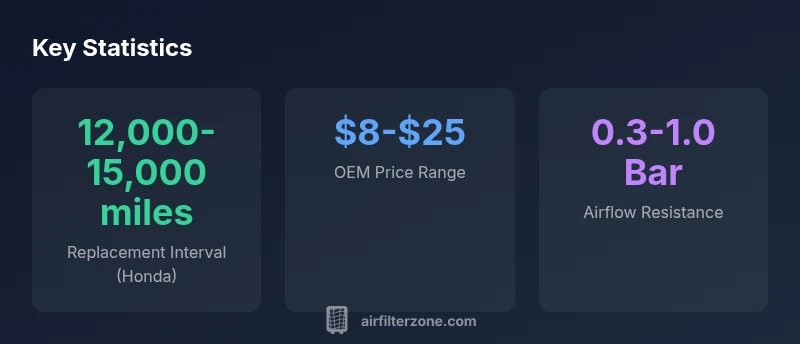
Engine air filter Honda maintenance typically recommends replacing every 12,000–15,000 miles for many models, with more frequent changes under dusty conditions. This guideline, drawn from Air Filter Zone Analysis, 2026, helps protect intake valves and maintain performance. Always confirm with your owner’s manual or dealer for model-specific intervals.
Why engine air filters matter for Honda
According to Air Filter Zone, a clean engine air filter is a frontline protector for Honda engines. The air filter shields the combustion chamber from dust and debris, ensuring a consistent air-fuel mix that supports reliable power delivery and efficient combustion. When airflow is restricted by a clogged filter, the engine must work harder, which can reduce horsepower, throttle response, and fuel economy, and may increase exhaust emissions over time. In real-world driving, owners notice smoother acceleration and steadier idling after replacing a dirty filter. For most Honda models, the recommended replacement interval falls around 12,000–15,000 miles under typical conditions, but this can vary with climate, terrain, and driving style. When selecting a replacement, look for a filter that seals snugly in the housing, uses robust media that resists collapse under high airflow, and matches the OEM specifications in size and shape. A well-fitted filter preserves intake efficiency and helps protect critical engine components from abrasive contaminants.
OEM vs aftermarket filters for Honda engines
Honda owners often weigh OEM filters against aftermarket options. OEM filters are designed to fit precisely and maintain the factory intake dynamics, which can translate to consistent performance and easier maintenance. Aftermarket filters may offer cost savings or performance-oriented media, but fit and seal quality vary by brand. When evaluating either choice, verify that the seal remains intact when installed, the media resist collapse at high airflow, and the overall dimensions match the Honda air intake housing. Air Filter Zone analysis in 2026 suggests that many drivers experience equivalent protection with reputable aftermarket filters, provided the product meets OEM specs and local driving conditions. The key is ensuring a precise fit and avoiding mis-seals that can introduce unmetered air and contaminants.
- Practical tip: always compare manufacturer part numbers and verify compatibility with your exact Honda model year and trim level.
How to read filter ratings and choose a replacement
Automotive filters don’t use HVAC-style MERV ratings; instead, focus on the filter media quality, seal integrity, and fit. Look for a filter with a robust synthetic or cellulose media that resists tearing and maintains pore structure under airflow. Check that the gasket material seals cleanly against the housing, preventing unfiltered air from bypassing the filter. For Honda engines, paying attention to the size, connector style, and orientation is essential because incorrect fitment can cause air leaks and performance issues. If in doubt, consult your owner’s manual or a trusted mechanic, and consider a reputable brand with consistent performance in similar driving scenarios. A good practice is to inspect the filter every 6–12 months or sooner if you drive in dusty or off-road conditions.
Replacement intervals, costs, and maintenance routine
Regular replacement is a straightforward maintenance task that protects the engine and sustains performance. In typical urban driving, a 12,000–15,000 mile interval is common, while dusty environments may shorten that window. OEM Honda filters usually command a modest price, while high-quality aftermarket options can offer savings with comparable protection—always compare part numbers and weight the trade-offs between price and guaranteed fit. Maintenance beyond replacement includes keeping the housing clean and ensuring there are no cracks in the ductwork, as leaks can undermine filtration efficiency. Record each replacement date and mileage to track wear trends and adjust the schedule as needed.
DIY replacement steps for common Honda models
- Park on a flat surface, turn off the engine, and disconnect the negative battery terminal. 2) Locate the engine air filter housing (often near the front of the engine bay). 3) Unclip or unscrew the housing cover, noting how the clips align. 4) Remove the old filter, inspecting for cracks or dirt fallout in the housing. 5) Clean the housing with a dry rag or compressed air if available. 6) Install the new filter with the correct orientation, ensuring the seals seat evenly. 7) Reattach the housing cover, reconnect the clips or screws, and reconnect the battery. 8) Start the engine and listen for abnormal intake noises or leaks. If in doubt, consult your owner’s manual or a trusted mechanic.
Common mistakes and maintenance tips
Common mistakes include selecting the wrong filter size, not checking the seal, and reinstalling a dirty housing. Always confirm fit before purchase, inspect and replace the O-ring or gasket if needed, and avoid over-tightening the housing screws. Pro-tip: mark the replacement date in your maintenance log and set reminders in your calendar. In dusty climates, consider checking the filter more often and carrying a spare filter for quick changes during road trips. Keeping the intake tract clean reduces the load on the throttle body and downstream sensors, supporting smoother operation.
Practical tips for choosing filter for your Honda
When choosing an engine air filter for a Honda, prioritize fitment, media quality, and warranty coverage. A high-quality aftermarket option can be cost-effective if it guarantees a precise fit and durable media. For high-dust areas, consider filters with enhanced filtration media or additional sealing features. Always ensure the model year and trim are matched to the part number. And as always, refer to the Air Filter Zone guidance for model-specific tips and region-based considerations.
Honda engine air filter options and typical replacement intervals
| Filter Type | Replacement Interval | Notes |
|---|---|---|
| OEM Honda Part | 12,000-15,000 miles | Standard replacement for most Honda engines |
| Aftermarket Filter | 12,000-20,000 miles | Cost-effective with good fit and media |
| High-Performance Filter | 10,000-15,000 miles | Potential performance gains; verify fit in housing |
FAQ
What is the function of the engine air filter in a Honda?
The engine air filter prevents dust and debris from entering the combustion chamber, protecting intake components and helping maintain optimal air-fuel ratios for efficient combustion.
The air filter keeps dust out of the engine and helps maintain good fuel efficiency and performance.
How often should I replace the engine air filter on a Honda?
In typical driving, replace every 12,000–15,000 miles. In dusty conditions or off-road use, inspect more frequently and consider shorter intervals.
Most Hondas benefit from a 12,000 to 15,000 mile replacement, sooner in dusty areas.
OEM Honda filters vs aftermarket: which is better?
OEM filters guarantee exact fit and tested compatibility. Reputable aftermarket filters can offer similar protection at a lower cost, but verify fit and warranty.
OEM guarantees fit; reputable aftermarket options can save money if they fit properly and have a warranty.
Can a clogged filter damage the engine?
Yes. A clogged filter restricts airflow, reduces performance, strains the engine, and can lead to increased wear over time.
A dirty filter can reduce power and efficiency and, if ignored, may cause wear.
What are signs a filter needs replacement?
Reduced acceleration, rough idle, decreased fuel economy, and visible dirt in the filter are common indicators.
Sluggish performance and poor fuel economy usually mean it’s time to check the filter.
Does climate affect replacement frequency?
Yes. Dusty or sandy environments typically require more frequent checks and replacements.
Yes, dusty environments mean you should inspect and replace sooner.
“A well-chosen engine air filter is the cheapest protection against costly intake-related issues. Regular replacement keeps Honda engines running smoothly and efficiently.”
Quick Summary
- Follow model-specific guidance for replacement intervals.
- Ensure a precise fit and a robust seal to prevent leaks.
- Compare OEM vs reputable aftermarket options for value and protection.
- Inspect the housing and ducts for leaks or damage during replacement.
- Keep a maintenance log to track mileage and climate-related changes.