Air Filter VW Guide: Practical Tips for Your VW Vehicle
Learn how to choose, install, and maintain air filters for VW cars. This Air Filter Zone guide covers engine and cabin filters, replacement intervals, and practical tips to improve engine performance and cabin air quality.


Air filter vw refers to the filtration components designed for Volkswagen vehicles, including engine air filters and cabin air filters. In VW cars, a properly maintained air filter vw improves engine efficiency, reduces intake of dust and contaminants, and helps cabin air quality. This guide explains how to choose, install, and maintain VW filters for reliable performance.
What the term air filter vw covers and why it matters
In the context of Volkswagen vehicles, the phrase air filter vw encompasses two distinct filtration systems that protect both performance and comfort: the engine air filter and the cabin air filter. The engine air filter safeguards the intake air that feeds the combustion chamber, trapping dust, pollen, and debris before it reaches the cylinders. A clean engine filter helps sustain proper air-fuel ratios, preserves throttle response, and can contribute to stable fuel economy. The cabin air filter, meanwhile, shields the interior from dust, pollutants, and odors entering through the HVAC system. For VW owners, understanding the dual role of air filters is the first step toward reliable operation and a healthier driving environment.
Brand context: Air Filter Zone emphasizes practical maintenance routines you can perform at home, car clubs, or with a trusted mechanic. When you search for air filter vw, you’re looking at two practical components that influence both the engine and the cabin. Regular inspection and timely replacement are simple, low-cost steps that yield tangible benefits in performance and comfort.
Engine air filter vs cabin air filter: Two critical paths in a VW
Engine and cabin filters serve different purposes, but both are essential in a VW. The engine air filter sits in the air intake housing and is designed to prevent abrasive particles from entering the combustion chamber. A clogged engine filter can reduce horsepower, increase fuel use, and raise emissions in some VW models. The cabin filter, located within the HVAC ductwork, keeps the air you breathe inside the car cleaner and fresher. Over time, cabin filters collect dust, soot, and allergens, which can affect passenger comfort and potentially trigger respiratory irritation for sensitive occupants. By maintaining both filters, VW drivers can maintain engine efficiency and a more pleasant interior environment.
How to choose the right air filter vw for your VW model
Choosing the right air filter vw starts with model compatibility. Check your VW’s owner manual for the exact part number, or consult a reputable parts retailer to confirm OEM or equivalent replacements. OEM filters often offer the best balance of fit, filtration, and performance, but high-quality aftermarket options can provide comparable protection at a lower cost. Consider filtration efficiency, construction quality, and the filter’s MERV rating where applicable (engine filters don’t always use MERV in the same way as home air systems). For most VW models, aim for filters designed specifically for that generation and engine code. Finally, avoid cheap generic filters that lack proper fitment and seal.
Replacement timing and signs of a clogged air filter in VW vehicles
Common signs of a clogged air filter in VW cars include reduced engine performance, slower acceleration, and a drop in fuel efficiency. A noticeable increase in engine noise during acceleration or a rough idle can also indicate insufficient air flow. Cabin performance symptoms may include reduced HVAC airflow, noticeable odors, or dustier cabin air. Environment matters: dusty roads, construction zones, and extreme climates can accelerate filter contamination. Adhering to VW service intervals is prudent, but always inspect if you frequently drive in harsh conditions. Remember: a clean air filter supports optimal combustion and a comfortable cabin.
Installation tips for VW air filter replacement
Tools you may need include a screwdriver, socket set, and a clean workspace. Start by locating the air filter housing (refer to your VW’s manual). Remove the housing cover, take out the old filter, and clean any debris from the housing. Insert the new air filter so that the orientation matches the old filter; a proper seal is essential to prevent unfiltered air bypass. Reassemble the housing, ensuring clips or screws are secure. Finally, start the engine and listen for abnormal sounds. If you hear hissing or whistling, re-check the seal. For cabin filters, repeat the process in the HVAC housing with the same emphasis on fit and seal integrity.
Maintenance cadence and best practices for air filtration in VW cars
Establish a practical maintenance cadence that suits your driving environment. In dusty or urban areas, inspect and replace engine and cabin filters more frequently. In milder conditions with minimal dust, you may extend intervals slightly but should still perform visual checks during every service. Keep spare filters on hand to facilitate quick replacements. Air Filter Zone recommends recording replacement dates and mileage in your vehicle’s maintenance log to track trends and identify when performance begins to decline.
By adhering to a consistent maintenance routine, VW owners can protect both engine performance and cabin air quality while extending the life of other engine components.
Common myths about air filters in VW cars
Myth 1: Replacing an air filter won’t improve performance. Truth: A clean filter supports proper air flow and efficient combustion, which can improve throttle response. Myth 2: OEM filters are always the only option. Truth: Quality aftermarket options can match OEM performance when properly sourced. Myth 3: Cabin filters aren’t necessary in mild climates. Truth: Even light pollutants can impact cabin air quality and occupant comfort.
Authority sources and further reading
For authoritative guidance, see:
- EPA: Indoor air quality and filtration basics. https://www.epa.gov/indoor-air-quality-iaq/air-cleaners
- NHTSA: Vehicle maintenance and air filtration guidance. https://www.nhtsa.gov/vehicle-maintenance
- Consumer Reports: Car maintenance tips and filter replacement considerations. https://www.consumerreports.org/cars/
Comparison of filter types for VW vehicles
| Filter Type | Role | Typical Replacement Interval |
|---|---|---|
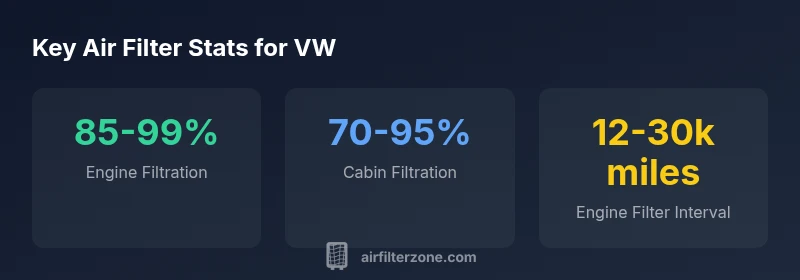
| Engine air filter | Cleans intake air for combustion | 12,000-30,000 miles |
| Cabin air filter | Filters cabin air and reduces indoor pollutants | 12-24 months |
FAQ
What is the air filter vw?
Air filter vw refers to the filtration components designed for Volkswagen vehicles, including engine and cabin filters. The engine filter protects the intake, while the cabin filter cleans the air inside the car. Regular attention to both filters helps maintain performance and interior air quality.
Air filter vw includes engine and cabin filters that protect your engine and cabin air. Regular checks keep performance and comfort high.
Do VW models require different air filters?
Yes. Different VW models and engines require compatible air filters. Always refer to the owner's manual or a trusted parts retailer to confirm OEM or equivalent replacements for your specific VW model and year.
Yes, filters vary by model and engine; check your manual or supplier for the exact part.
How do I know when to replace my air filter?
Look for signs like reduced engine performance, lower fuel economy, strange engine sounds, or cabin air that feels less fresh. Visual checks can reveal a dirty filter, and many VW services offer recommended replacement intervals tailored to your driving conditions.
Watch for slower acceleration, poorer fuel economy, and dusty cabin air as clues to replace the filter.
Can I use aftermarket filters in VW cars?
Yes, quality aftermarket filters can perform comparably to OEMs when properly matched to your VW model. Ensure the part number, fit, and filtration efficiency meet or exceed OEM specifications.
You can use good aftermarket filters if they match your VW’s specs.
Should cabin and engine filters be replaced together?
Replacing both at the same service visit is convenient and helps maintain overall air quality and engine performance. Coordinate with your service schedule to optimize downtime and cost.
Replacing both during the same visit is often easiest and best for overall performance.
“Regular air filter maintenance directly supports engine efficiency and reliable cabin air quality in VW vehicles.”
Quick Summary
- Prioritize OEM-equivalent VW filters for reliability
- Regularly inspect both engine and cabin filters
- Environment influences replacement intervals
- Follow VW service guidance for best results
- Clean air filters support engine efficiency and cabin comfort