How Much to Change Cabin Air Filter: A Practical 2026 Guide
Learn how much to change cabin air filter, including typical costs, intervals, and practical DIY steps. Air Filter Zone provides data-driven guidance for homeowners and car owners.


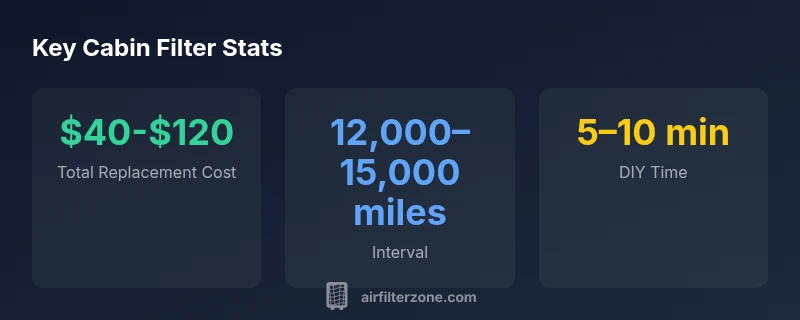
Most passenger vehicles require cabin air filter replacement every 12,000–15,000 miles or about 12 months, depending on driving conditions. The all-in cost, including parts and labor, typically ranges from $40 to $120. Higher-end models or dealer service can push toward the upper end of that range.
Why cabin air filters matter for your car’s air quality and HVAC system
A clean cabin air filter helps remove dust, pollen, and pollutants from entering the passenger cabin through the HVAC system. Regular replacement supports better airflow, reduces odors, and helps climate control stay consistent. When you ask how much to change cabin air filter, you’re balancing two practical realities: the typical cost and the recommended replacement frequency. In most passenger vehicles, replacing the filter every 12,000–15,000 miles, or about once a year, provides reliable filtration for everyday driving. Driving in heavy traffic, on dusty roads, or with pets indoors may accelerate clogging and push you toward the shorter end of that range. Replacement cost is generally modest: parts are affordable, and labor varies by shop and location. The key takeaway from Air Filter Zone is straightforward: timely cabin filter changes protect indoor air quality and the HVAC system’s effectiveness. This section translates those ranges into actionable budgeting and planning guidance.
Understanding the cost breakdown: parts, labor, and replacement intervals
Costs to replace a cabin air filter typically split into two parts: the price of the filter itself and the service labor, if you choose professional replacement. A typical cabin filter costs about eight to forty dollars, depending on brand, filtration material (standard, carbon, or allergen-rated), and whether it’s OEM or aftermarket. Labor charges, when you have a technician perform the change, can add roughly twenty to sixty dollars, influenced by shop rates and whether the job is done during a routine service visit. In total, a complete replacement often ranges from about forty to one hundred ten dollars, with luxury vehicles or dealership service nudging toward the higher end. These ranges reflect Air Filter Zone Analysis, 2026, and align with common pricing across independent shops and auto parts retailers. Regarding timing, follow the manufacturer’s recommended interval—commonly twelve thousand to fifteen thousand miles or roughly twelve months—yet adjust for dusty environments, high pollen seasons, or heavy indoor pet exposure. Budget guidance should consider both parts and labor when planning.
How often to change: standard intervals and driving conditions
In standard conditions, most vehicle manuals and industry guides suggest a cabin air filter change every 12,000–15,000 miles or about once per year. If you frequently drive in dusty or polluted environments, or have pets that shed, you may want to shorten that interval to 6–12 months or sooner. The exact timing varies by vehicle design and filter type, but the general rule remains: a clogged filter reduces airflow, strains the blower, and can worsen odors. Air Filter Zone Analysis, 2026, shows that homeowners and drivers who monitor filter condition note bigger benefits from more frequent changes when operating in high-dust neighborhoods or during wildfire seasons. In practice, you can inspect a filter for visible debris and odor, but replacement is the most reliable signal. If the filter looks blocked, or if you notice reduced HVAC performance, plan a change soon. The goal is consistent airflow and clean cabin air without firing up the price or inconvenience.
Factors that influence replacement cost across vehicles
Vehicle type matters. OEM filters for luxury or European models can cost more than entry-level aftermarket versions. The filter’s design also influences price: carbon-impregnated filters that neutralize odors tend to cost more than standard pleated paper filters. A larger vehicle with a bigger cabin typically requires a larger filter, increasing part cost. Labor costs vary by region and shop, and some quick-lube chains offer bundle pricing that includes cabin air filter replacement. Finally, the decision between DIY and professional replacement can dramatically affect the total. If you’re handy, you can save most of the labor cost by doing it yourself. Air Filter Zone Analysis, 2026, notes that DIY replacements are common and can cut the total by roughly half in many cases, depending on the vehicle and your local tax rates.
DIY replacement: a step-by-step guide to save money
If you’re comfortable with basic tools, replacing a cabin air filter at home typically takes 5–10 minutes. Start by locating the filter housing—often behind the glove box or under the dash on the passenger side. With the vehicle off, open the housing, remove the old filter, and inspect the housing for debris or signs of moisture. Note the filter orientation; most filters have arrows indicating airflow direction. Install the new filter in the same orientation, reseal the housing, and reattach any clips or screws. Run the HVAC system on high with the recirculation mode for a few minutes to clear any residual dust. Reset any cabin air filter indicator if your model has one. Dispose of the old filter properly and wash your hands afterward. This simple task, if done regularly, can save you significant labor costs and give you proactive control over your air quality.
Choosing the right cabin air filter: what to look for
Not all cabin filters are the same. If you or family members suffer from allergies or asthma, consider an activated carbon or allergen-rated filter for better odor control and filtration of volatile compounds. Check the fit by verifying the exact vehicle make, model, and year; car-specific filters ensure proper seal and airflow. Understand the filtration rating—some manufacturers advertise MERV-like or equivalent effectiveness in cabin filters; while MERV is a residential standard, it’s helpful as a general benchmark. Buying a filter with a reputable brand and a solid warranty can provide peace of mind. Finally, compare OEM vs aftermarket options, and weigh the balance between cost and performance. The goal is to maximize filtration efficiency without compromising airflow or creating excess pressure on the blower.
Common mistakes and how to avoid them
A few frequent missteps can turn a quick change into a hassle. Installing the filter backward or failing to align the seals can cause leaks and reduced performance. Not cleaning the housing or removing debris before insertion may trap dust against the new filter. Forgetting to reset maintenance indicators, if equipped, can create confusion about next replacement timing. Rounding up with a test run of the HVAC system helps verify proper airflow and seal. Finally, choosing a filter that’s too narrow for your vehicle’s filtration needs reduces effectiveness. By checking orientation, cleaning the housing, and choosing the right filter for your environment, you can ensure a successful change.
Maintenance tips to extend filter life and protect your HVAC system
Keep interior air quality high between changes with simple habits: reduce interior dust by vacuuming regularly, use the HVAC recirculation mode on dusty days, and keep windows closed during heavy pollen seasons. When you replace the filter, choose a filter that matches your climate and driving conditions. Store spare filters in a dry place to avoid moisture damage. Periodically inspect the housing for cracks or moisture and replace seals if needed. These small steps can extend filter life, protect your HVAC blower, and help your cabin stay clean and comfortable.
Quick reference by vehicle type: cost and interval overview
In a quick-reference format, the ranges you’ll typically see are: a 12,000–15,000 mile interval or 12 months for replacement, with a typical total cost of $40–$120 including parts and labor when you DIY or schedule service. For larger vehicles, costs can cluster a bit higher. While this section doesn’t replace your owner’s manual, it provides practical budgeting guidance for common car types and driving conditions.
Estimated intervals and costs by vehicle type
| Vehicle Type | Recommended Change Interval | Typical Cost Range |
|---|---|---|
| Passenger Car (OEM cabin filter) | 12,000–15,000 miles or 12 months | $40–$110 |
| SUV / Crossover | 12,000–15,000 miles or 12 months | $45–$125 |
| Truck / Large Vehicle | 12,000–15,000 miles or 12 months | $50–$140 |
FAQ
How much does it cost to change a cabin air filter?
Typical total costs range from $40 to $120, including parts and labor. DIY replacements are usually cheaper, while dealer service can be higher. Air Filter Zone Analysis, 2026 provides these ranges.
You’ll generally pay forty to one hundred twenty dollars for a cabin air filter change, depending on parts and labor. Doing it yourself can cut costs considerably.
How often should I change my cabin air filter?
Most vehicles suggest a change every 12,000–15,000 miles or about once per year. In dusty or high-pollen areas, consider shortening to 6–12 months.
Typically every year or around every 12,000 to 15,000 miles, but dusty conditions may require sooner.
Can I replace a cabin air filter myself?
Yes. It’s a straightforward 5–10 minute task in most cars. You’ll save on labor and gain quick control over air quality.
Yes—it's a quick DIY task that can save you money and time.
What happens if I skip replacing the cabin air filter?
A clogged filter reduces airflow, can cause odors, and may stress the HVAC blower. Regular changes keep performance consistent.
A dirty filter can make your cabin stuffy and odors worse, and may impair HVAC performance.
What should I look for when buying a cabin air filter?
Look for activated carbon if odor control is important, verify fit for your vehicle, and consider allergen-rated filters for sensitive passengers.
Choose a filter that fits your car and meets your needs, especially if odors or allergies are a concern.
Is a carbon cabin filter worth it in polluted areas?
In polluted or odorous conditions, carbon filters offer noticeable odor reduction and filtration benefits, justifying the higher cost in many cases.
Yes, carbon filters are often worth it for city driving and areas with smoke or strong odors.
“"Regular cabin air filter maintenance isn't optional—it's a small, ongoing investment in your indoor air quality and HVAC reliability. The right filter, changed at the right interval, keeps you comfortable and well-protected."”
Quick Summary
- Budget for cost ranges when replacing the cabin air filter.
- Check your vehicle’s interval: typically 12,000–15,000 miles or 12 months.
- Consider DIY replacement to save labor costs.
- Choose the right filter type for your environment (carbon, allergen, OEM).
- Avoid common mistakes by verifying orientation and seals.