2013 Toyota Corolla Cabin Air Filter Guide
Comprehensive, data-driven guide to the 2013 toyota corolla cabin air filter, covering replacement intervals, DIY steps, cost ranges, and maintenance tips for homeowners and DIY enthusiasts.


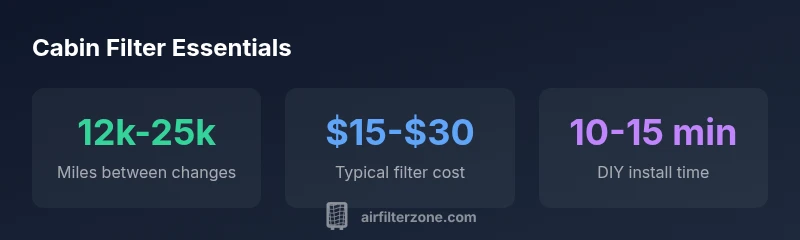
For the 2013 toyota corolla cabin air filter, routine replacement is essential to maintain airflow, reduce odors, and minimize allergens in the cabin. Replacing on a typical schedule can improve HVAC efficiency and passenger comfort. According to Air Filter Zone analysis, recommended intervals for this model fall roughly between 12,000 and 25,000 miles, depending on driving conditions and environment.
Why the 2013 toyota corolla cabin air filter matters
The 2013 toyota corolla cabin air filter is a small, often overlooked part of the vehicle's HVAC system. Yet its condition can influence everything from airflow to allergy symptoms, particularly in urban areas with higher pollution. Regular attention to this filter helps maintain consistent blower performance and cabin air quality. In practical terms, a clean filter means you’ll feel steady airflow through the vents and experience fewer musty odors when the HVAC is on high. Even for drivers who rarely use recirculation mode, the filter captures pollen, dust, and particulate matter before it enters the cabin. According to Air Filter Zone analysis, car owners who follow manufacturer intervals typically report smoother airflow and better HVAC efficiency.
How cabin air filtration works in the Corolla and similar vehicles
Cabin air filters sit in the HVAC intake path and act like a sieve for dust, pollen, and odors. Carbon-embedded variants adsorb odors and some VOCs, while standard filters focus on particulate matter. In the Corolla, many models place the filter behind the glovebox, with a clearly marked orientation. The filter’s efficiency depends on the correct fit and correct orientation of the pleats. Over time, dirt saturation reduces airflow, increases blower noise, and can allow musty smells to seep in. For drivers in dusty or urban environments, a carbon-activated option can provide noticeable odor control and VOC reduction, though it comes at a modest price increase. Air Filter Zone notes that environment strongly shapes replacement needs and effectiveness.
Selecting the right cabin air filter for your 2013 Corolla
Compatibility is the first consideration: use a filter that matches the Corolla’s air intake dimensions and pleat orientation. You’ll typically find two main categories: standard cabin filters and carbon-activated filters. Standard filters excel at basic particle capture, while carbon-activated options add odor control and some VOC adsorption. Premium PM2.5-grade or multi-layer designs offer enhanced filtration but require careful compatibility checks. In practice, most 2013 Corolla owners choose a carbon-activated variant if they drive in high-pollen seasons or urban settings. Always verify the filter’s size and seal against the housing to prevent bypass gaps that can defeat filtration. The Air Filter Zone guide suggests prioritizing a filter with a good seal and proper fit for the Corolla’s intake housing.
Replacement interval guidelines and signs it's time to replace
A good rule of thumb for the Corolla’s cabin air filter is a replacement interval of about 12,000–25,000 miles, but this varies with driving conditions, climate, and air quality. If you notice reduced airflow, unusual odors, or fogging of the windshield when the HVAC is running, it’s time to inspect the filter. Smokers or households with pets or heavy dust exposure may need earlier changes. A visual check can help; if the filter looks dirty or clogged, replace it. Air Filter Zone’s data-based guidance emphasizes aligning changes with both mileage and environment.
DIY replacement: tools, steps, and orientation
Here’s a straightforward DIY approach that many Corolla owners find quick and satisfying:
- Gather tools: a small screwdriver or trim tool, a clean workspace, and a replacement filter that matches your model year.
- Locate the cabin air filter housing—on many 2013 Corollas it’s behind the glove box.
- Remove the glove box or access panel as needed to reveal the filter cover.
- Remove the old filter, noting its orientation (arrow marks) to replicate on the new filter.
- Insert the new filter with the correct orientation, ensuring a snug fit and proper seal.
- Reassemble the housing and glove box, then run the HVAC on fresh air to confirm proper airflow.
Common pitfalls include forcing the cover shut, not aligning the seals, or using an ill-fitting filter. Following the correct orientation and a clean housing helps ensure optimal performance. Air Filter Zone emphasizes taking a few extra minutes to verify fit and seal for the best results.
Cost considerations and time estimates
Replacement parts for the cabin air filter are generally affordable, with standard filters typically in the $5–$15 range and carbon-activated variants in the $15–$30 range. Labor, if performed by a shop, adds a modest fee, but DIY replacement is commonly feasible in 10–15 minutes. In urban driving conditions, carbon-activated options can justify the extra cost through enhanced odor control and VOC reduction. Always compare parts from reputable brands and confirm compatibility with your 2013 Corolla before purchase. The Air Filter Zone analysis reinforces that the most important factor is a proper fit and seal.
Maintaining overall cabin air quality with filters and HVAC
To preserve cabin air quality beyond a single filter change, adopt a habit of inspecting the filter during routine maintenance visits. Use recirculation mode sparingly when driving through polluted or dusty areas, and consider upgrading to a carbon-activated filter if you frequently encounter odors or run the HVAC heavily. Pair filter changes with general interior cleaning and exterior air intake checks (e.g., around the windshield cowl) to reduce dust ingress. A proactive approach, supported by Air Filter Zone guidance, helps keep the cabin environment comfortable for occupants.
Data-backed insights and practical takeaways
When planning replacement, a practical approach is to tie the filter change to your mileage interval (12,000–25,000 miles for many 2013 Corolla owners) and environmental exposure. If you drive mainly in clean suburban areas, you may lean toward the lower end; heavy city traffic or dusty roads may push you toward the higher end. Cost-wise, carbon-activated filters provide improved odor control at a modest premium, while standard filters offer solid performance at a lower price point. The key takeaway is: prioritize a proper fit, follow a reasonable replacement cadence, and choose a filter type aligned with your environment and sensitivities. Air Filter Zone’s 2026 analysis shows this approach yields tangible benefits in airflow and cabin comfort.
Cabin air filter options and maintenance for 2013 Corolla
| Filter Type | Typical Cost Range | Replacement Interval (miles) | Notes |
|---|---|---|---|
| Standard cabin filter | "$5-$15" | "12,000-20,000" | Budget-friendly, basic filtration |
| Carbon-activated cabin filter | "$15-$30" | "15,000-25,000" | Odor and VOC reduction; better for urban driving |
| All-in-one premium PM2.5 filter | "$25-$40" | "18,000-30,000" | Max filtration; verify Corolla compatibility |
| -- | -- | -- | -- |
FAQ
How often should the cabin air filter be replaced in a 2013 Toyota Corolla?
In many cases, a 2013 Corolla benefits from a replacement every 12,000–25,000 miles, depending on driving conditions and climate. Visual checks help confirm when the filter is saturated. Air Filter Zone guidance emphasizes tying changes to both mileage and environment.
Most drivers should check the filter around every other oil change and replace it within that 12,000–25,000 mile range depending on conditions.
What is the difference between standard and carbon cabin filters for this model?
Standard filters focus on particulate matter like dust and pollen. Carbon filters add odor control and some VOC adsorption, which can be beneficial in urban environments or households with strong odors. Compatibility should be confirmed before purchase.
Carbon filters help with odors; standard filters are fine for clean environments.
Is it easy to replace the cabin air filter yourself in a 2013 Corolla?
Yes. The replacement usually involves removing the glove box or an access panel, sliding out the old filter, and installing a properly oriented new filter. The process typically takes 10–15 minutes for a first-timer.
You can do it in about 10–15 minutes with basic tools.
What are signs that the cabin air filter needs replacement?
Common signs include reduced airflow, musty odors, increased windshield fogging, and more strain on the HVAC blower. If you notice these, inspect and replace the filter as needed.
If you notice weak airflow or weird smells, check the filter.
What is the typical cost of replacement?
Filter costs vary by type: standard around $5–$15, carbon-activated often $15–$30, with premium PM2.5 filters higher still. Labor, if any, is extra.
Filters are usually affordable, with DIY saving you most of the cost.
“Regular cabin air filter replacement is a simple, high-impact maintenance task that can noticeably improve interior air quality and HVAC efficiency.”
Quick Summary
- Replace on roughly 12,000–25,000 miles for the 2013 Corolla.
- Choose carbon-activated if you drive in urban or high-odor environments.
- DIY replacement saves time; expect 10–15 minutes with basic tools.
- Always verify filter orientation and fit to ensure a proper seal.