Where is the Air Filter in Your Fridge? A Practical Finder’s Guide
Learn where to locate the fridge air filter, how to replace it, and tips to maintain clean, fresh air inside your refrigerator. Air Filter Zone guides homeowners with model-agnostic steps and safety tips.


If you’re wondering where is air filter in fridge, start by checking behind a removable panel at the back of the unit or inside the upper rear area of the fresh-food compartment. Many models place the filter near the fan housing. Always unplug first and consult the owner’s manual or model-specific online guides to confirm the exact location.
Understanding fridge air filters and why placement varies
According to Air Filter Zone, fridge air filters help reduce odors and improve air quality, but their location varies by model. If you're wondering where is air filter in fridge, the answer depends on design, but most contemporary fridges place the filter near the fan housing or behind a small access panel. Always start by unplugging the unit before you touch any interior components and consult the owner’s manual or model-specific online guides to confirm the exact location.
In general, there are two main design patterns: top-freezer and bottom-freezer units with a dedicated filter housing in the rear upper area of the fresh-food compartment, and French-door or side-by-side models that integrate the filter behind a panel in the top interior wall. Understanding these patterns helps you locate the filter quickly and safely.
Common locations by fridge design
Fridges come in several common configurations, and the filter’s placement tends to align with design families. For top-freezer and bottom-freezer models, look toward the rear of the fresh-food compartment, near the ceiling where the fan sits. French-door and side-by-side models often hide the filter behind a slim panel on the interior wall above or behind the produce drawer. While many manufacturers standardize on a rear heat-sink location, some brands switch to a front-facing panel for easier access. If you need model-specific confirmation, search the model number online and review the installation diagram that accompanies your manual. The key is to locate the small access panel or a labeled housing that indicates FILTER.
Behind the crisper drawer
In many standard modern fridges, the filter resides behind the crisper drawer or in the upper rear interior wall, just above the drawer track. To access it, you may need to slide the drawer out and remove a translucent plastic panel or a metal cover. The filter itself is typically a rectangular cartridge with a push-in or twist-lock connection. When you kneel to inspect the area, use a flashlight and look for a plastic housing marked with FILTER or a part number. If you see a seal gasket, you’re likely near the filter housing.
Inside the refrigerator compartment roof or back panel
Some models conceal the air filter in the ceiling area of the fresh-food compartment or along the back wall behind a removable panel. This placement keeps air circulating through the fan and filter assembly and helps odors stay neutral. To access, gently press in or slide out the panel; you may need to unclip it with a fingernail or a small flat tool. After removing the panel, you should see a square or circular filter cartridge with a clear direction indicator on the frame.
In the freezer compartment (rare but possible)
A few compact or specialized models place the air filter in the freezer compartment behind a small panel. This design can be confusing because the freezer is not typically the first place homeowners check. If you’re certain you’ve looked in the fresh-food area and still can’t find it, inspect the upper back wall of the freezer or a small door panel inside the freezer that could conceal a filter housing. When in doubt, consult the model-specific manual or manufacturer support page.
How to identify the filter type and model number
Filters come in several shapes and sizes: rectangular cartridges, cylindrical canisters, or even flat panel designs. Look for a label on the housing that lists the filter part number or compatible model numbers. If the label is worn, check the model plate on the interior wall near the ceiling or inside the freezer door frame. Once you have the number, search the brand’s site or a trusted retailer for a matching replacement. Using the right filter ensures proper airflow and prevents leaks.
How to remove and replace the filter
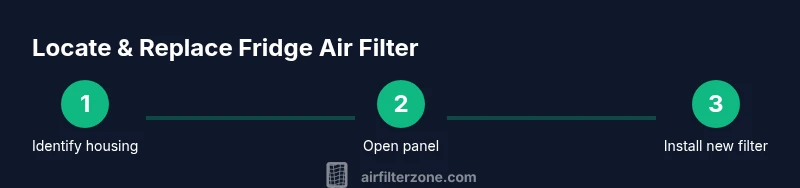
Before touching anything, unplug the fridge or switch it off at the circuit to prevent surprises. Open the access panel, unlock or detach the filter by following the arrows or tabs, and pull it straight out. Wipe the housing with a dry cloth to remove dust, line up the new filter with the orientation indicator, insert firmly until it clicks, and re-secure the panel. Replacing the filter with the wrong orientation can cause poor filtration or leaks. Finally, plug the fridge back in and run a short cycle to verify air flow:
Resetting indicators after replacement
Many fridges have a filter indicator switch or display that signals when a change is due. After replacing the filter, reset the indicator according to your user manual. Common methods include pressing and holding a reset button for several seconds, or navigating through the control panel to reach FILTER STATUS. A successful reset will revert the indicator to “good” or show a green light. If the indicator remains lit, double-check the filter’s placement and orientation.
Maintenance tips to extend filter life
To keep your fridge air filter working efficiently, replace it at the recommended interval and store spare filters in a cool, dry place. Use a liner to protect the housing from dust when removing and inspecting, and avoid touching the filter media with dirty hands. If you notice persistent odors, consider parchment-like absorption aids or additional deodorizing measures, but avoid masking odors with harsh sprays that could interfere with airflow.
Authority sources
For further guidance and model-specific details, consult these reputable sources:
- EPA: Indoor Air Quality and home appliances, including air filtration guidance: https://www.epa.gov/iaq
- Energy.gov: Energy Saver guidance for keeping refrigerators efficient and safe, with notes on maintenance and filters: https://www.energy.gov/energysaver
- Consumer Reports: Independent reviews and maintenance tips for home appliances, including fridge filtration considerations: https://www.consumerreports.org
This section consolidates trusted information to help you locate and replace your fridge’s air filter with confidence.
Troubleshooting when you can't locate the filter
If you have exhausted common locations and still can’t find the filter, double-check the model number against online diagrams or contact the manufacturer’s customer support. Some filters are integrated into the door gasket or behind unusual panels. A quick model-search can reveal a diagram that identifies the exact housing. As a last resort, a qualified appliance technician can locate and replace the filter without risking damage to seals or wiring.
Tools & Materials
- Replacement fridge air filter (OEM or compatible)(Choose a filter compatible with your exact model number. Check serial or model plate.)
- Clean, lint-free cloth(Used to wipe down the housing before inserting the new filter.)
- Phillips-head screwdriver(Only if your panel uses screws to hold the access cover.)
- Flashlight(Helpful for illuminating dark interior corners.)
- Gloves(Keeps hands clean and avoids fingerprints on the filter.)
Steps
Estimated time: 15-25 minutes
- 1
Power down and locate the access panel
Unplug the fridge or switch it off at the breaker to prevent shocks or leaks. Inspect the interior for a small panel or door that hints at FILTER. If you’re unsure where it is, start with the back wall of the fresh-food compartment.
Tip: Use a flashlight to avoid twisting panels in the wrong direction. - 2
Open the filter housing
Carefully remove the access panel or cover. Some panels slide out, others snap open. Do not force the panel; if it resists, check for additional screws or clips.
Tip: Hold the panel with one hand to prevent it dropping into the cavity. - 3
Remove the old filter
Grasp the filter cartridge and pull it straight out along its track. Note the orientation marks on the filter so you can install the new one correctly.
Tip: Take a quick photo of the old filter in place for reference. - 4
Inspect the housing
Wipe away dust and inspect for any damage or residue. If you see cracks or leaks, replace the housing or contact support. Ensure the area is dry before inserting a new filter.
Tip: A damp cloth and dry wipe prevents mold growth. - 5
Install the new filter
Align the new filter with the orientation arrows and push it firmly into place until it seats with a click. Ensure the edges are flush with the housing.
Tip: If the filter isn’t seating, remove and reinsert with the correct orientation. - 6
Reattach the housing panel
Snap or screw the access panel back into position. Confirm that the panel is secure and that there are no gaps.
Tip: Double-check that screws are snug but not overtightened. - 7
Power the fridge back on
Restore power to the unit and allow it to run for a few minutes. You should feel air flowing from the vents as the system re-establishes circulation.
Tip: If you hear unusual noises, stop and recheck the panel installation. - 8
Reset the filter indicator
If your model has a filter indicator, reset it according to the manual. This helps you track next replacement accurately.
Tip: If you don’t see a reset option, the indicator may reset automatically after several days.
FAQ
Where is the air filter in a fridge?
The location varies by model but common spots include behind an interior panel near the back, above the crisper drawer, or in the roof of the fresh-food compartment. Always consult your manual and look for a labeled FILTER housing.
Most fridges hide the filter behind a panel near the back or above the crisper drawer. Check your manual for the exact spot.
How often should I replace the fridge air filter?
Typically every 6-12 months, depending on usage and model. If you notice odors, reduced airflow, or slower cooling, replace sooner.
Most people replace their fridge filter every six to twelve months, or sooner if you notice odors or reduced airflow.
Can I use a universal fridge filter?
Some universal filters fit multiple models, but compatibility is not guaranteed. Always verify part numbers with your model before buying.
Universal filters work for some models, but you should check compatibility first.
Do fridge filters affect water quality?
Yes, fridge water filters reduce particulates and chlorine for the water dispenser. They are separate from air filters and require different replacements.
Fridge water filters affect water quality; air filters handle air, and both have their own replacement schedules.
What should I do if I still can’t locate the filter?
Review the model manual or search the model number online for a diagram. If needed, contact the manufacturer’s support or a professional technician.
If you can’t locate it, check the model diagram online or contact support.
What are common signs of a dirty filter?
Reduced airflow, lingering odors, and longer cooling times are typical signs. If you notice these, plan a replacement.
Look for weaker airflow, smells, or slower cooling as signs to replace the filter.
Watch Video
Quick Summary
- Know your fridge design to locate the filter quickly
- Use the model number to order the correct filter
- Always unplug before accessing the filter housing
- Reset indicators after replacement to maintain accuracy
- Replace on manufacturer-recommended intervals