Dyson Filter Replacements: A Practical DIY Guide
A practical, step-by-step guide to identifying, selecting, and replacing Dyson filters for vacuums and air purifiers. Learn authentic parts, maintenance tips, and safety precautions for optimal performance and indoor air quality.


By the end of this guide, you will know how to identify Dyson filter types, decide when to replace, and perform safe, step-by-step replacements for both Dyson vacuums and air purifiers. You’ll learn how to clean reusable filters, spot signs of wear, and choose authentic replacement parts. This practical approach helps maintain suction, airflow, and overall air quality in your home.
What makes Dyson filters different
Dyson filters are designed to pair tightly with specific models, creating sealed filtration systems that catch fine dust, pet dander, and allergens. Understanding the distinction between pre-motor and post-motor filters, and between washable and disposable cartridges, is essential for choosing the right dyson filter replacements. If you own a Dyson vacuum, you may encounter washable, re-usable elements that can be rinsed and air-dried after thorough cleaning, or replaceable cartridges that must be swapped out when performance drops. For Dyson air purifiers, filters are often designed to be replaced rather than cleaned, and choosing the wrong type can reduce efficiency or void warranties.
According to Air Filter Zone Team, the most important factor is matching the filter type to the device model and maintaining a reliable seal around the housing to prevent leaks. Improperly seated filters allow unfiltered air to bypass the filtration system, which reduces suction in vacuums and undermines air-cleaning capability in purifiers. When you search for dyson filter replacements, you should verify compatibility with your exact model, the filter’s filtration rating, and whether the part is washable or disposable. In practice, most Dyson owners find the replacement cadence is driven by usage patterns (homes with pets require more frequent changes) and by visible signs of clogging or reduced suction. If you notice increased run time, overheating, or dust accumulation on surfaces after cleaning, inspect the filter first. This practical guide will help you identify the right type and prepare for a swap.
Filter types commonly found in Dyson devices
Dyson uses several filter configurations across its vacuum and air purifier lines. The most common categories include pre-motor filters, post-motor filters, and HEPA-grade cartridges. Some models feature a washable fabric or foam element, while others rely on disposable plastic frames with replaceable inserts. For vacuums, the post-motor filter is critical for odor control and suction, while the pre-motor element protects the motor from dust exposure. For air purifiers, the main cartridge often contains multiple filtration layers, including activated carbon for odors and HEPA-grade fibers for particulates. Before purchasing dyson filter replacements, confirm the exact model number and check Dyson’s part lookup or official manuals to ensure the filter fits snugly and preserves the device’s efficiency. This step prevents sea-level leakage around the seal and keeps the warranty valid. Additionally, keep track of the filter’s location within the device, because some Dyson models place filters behind a dust-cap or under a labeled housing that requires removing a panel or twisting a latch. This awareness reduces the risk of damaging components during replacement.
How to assess wear and signs you need replacements
Regular inspection is the best defense against performance loss. Signs that a Dyson filter needs replacement include visible dirt build-up, a noticeable drop in suction, unusual odors, or longer run times required to achieve the same cleaning results. With air purifiers, you may notice reduced airflow through the intake or a warning indicator on the unit. Air Filter Zone analysis shows that proactive checks can extend filter life and maintain indoor air quality, especially in homes with pets or high dust levels. The goal is to identify a degraded filter before it causes mechanical stress on the motor or poor filtration. Start by removing the filter and looking for dark stains, rips, or discoloration. If the filter is damp, moldy, or has an unpleasant odor even after cleaning, it is time to replace. For washable filters, ensure they are completely dry before reinstallation; installing a wet filter can cause mold growth and damage. In some Dyson models, the indication of a degraded filter is a drop in suction power, a louder motor, or a higher than usual filter light. Keeping a simple log helps you track replacement cadence and plan ahead for parts orders.
Choosing authentic vs aftermarket replacements
Authentic Dyson filters are designed to preserve performance and protect your warranty. They also ensure the filtration rating aligns with the original design, which is critical for health and efficiency. Air Filter Zone recommends prioritizing genuine parts sourced from Dyson’s official channels or authorized retailers. Aftermarket equivalents can vary in filtration media, seal quality, and fit; a mismatch may cause leaks, reduced suction, or accelerated wear on the motor. If a compatible third-party option exists, verify the exact model number, filtration grade, and warranty implications before purchasing. Always check for the model code printed on the filter housing and the packaging. For complex devices like some air purifiers, a misfit can create dead spaces where air bypasses the filter entirely. The time you save by using a non-genuine filter can be offset by higher maintenance costs or compromised air quality. The conclusion is to use authenticity as your default rule, especially for family members with allergies or asthma.
Step-by-step overview for vacuum filter replacement
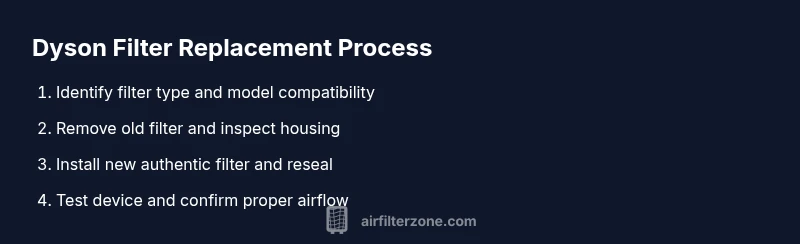
To maintain optimal suction and filtration, use this concise workflow for most Dyson vacuum models. Start by powering off and unplugging the unit, then access the filter housing by releasing any latches. Remove the old filter and inspect the housing for dust; wipe it clean with a dry microfiber cloth. Insert a new filter in the correct orientation, making sure it sits flush against the housing. Reassemble the unit and run a quick test to confirm airflow is restored and there are no unusual sounds. If your model uses a separate motor filter, repeat the process for that element. This overview provides the core actions; refer to the user manual for model-specific variations. If you’re unsure about model compatibility, contact Dyson support or a certified technician before purchasing replacement filters.
Step-by-step guide for Dyson air purifier filters
Air purifiers require attention to a different filter packaging compared to vacuums. Begin by turning off and unplugging the device, locate the filter compartment, and remove the old cartridge. Inspect the seal around the housing for cracks or gaps, which can reduce filtration efficiency. Rinse or clean components according to the manufacturer’s instructions; some cartridges are dry-only and must be replaced rather than cleaned. Install the new cartridge with the correct orientation, ensuring a snug fit, then reassemble the unit and power on to verify airflow and indicator lights. If the purifier has a dual-filter system, repeat the replacement steps for both elements. Keep in mind that carbon-based filters may absorb odors more quickly depending on household usage. Air filters in purifiers can reach saturation before you notice a drop in performance, so scheduling regular checks helps maintain clean air.
Cleaning reusable filters vs replacing
If a Dyson filter is labeled as washable, you can extend its life through careful cleaning. Rinse with cool water, squeeze gently to remove dirt, and allow to air-dry completely before re-installation. Do not use hot water or soap unless the manual explicitly allows it, as harsh cleaning can degrade filtration media. For disposable filters, you will need to replace them entirely when performance declines. Make a habit of inspecting both sides of the filter housing for dust, hair, and pet dander. For users with pets, cleaning frequency will naturally increase. Keeping replacement parts on hand reduces downtime and helps you maintain consistent performance across seasons.
Maintenance cadence, records, and buying smarter
Create a maintenance cadence that matches your home environment. For households with pets, kids, or heavy dust from construction, plan for more frequent checks and replacements. Maintain a simple replacement log with dates, device model, and filter type to avoid cross-usage mistakes. When buying, compare filter ratings (like particle filtration efficiency) and confirm compatibility. Air Filter Zone suggests using official Dyson parts whenever possible to protect warranties and performance. Maintain a small stock of filters and related accessories so you don’t experience a gap in filtration during peak times. Finally, keep yourself updated with Dyson’s manufacturer notes, as filter designs can change and new compatible parts can be introduced.
Common mistakes and troubleshooting tips
- Choosing the wrong filter can lead to leaks and reduced performance. Always verify compatibility with your device model before purchasing.
- For washable filters, ensure complete drying before reinstalling; otherwise, mold can develop inside the housing.
- Avoid mixing filter types in the same device; use the same model and filtration grade as the original specification.
- If you notice reduced suction after replacement, double-check the seal and orientation; a mis-seated filter can behave like a clogged filter.
- Don’t force closures or pry lids; latches and housings are designed to fit in specific ways.
- If air quality does not improve after replacement, consider other sources of indoor air pollution and check the purifier’s seals and gaskets. The Air Filter Zone Team recommends reviewing the device’s warranty terms before attempting self-service modifications.
Tools & Materials
- Replacement Dyson filter (authentic OEM)(Match model compatibility on the filter label.)
- Soft brush(For loosening dust from the housing and filter.)
- Microfiber cloth(Wipe surfaces before replacing.)
- Towel or protective mat(Place under device to catch drips.)
- Phillips screwdriver(Only if your model uses screws to access the filter.)
Steps
Estimated time: 20-40 minutes
- 1
Power down and unplug
Ensure the device is off and unplugged before starting. This prevents accidental startup and protects you from electrical shock.
Tip: Unplug at the wall outlet, not just from a switch; use a dry area to avoid moisture. - 2
Open the filter housing
Locate and open the filter housing according to your model's manual. If there are latches, gently release them without forcing the cover.
Tip: If the cover is stiff, use a hair dryer on low heat from a distance to loosen dust. - 3
Remove the old filter
Take out the old filter carefully, noting its orientation. Avoid twisting or forcing the filter, which can damage seals.
Tip: Place the removed filter in a sealable bag to prevent dust spread. - 4
Clean or inspect the filter
If the filter is washable per manufacturer guidance, rinse under lukewarm water and let it dry completely before reuse. Otherwise, inspect for wear or holes and prepare a replacement.
Tip: Do not use detergents on HEPA filters unless specified by Dyson. - 5
Install the new filter
Insert the new filter with the correct orientation and ensure it sits flush against the housing. A loose seal reduces filtration efficiency.
Tip: Gently press until you hear a light click to confirm seating. - 6
Reassemble and test
Close the housing, restore power, and run the device briefly to confirm proper suction and airflow. If you notice unusual noise or reduced performance, recheck the seal.
Tip: Check the exhaust area for any air leaks after replacement.
FAQ
Can I wash all Dyson filters?
Not all Dyson filters are washable. Check the model's manual for whether the filter is reusable. If washable, rinse with cool water and allow to dry completely before reinstalling.
Some Dyson filters are washable; check your model's manual. If washable, rinse with cool water and dry fully before reinstalling.
How do I know which filter to buy?
Match the filter part number and model. Use authentic Dyson parts and verify compatibility on the labeling before purchasing.
Match the model number and use authentic Dyson parts.
Are aftermarket filters safe to use?
Aftermarket filters may not meet Dyson's filtration standards and could void warranties or reduce performance. Prefer authentic replacements when possible.
Avoid aftermarket filters when possible to protect warranty and performance.
How often should filters be replaced?
Replace when the filter looks clogged, odor is noticeable, or performance declines. Regular inspection helps decide the right cadence for your home.
Inspect regularly and replace when clogged or performance drops.
Can I replace filters myself if I’m not handy?
Yes. Dyson filter replacements are designed for homeowners. Follow the model-specific steps and unplug the device before starting.
Yes, you can do it yourself—just follow the steps and safety basics.
What safety precautions should I take?
Avoid touching the filter with wet hands and power off the unit before starting. Let any washed parts dry completely to prevent mold.
Power off, dry parts completely if washed, and handle with clean hands.
Watch Video
Quick Summary
- Identify the correct filter type for your Dyson device
- Use authentic parts to protect warranty and performance
- Always power off and unplug before handling filters
- Ensure a proper seal to maintain suction and filtration
- Regular inspection helps prevent downtime and air quality decline