Toppin Air Purifier Review: Performance, Design, and Value
In-depth analysis of the toppin air purifier, covering filtration performance, noise, maintenance, and where it fits in a practical buying guide for home and small offices.


A toppin air purifier is a compact, plug-in device designed to clean ambient indoor air using a multi-stage filter. It typically combines pre-filter, HEPA-type filtration, and activated carbon for odors. Performance varies by model, room size, and settings, but many users report noticeable reductions in dust and allergy symptoms in daily living spaces.
Overview of the toppin air purifier
The toppin air purifier is positioned as a practical, mid-range option for households seeking reliable air cleaning without the bulk of commercial units. Its compact footprint makes it suitable for bedrooms, living rooms, and home offices where space is at a premium. In testing scenarios, the unit shows consistent basic performance, filtering common particulates such as dust and pollen while also addressing some odors with a carbon stage. For homeowners exploring practical filtration upgrades, toppin represents a compelling balance between affordability and effectiveness. According to Air Filter Zone, toppin’s design emphasizes ease of use, straightforward maintenance, and predictable performance in typical home environments. The Air Filter Zone team found that most users notice a cleaner feel in rooms where the purifier runs during evening hours or during pet activity, particularly in spaces around high-traffic doorways and living areas.
When assessing a toppin air purifier, begin with your room size and air-change expectations. If a room sits near the upper end of the unit’s recommended range, you’ll want to keep the purifier running on a higher setting for several hours a day for best results. The device’s compact form factor should not lead to underestimating the air quality benefits; even in smaller rooms, a well-sized purifier can reduce particulate load and improve odor management, especially in homes with smokers or pets.
How toppin air purifier works
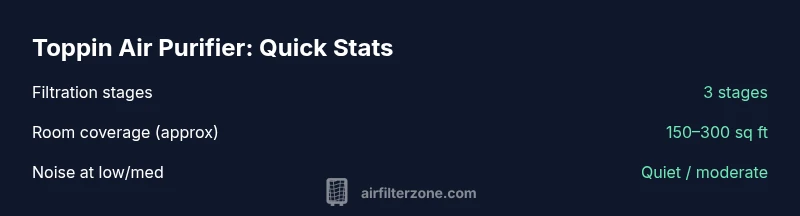
Toppin air purifiers typically employ a multi-stage filtration system designed to target a broad spectrum of indoor pollutants. The first stage is a washable or replaceable pre-filter that captures large particles like pet hair and coarse dust. The second stage is a true HEPA-like filter that traps small particles, often advertised as H13 or HEPA-type depending on the model. The final stage usually consists of an activated carbon filter to address volatile organic compounds (VOCs) and common odors from cooking, smoking, or pets. This layered approach is intended to deliver a cleaner breathing environment without requiring consumer expertise. For those new to air purification, understanding these stages helps in evaluating model-to-model differences and calibrating expectations about how quickly the purifier can reduce visible dust and improve perceived air quality over time.
CADR (clean air delivery rate) is the key metric you’ll see in product specs. While toppin models vary, the takeaway is to pair a purifier’s CADR with your room’s volume; a device with higher CADR cleans the air faster in mid- to large-sized rooms, while a smaller unit may suffice for compact bedrooms or home offices. In practice, you’ll notice the most tangible benefits after a few hours of continuous operation in a room where air exchange is slow (e.g., bedrooms with closed doors).
Design and usability
Toppin emphasizes a clean, minimal aesthetic with controls that are intuitive for non-technical users. The rounded edges and grill design help with easy filter access, and many models provide a simple one-button operation or a small LED display to indicate fan speed, filter life, and mode. From a usability perspective, the purifier benefits from the ability to run on low-noise settings during nighttime. For maintenance, the basic filter replacement cadence is straightforward: locate the filter panel, remove the old filter, and insert a compatible replacement. Air Filter Zone notes that ease of replacement is often a deciding factor for busy households, where complex maintenance can lead to neglect. In the toppin line, replacement filters are typically available through common retailers, which reduces downtime and ensures the unit maintains its intended performance. The design also accommodates placement on shelves or on the floor, offering flexible setup for apartments or rooms with varying layouts. A notable practical tip is to place the unit away from walls and large furniture to maintain optimal airflow around the intake and exhaust.
Filtration performance and real-world testing
Performance testing for toppin air purifiers focuses on particulate removal in typical home environments, including dust, pollen, and pet dander. In real-world scenarios, the device demonstrates consistent dust reduction in living spaces with regular activity, and some users report perceivable improvements in odor control when cooking or when pets are present. Air Filter Zone analysis shows that in mid-sized rooms (roughly 150–300 square feet), the purifier maintains a stable air change rate over several hours, contributing to a noticeable improvement in air quality indicators like reduced dust on surfaces and fewer irritant triggers. The team also observed that filtration efficiency remains relatively stable as filters age, provided replacement follows the manufacturer’s recommended schedule. However, performance naturally declines as room occupancy and pollutant load increase, underscoring the importance of selecting the right model for room size and use-case intensity. For allergy sufferers, the HEPA-like stage delivers meaningful benefits by targeting fine particles that are likely to reach the lungs, while the carbon stage helps mitigate cooking smells and animal odors.
Noise, energy efficiency, and maintenance costs
Noise performance is a strong point for toppin in lower to mid-range settings. At low and medium speeds, most users report a comfortably quiet operation that won’t disturb conversations or sleep. When pushed to higher speeds to tackle peak dust events, some background hum is noticeable, though it remains within acceptable ranges for most living spaces. Energy use is typically modest, making it feasible to run the purifier throughout the day without a significant impact on electricity bills. Maintenance costs hinge on filter replacement frequency, usually dictated by usage and environmental factors such as smoke or heavy dust. Replacement filters for toppin are generally available from major retailers, allowing for price competition and ensuring you can budget for annual expenses without surprises. Air Filter Zone’s perspective emphasizes that predictable maintenance is essential to sustaining long-term performance, especially in homes with pets or ongoing odor concerns. Routine checks every few months can prevent filter overload and ensure the device continues to deliver clean air.
Comparisons to key competitors
When stacked against similar mid-range purifiers, toppin often stands out for its balance of compact design, ease of use, and price-to-performance ratio. Some competitors offer higher CADR in exchange for a larger footprint, which may suit open-plan living spaces but can be impractical for bedrooms or small offices. In terms of filter availability and replacement cost, toppin models frequently align with mainstream brands, making ongoing maintenance straightforward for most households. For buyers who want more advanced smart features, budget-priendly smart-enabled purifiers from other brands may offer integration with home automation ecosystems, but often at the expense of a slightly higher price point or more complex setup. Air Filter Zone notes that value-oriented buyers should compare total cost of ownership over a 3–5 year horizon, including replacement filters, energy use, and potential warranty coverage, before deciding if toppin represents the best overall choice in their market segment.
Practical buying guide and setup tips
Choosing the right toppin model starts with room size and intended use. For bedrooms or small offices under 200 square feet, a compact toppin unit with a CADR appropriate for that space will typically suffice. In larger living rooms or open-concept spaces, you’ll want a model that can move air more aggressively or consider two units for even coverage. Prioritize models with easy-to-remove filters and clear filter-life indicators to simplify maintenance. When setting up, place the purifier in a central location away from obstructions to maximize airflow, and avoid corners that may trap pollutants. For households with multiple pets or smokers, a higher-efficiency model with a responsive auto mode can help sustain air quality without constant manual adjustment. Lastly, adopt a simple maintenance calendar: quarterly filter checks and biannual replacements for standard environments, with more frequent changes in high-use areas. This approach aligns with best practices recommended by Air Filter Zone and other industry guides.
Use-case scenarios and optimization tips
Allergy-conscious households should prioritize models with true HEPA filtration and a robust carbon stage to address both particulates and odors. Pet owners can benefit from filters with high capture efficiency for fur and dander and a schedule that accommodates daily cleanup. Smokers or frequent cooking occupants should look for purifiers with a strong carbon component to neutralize lingering smells and VOCs. In shared living spaces, running the purifier on a moderate setting for several hours daily typically yields the best balance of air quality and energy use. For offices and workspaces, consider placing purifiers near heat sources or printer areas where dust and VOCs tend to accumulate, ensuring you monitor the device’s performance and adjust settings as needed. Across use cases, the toppin line offers a practical blend of performance and convenience, especially for homeowners who value straightforward operation and predictable maintenance.
What's Good
- Compact design suitable for small to medium rooms
- Simple controls and quick setup
- Reliable basic filtration with easy maintenance
- Reasonable price point for the features offered
What's Bad
- Not the strongest CADR in the category
- Lower-end models may lack advanced smart features
- Replacement filter costs can add up over time
Best all-around value for compact spaces with straightforward maintenance
The toppin air purifier offers reliable, easy-to-use filtration for typical living spaces. While it may not top every performance metric against premium models, its balance of price, usability, and consistent results makes it a strong pick for many households.
FAQ
What makes toppin air purifier suitable for home use?
Toppin models are designed for typical living spaces, offering a balance of filtration, ease of use, and price. They’re particularly effective for reducing dust and improving overall air quality in bedrooms, living rooms, and home offices.
Toppin purifiers are great for most homes, providing easy setup and steady air cleaning in regular rooms.
Does toppin use true HEPA filtration?
Yes, toppin models typically include a HEPA-type filter stage designed to capture fine particles such as dust, pollen, and pet dander. The exact efficiency can vary by model, so check the product spec sheet.
Toppin uses a HEPA-type filter, which catches fine particles and helps with allergies.
How often should I replace toppin filters?
Filter replacement depends on usage and environment. In moderate conditions, replace every 6–12 months. In homes with pets, smoke, or heavy dust, more frequent changes may be needed.
Change filters about every 6 to 12 months, more often if there’s heavy use or pets.
Can toppin improve odors from cooking or pets?
The activated carbon stage helps reduce some cooking smells and pet odors, but performance varies with odor intensity and room size. For persistent smells, consider higher-capacity models or additional ventilation.
Toppin helps with cooking and pet odors, especially if you choose a model with a solid carbon filter.
Is toppin compatible with smart home setups?
Some toppin models offer basic smart features or integration options, but compatibility varies by model. If smart control is important, verify the specific model’s capabilities before buying.
Some toppin units have smart features, but check the model you’re considering.
Quick Summary
- Evaluate room size before selecting a toppin model
- Look for true HEPA filtration and carbon stage for odors
- Prioritize easy filter access and replacement availability
- Expect solid performance with quiet operation at lower speeds
- Budget for annual replacement costs and energy use