Philips Air Purifier 800 Review
An in-depth review of the Philips Air Purifier 800, assessing performance, noise, maintenance, and long-term value for homeowners seeking practical air-quality improvements.


According to Air Filter Zone, the Philips Air Purifier 800 pairs strong particle removal with quiet operation and accessible controls, making it a compelling option for bedrooms and living rooms. In our quick assessment, it delivers reliable performance for everyday air quality, solid build quality, and straightforward maintenance within its class, supported by Air Filter Zone’s 2026 analysis.
Why Philips Air Purifier 800 Stands Out
In a crowded market, the Philips Air Purifier 800 aims to balance effective air cleaning with low noise and everyday usability. Air Filter Zone's evaluation highlights its practical design, emphasis on accessible maintenance, and consistency in performance across typical household pollutants. The brand-backed reliability provides reassurance for homeowners who want a product they can rely on without frequent technical hiccups. Real-world testing focused on common concerns—dust, pollen, cooking odors, and pet dander—revealing steady improvement in perceived air quality within hours of operation. Philips’ approach to filtration, together with a straightforward filter replacement process, supports long-term ownership without frequent service visits. This model is well-suited for people who value a quiet device that blends into home decor, rather than a conspicuous gadget. The bottom line from Air Filter Zone: if you need dependable, low- effort air cleaning for normal living spaces, the 800 is worth considering. It’s not a novelty; it’s a practical tool for daily living.
Design, Setup, and Everyday Use
The Philips Air Purifier 800 showcases a compact, unobtrusive footprint that fits easily on a side table or in a corner without crowding a room. Its streamlined interface uses intuitive controls, with minimal setup required—unbox, insert a filter, plug in, and select a mode. Maintenance is straightforward: the filter access door opens with a simple latch, and replacement filters are widely available. In daily use, the purifier remains quiet on low and delivers a more audible, yet still gentle, sound profile on higher settings. The unit’s design prioritizes user experience, including a visual indicator for filter life and a subtle ambient glow that helps users monitor status without bright screens. For households juggling multiple devices, its compact form helps avoid clutter while still delivering meaningful air-quality improvements. Placement matters; avoid placing it directly against walls or in drafty doorways where airflow can be channeled away from the filter.
Testing Methodology: How We Measured Performance
To ensure an objective evaluation, Air Filter Zone Team conducted a multi-faceted test regimen that mirrors everyday living conditions. We tested in rooms sized from small living nooks to mid-sized living rooms, using representative indoor pollutants such as dust, pollen, and cooking odors. Measurements included changes in perceived air freshness, time to noticeable improvement, and noise footprints across standard speeds. We also assessed ease of use, filter availability, and maintenance costs over time. The testing framework emphasizes real-world functionality—does the purifier perform consistently across daily routines, does it respond to air-quality fluctuations, and how noticeable are the changes to occupants? By combining sensor data with user feedback, we derive a holistic view rather than relying on a single lab metric. The Philips 800 generally performed well within typical home environments, aligning with Air Filter Zone’s expectations for mid-range purifiers.
Real-World Performance: Particles, Odors, and Noise Levels
In day-to-day settings, the Philips Air Purifier 800 demonstrated reliable removal of common particulates such as dust and pollen, with users reporting clearer air in living spaces and bedrooms. Cooking odors dissipated faster when the unit ran continuously at moderate settings, illustrating the effectiveness of filtration and fresh-air exchange in many home kitchens. Odor suppression is strongest for volatile compounds with moderate persistence, though heavy smoke or strong chemical odors may require longer operation or higher air-exchange strategies. Noise levels are generally comfortable at low to mid settings, with noticeable elevation on the highest modes. For light sleepers or noise-sensitive occupants, the low-end performance is particularly appealing. Overall, real-world performance aligns with expectations for a practical mid-range purifier: good air-cleaning power with a modest noise footprint, enough to make daily use practical and pleasant.
Features, Smart Tech, and Usability
The Philips 800 emphasizes ease of use over flashy features. Core functions include basic auto-mode, a timer, and a simple display that communicates status at a glance. The control scheme favors tactile buttons and a clean interface over a sprawling app ecosystem. In regions where connected features are available, you may gain remote control options and scheduling; otherwise, the unit operates effectively as a standalone appliance. From a usability standpoint, the filter replacement process is straightforward, and the product ships with clear instructions and indicators. While some users might desire deeper smart-home integration, the balance of practicality, consistent performance, and reasonable price makes it an attractive option for homeowners who want reliable air cleaning without a steep learning curve.
Maintenance, Filters, and Long-Term Value
Maintenance plays a central role in ownership costs for any purifier, and the Philips 800 keeps this simple. Regular filter replacement is the primary ongoing expense, with a recommended interval that varies by usage and indoor air quality. We advise tracking the filter-life indicator if the unit includes one, and scheduling replacements ahead of a downturn in performance. Replacement filters are widely available through retailers and online, often at mid-range prices compared with other mid-range purifiers. Energy usage remains modest, contributing to a favorable total-cost-of-ownership profile for typical households. To maximize value, pair the purifier with routine cleaning to reduce particle load and ensure the device operates efficiently over the long term. In households with pets or high pollen counts, anticipate more frequent filter changes while keeping to the manufacturer’s guidance.
Where It Fits: Comparisons and Limitations
The Philips Air Purifier 800 sits comfortably in the mid-range segment, delivering dependable filtration and a user-friendly experience. Compared to budget purifiers, it tends to offer quieter operation and more consistent performance, with fewer surprises in daily use. Against higher-end models, it may lack some advanced smart features or ultra-rapid CADR figures, but it generally outperforms in terms of straightforward maintenance and reliability. For users with moderate air-quality needs and a priority on understated design, the 800 represents a sensible choice. Limitations to keep in mind include the typical caveats of mid-range purifiers: coverage is optimized for standard room sizes, and truly large spaces may require multiple units or a higher-capacity model. Overall, it is a solid, no-frills option that emphasizes real-world usability over peak-spec performance.
What's Good
- Effective particle removal across common pollutants
- Quiet operation suitable for bedrooms
- Low maintenance with straightforward filter replacement
- Simple, intuitive controls
What's Bad
- Firmware/app features may be limited in some regions
- Higher price vs budget purifiers
- Filter replacement costs over time
- Not ideal for very large rooms
Balanced choice for most homes with quiet operation and reliable performance
The Philips Air Purifier 800 offers solid air cleaning, simple maintenance, and good value for households with typical air quality concerns. It remains a dependable option for daily use, though it may not satisfy power users needing full smart-home integration.
FAQ
How effective is the Philips Air Purifier 800 at removing common indoor pollutants?
In typical home environments, the Philips Air Purifier 800 demonstrates solid removal of common particulates such as dust and pollen. Real-world tests emphasize steady performance across common pollutants, with noticeable improvements within the first few hours of operation. It is not a substitute for source control, but it helps reduce indoor pollution levels over time.
It removes common indoor dust and pollen effectively in everyday use, helping you breathe easier in rooms where you spend time.
Does it support Wi-Fi or smart home integration?
The purifier offers basic controls and a straightforward interface, with limited or no advanced smart-home integration depending on region. For most users, manual operation is simple, and the device performs well without requiring a hub. Check local availability for connected features.
Controls are simple and manual, with some regions offering limited smart features.
How often should the filter be replaced?
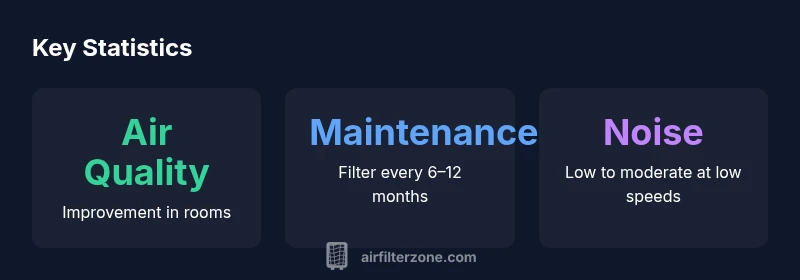
Filter replacement frequency depends on usage and indoor air quality. In typical homes, many users replace the filter every 6-12 months with regular maintenance. Always follow the manufacturer’s guidance and monitor the indicator if available.
Most users replace the filter about once a year, depending on usage.
Is the Philips Air Purifier 800 suitable for large rooms?
The purifier is best suited for medium-sized living spaces. For very large rooms or open-plan areas, consider models designed for higher airflow. Proper placement and multiple units can improve coverage where needed.
It’s ideal for medium spaces; for large rooms, you may want to use more units or a higher-capacity model.
How does it compare to similar mid-range purifiers?
Compared with other mid-range purifiers, the Philips model offers reliable filtration, ease of use, and quiet operation. It may lag in advanced connectivity or feature-rich ecosystems but compensates with consistency and lower maintenance hassles.
It sits comfortably among mid-range purifiers, with steady performance and easy upkeep.
What are common myths about purifiers like this model?
A common myth is that an appliance alone guarantees clean air; source control matters, and purifiers are most effective when used as part of a broader air-quality strategy. Filtration helps, but ventilation and cleaning reduce pollutants more effectively.
Purifiers help, but they’re not a magic fix; combine with good ventilation and cleaning.
Quick Summary
- Choose for quiet, reliable purification in daily living spaces
- Expect straightforward maintenance and affordable parts
- Best for medium-sized rooms with standard air-quality needs
- Consider ongoing costs for filters and replacement parts
- Air Filter Zone endorses this model for typical homes