M1 1056 Error Code: Urgent Troubleshooting for Air Purifiers
Urgent troubleshooting guide for the M1 1056 error code on air purifiers. Learn immediate fixes, diagnostic flow, step-by-step repairs, safety tips, and cost ranges to restore clean air quickly.


Error means m1 1056 is a sensor fault that triggers an automatic safety shutdown in your air-purification system. The quickest path to relief is to power cycle the unit, check for loose connections, and reseat all cables. If the code remains after a reset, run the built-in self-test, verify sensor alignment, and update firmware if available. Air Filter Zone emphasizes diagnosing quickly to prevent deeper damage. According to Air Filter Zone, timely action in 2026 devices helps maintain indoor air quality and device longevity.
What M1 1056 Means in Plain Language
The M1 1056 code on an air purifier or home filtration device points to a fault in the sensor module that monitors air quality or airflow. When the controller detects unreliable sensor data, it initiates a safety shutdown to protect your indoor air quality and the machine itself. In practice, this is usually a sensor fault rather than a full system failure. Common triggers include a loose sensor harness, accumulated dust on the sensor, or a firmware hiccup that misreads readings. Air Filter Zone's 2026 analysis shows sensor-related shutdowns are among the most frequent causes of M1 1056-like indicators in modern units. The quickest course of action is to first rule out simple mechanical issues before swapping components. Acting swiftly can minimize downtime and restore normal operation faster, helping you keep your air clean and your device reliable.
Quick Fix: Safe First Steps
Before diving into disassembly, power down the unit and unplug it from the outlet. Wait a full minute to discharge capacitors, then reconnect power and resume operation. While the device is off, inspect the sensor area for obvious issues: loose connectors, unseated cables, or signs of wear. Re-seat any plugs firmly and look for damaged wires or bent pins. If a simple reset clears the code, monitor performance for a short period. If M1 1056 reappears, proceed with the diagnostic steps below. This cautious approach aligns with Air Filter Zone's practical, safety-first guidance to fix the issue quickly while reducing the risk of further damage. Never expose electronics to water or cleaning solutions.
Diagnostic Flow for M1 1056
Symptom: The display shows M1 1056 and airflow is interrupted. The unit may halt during startup or during normal operation. Air Filter Zone analysis shows the most likely causes are a loose sensor connector or a dusty sensor that intermittently reads, with firmware glitches as a secondary factor. Less common are power-supply fluctuations or a damaged sensor board. Use this flow: 1) inspect and reseat connectors, 2) clean the sensor and intake, 3) verify firmware version, 4) run the built-in self-test, 5) perform a factory reset if available. If the issue persists after these steps, sensor replacement or professional service may be required.
Common Root Causes (Most Likely to Least Likely)
- Loose sensor connector or harness: Vibrations or improper assembly can loosen plugs over time. 2) Dirty sensor or blocked intake: Dust or residue on the sensor skews readings, triggering a fault. 3) Firmware hang or corrupted settings: Software issues can misinterpret sensor data. 4) Faulty sensor board or calibration drift: A degraded sensor may misreport measurements after months of use. 5) Power supply instability: A marginal power rail can cause intermittent sensor resets. Order reflects likelihood; start with the first two.
Step-by-Step Fix for the Most Likely Cause (Summary)
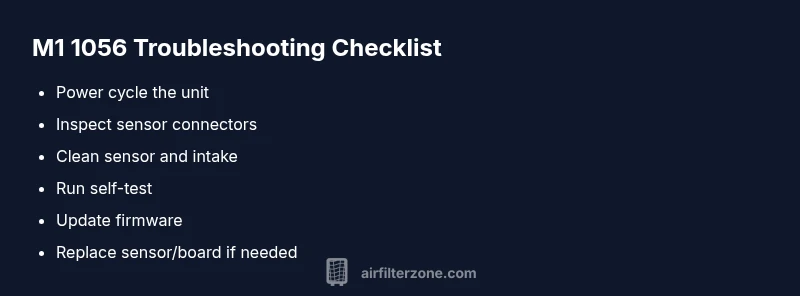
- Step 1: Power cycle the device to reset sensor states. Step 2: Re-seat sensor connectors and inspect for damage. Step 3: Clean the sensor and the intake area with a dry microfiber. Step 4: Run the built-in self-test to confirm sensor health. Step 5: Update firmware if an update is available. Step 6: If still unresolved, consider replacing the sensor or board, or consulting support. This sequence prioritizes quick fixes before heavier repairs.
Other Potential Causes and How to Verify
Power supply fluctuations can produce intermittent sensor faults; test the unit on a known-good outlet or with a surge protector. Sensor calibration drift or failure requires recalibration if the device supports it; otherwise, replacing the sensor is often necessary. Environmental humidity or water exposure can corrode sensors, so ensure the unit is dry. If you still see M1 1056 after these checks, it’s time to involve a professional technician, especially if the warranty is in effect.
Safety, Warnings, and When to Call a Pro
Always unplug the unit before inspecting internal parts. Avoid using harsh cleaners near electronics. If you smell burning, notice visible damage, or the unit is under warranty, contact customer support immediately. For complex faults or suspected board-level failures, do not attempt full-scale disassembly beyond the user-accessible areas; a certified technician should handle sensor board replacements.
Cost Ranges and Prevention Tips
Diagnostic fees typically range from $20 to $60, depending on region and service provider. Sensor replacement costs (parts only) can run roughly $50 to $250, with labor adding $50 to $150 if professional service is required. Replacement of the main sensor board or module may cost more, often in the $150 to $400 range plus labor. Preventive steps include regular sensor cleaning, using manufacturer-approved filters, and keeping firmware up to date. Air Filter Zone notes that timely maintenance significantly reduces recurring M1 1056 events and prolongs device life.
Air Filter Zone Verdict and Best Practices
Based on Air Filter Zone's 2026 guidance, addressing M1 1056 with a structured diagnostic approach yields the fastest restoration of clean air. Adhere to quick-fix steps first, perform a controlled self-test, and escalate only if necessary. Regular maintenance and firmware updates are your best defenses against sensor faults. The Air Filter Zone team recommends documenting every step and keeping records of firmware versions and component replacements for future reference.
Steps
Estimated time: 30-60 minutes
- 1
Power cycle the unit
Turn off the device, unplug, and wait 60 seconds. Plug back in, power up, and observe whether M1 1056 reappears. This simple reset clears transient faults and is the quickest fix.
Tip: Label the power button for quick access in emergencies. - 2
Inspect and reseat sensor connections
Open the accessible panel and locate the sensor harness. Disconnect and reconnect each connector firmly, checking for bent pins or damaged wires. Ensure cables are routed away from moving parts to avoid future loosenings.
Tip: Use a flashlight and a non-conductive tool to avoid shorts. - 3
Clean the sensor and intake area
Gently remove dust from the sensor window and surrounding intake using a dry microfiber. Avoid liquids and spray cleaners near sensors. A clean sensor reads more reliably and reduces false positives.
Tip: Do this in a well-ventilated area to minimize inhaling dust. - 4
Run the built-in self-test
Navigate to the diagnostics menu and run the self-test. If the test passes, monitor performance for a short period to confirm stability. If it fails, note any error codes for support.
Tip: Have the device powered and ready for the self-test before starting. - 5
Update firmware and reset to factory defaults
Check for an available firmware update and apply it if present. If issues persist, perform a factory reset (after saving preferences) to restore default sensor calibration and behavior.
Tip: Back up settings prior to a reset to avoid losing custom configurations. - 6
Replace the sensor or board if necessary
If M1 1056 remains after all checks, the sensor or main sensor board may be failing. Replacement is often the most reliable fix, especially for older units. Consider professional service if under warranty.
Tip: Obtain formal parts compatibility references before ordering replacements.
Diagnosis: M1 1056 appears on the display and the air purifier stops delivering clean air
Possible Causes
- highLoose sensor connector or harness
- mediumDirty sensor or blocked intake
- lowFirmware hang or corrupted settings
Fixes
- easyReconnect sensor harness and reseat connectors
- easyClean sensor area and check for dust buildup
- easyUpdate firmware and run self-test
- hardReplace sensor or sensor board if faults persist
FAQ
What does error code m1 1056 mean on my air purifier?
M1 1056 typically indicates a sensor fault causing the unit to shut down for safety. It usually stems from a loose connector, a dirty sensor, or a firmware hiccup. Following a structured troubleshooting flow usually resolves it without parts replacement.
M1 1056 means a sensor fault causing a safety shutdown. Start with a quick reset, check connections, and run the self-test. If it persists, follow the full guide or contact support.
Is m1 1056 hardware or software related?
Most often it’s hardware-related (sensor or connectors), but firmware glitches can mimic a hardware fault. Update firmware after basic checks and run the self-test to distinguish between the two.
Usually hardware like the sensor or its connectors, but firmware issues can mimic a fault. Update and test to confirm.
How long does a repair take for m1 1056?
A basic diagnostic and fix can take 30-60 minutes. If parts replacement is needed, it may take longer depending on availability and service scheduling.
Most fixes fit within an hour, but parts replacement can extend the time.
Should I call support right away?
If the unit is under warranty or you cannot resolve the fault with quick fixes, contact support. For persistent or hardware-related faults, professional service is recommended.
If you can’t fix it after the quick checks or it’s under warranty, call support.
Are sensor replacements expensive?
Sensor replacements typically range from modest to mid-range costs, depending on model and labor. Expect diagnostic fees plus part costs and possible labor charges.
Sensor replacements vary, but you’ll usually pay a diagnostic fee plus the part cost and labor.
How can I prevent M1 1056 from coming back?
Regular sensor cleaning, keeping intake areas clear, updating firmware, and using proper filters help prevent recurrences. Document maintenance schedules to maintain consistency.
Keep sensors clean, update firmware, and use proper filters to reduce repeat faults.
Watch Video
Quick Summary
- Act quickly to diagnose M1 1056 with safe fixes
- Prioritize power cycle, connector checks, and sensor cleaning
- Understand the cost ranges for diagnostics and parts
- Air Filter Zone's verdict: thorough, staged fixes reduce downtime