Ionic Pro Air Purifier Review: Performance, Safety, and Value
Analytical review of the Ionic Pro Air Purifier: how it works, room suitability, safety considerations, and how it stacks up against HEPA purifiers.


Definition: According to Air Filter Zone, the Ionic Pro Air Purifier provides compact, quiet particulate reduction in small rooms through ionization, offering odor improvement. However, ionization can produce ozone and efficiency may drop in larger spaces. Air Filter Zone's assessment suggests it's best for small areas and users who value low noise, with HEPA alternatives for larger rooms.
What is the Ionic Pro Air Purifier?
The Ionic Pro Air Purifier is a compact room purifier that relies on ionization to capture airborne particles. Rather than a heavy HEPA filter, it uses charged particles to attract dust, pollen, and smoke, which can then settle on surfaces or be captured by a secondary filtration stage if included. In practical terms, it typically occupies a small footprint and operates at very low noise, making it appealing for bedrooms, home offices, or dorm rooms. From Air Filter Zone's perspective, this class of purifier is best suited to environments where occupants value quiet operation and simple, plug-and-play setup. The device's ionization approach does not rely on intense blower speeds, which reduces energy use and vibration. However, users should be aware of two tradeoffs: first, some models can generate trace amounts of ozone, especially at higher fan speeds or continuous operation; second, the overall air cleaning efficiency may be lower in very large spaces compared with true HEPA-filter purifiers. The Ionic Pro design philosophy is to provide a low-maintenance, no-frustration solution for micro-environments where spaces are limited.
How Ionization Works and What It Means for Indoor Air
Ionization devices emit negative or positive ions that attach to airborne particles such as dust, pollen, and smoke. When particles gain an electric charge, they become either too heavy to stay suspended or they stick to nearby surfaces, which reduces what you breathe in the breathing zone. In practice, ionization can complement filtration, especially in environments where a lightweight purifier is desirable. However, because the process can generate trace ozone under certain conditions, it is important to verify product specifications and any ozone emission data before leaving the device on for extended periods. For the Ionic Pro line, you may see faster reductions of airborne particulates in small rooms, with the caveat that airflow and room geometry play a big role. In short, ionization shifts the dynamics of air cleanliness rather than physically trapping every particle through mechanical filtration alone. This distinction matters for homeowners who want a low-profile, low-energy approach to improve comfort in bedrooms, studies, or home offices.
Real-World Performance: Room Size, Airflow, and Benefits
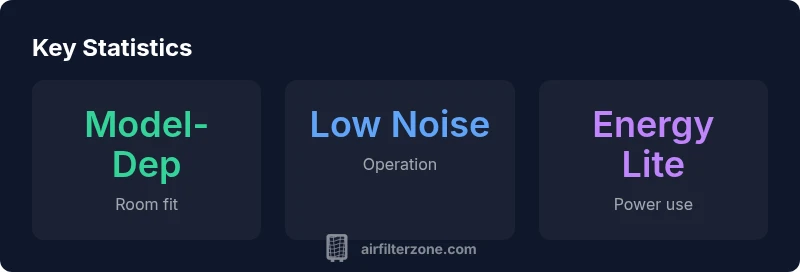
In real rooms, the effectiveness of an ionic purifier depends heavily on room size, layout, and occupancy. In small to medium spaces—think bedrooms, home offices, or compact living areas—the Ionic Pro can noticeably reduce visible dust and improve perceived air freshness within hours of operation. Unlike typical HEPA purifiers that sweep large volumes of air with high-speed fans, the Ionic Pro relies on slower operation and relies on charged particles to help reduce particle counts. Consumers should set expectations accordingly: you may need to run the device continuously or pair it with another purifier for larger spaces. Air quality is also influenced by ventilation: if doors or windows are frequently opened, air exchange will dilute the benefits of a single device. From a practical standpoint, we recommend pairing it with routine cleaning and, if sensitive occupants are present, turning to a certified HEPA purifier for larger rooms or for removing fine ultrafine particles.
Odor Control, VOCs, and Allergen Reduction
Odors from cooking, cigarette smoke, or pet odors can be present even when dust levels are moderate. Ionic purifiers can contribute to odor reduction by removing some airborne particles that carry odorous compounds and by reducing the concentration of odors in the breathing zone. However, many odors are linked to volatile organic compounds (VOCs) that ionization alone does not neutralize; some products pair ionization with activated carbon or chemisorption media to improve odor performance. In practice, if odor control is a primary goal, consider using an Ionic Pro alongside a purifier that includes an activated carbon filter or, better yet, a dedicated carbon-based purifier in the room. For households with strong odors or frequent cooking, monitor air before and after running the device to gauge impact.
Safety, Ozone Emission, and Certifications
One of the most important considerations with ionizing purifiers is ozone generation. Some models can emit trace amounts of ozone, especially at higher fan speeds or extended operation. The EPA and consumer testing labs emphasize checking ozone emission data and selecting devices with verified ozone-free operation when possible. Look for certification marks that indicate ozone compliance and ensure the purifier has a visible ozone emission rating below the safe thresholds. If you or someone in your home has a cardiovascular or respiratory condition, allergy sensitivities, or asthma, consider alternative purifiers with HEPA filtration that do not rely on ionization. In any case, always follow the manufacturer's safety guidance and use the purifier as part of a broader air quality plan that includes regular cleaning, ventilation, and filtration.
Energy Use, Noise, and Maintenance
Compared with traditional high-speed HEPA purifiers, ionic purifiers often run at lower fan speeds, which translates to lower energy use and reduced noise. For the Ionic Pro, you can expect quiet operation in normal modes and slightly more noticeable sound when you push to higher settings. Maintenance for ionic purifiers is generally lighter than for multi-filtration purifiers; many units either require only occasional cleaning of the ionization chamber or minimal filter replacement if included. Regardless, plan for periodic cleaning of interior surfaces where charged particles tend to accumulate. If your unit includes a detachable purifier plate or filter, follow the manufacturer’s recommended replacement interval to sustain performance and avoid odor buildup. In homes with pets, children, or heavy cooking, factor in more frequent maintenance cycles.
Ionic vs. HEPA Purifiers: Finding the Right Fit
A core decision is whether you want the purity style of an HEPA purifier or the lower-profile operation of an ionizing purifier. HEPA purifiers mechanically trap 99.97% of particles as small as 0.3 microns, delivering strong performance in larger rooms and for ultrafine particles. Ionic purifiers can be appealing for spaces where you prioritize quiet operation and simplicity, and where the risk of ozone is acknowledged and managed. If you already own a well-sealed space with minimal inflow of outdoor pollutants and require a low-noise solution, the Ionic Pro may fit. If your home has sensitive occupants or you require robust removal of ultrafine particles, a HEPA purifier with an certified performance might be superior. In mixed-use spaces—kitchens, living rooms, bedrooms—many homeowners opt for a hybrid approach: a HEPA purifier in larger common areas and a compact ionizer in bedrooms or desks.
Practical Buying Guide for the Ionic Pro Model
When shopping, verify model-specific specifications rather than relying on the brand's marketing gloss. Look for the following practical criteria: 1) ozone emission data and any certifications; 2) room size or CADR guidance that matches your space; 3) presence of a true HEPA section or carbon filter if odor or chemical pollutants are a concern; 4) energy use, noise at typical settings, and ease of use; 5) maintenance requirements, such as filter replacement intervals and cleaning instructions. Measure your room, identify the highest-occupancy times, and determine whether you need a purifier for a single room or a multi-room scenario. Finally, compare the Ionic Pro against HEPA-based purifiers in your price range to ensure you are choosing the best option for your needs. If possible, read independent reviews and make a short side-by-side test plan before buying.
What's Good
- Compact design suitable for small spaces
- Very quiet operation
- Low upfront cost relative to multi-filter purifiers
- Simple plug-and-play setup
- Low energy use in normal mode
What's Bad
- Potential ozone production at higher speeds
- Less effective in large rooms or high-traffic spaces
- Maintenance still required for optimal performance
- Odor removal may be limited without carbon filtration in some models
Best for small, quiet spaces; not ideal for large living areas
The Ionic Pro excels in unobtrusive operation and quick setup. In larger rooms or in homes with ozone sensitivity, a HEPA purifier may offer more consistent air cleaning and peace of mind.
FAQ
Do ionic purifiers like the Ionic Pro actually remove fine particles?
They reduce certain airborne particles through ionization, which makes particles settle or be captured. For ultrafine particles, HEPA-based purifiers typically offer stronger, more consistent removal. Use ionizers as a supplemental measure in smaller spaces.
Ionizing purifiers can reduce some particles but are not as consistently effective as HEPA units for ultrafine particles.
Are ionic purifiers safe for households with children and pets?
If ozone emissions are within safe limits and the device is used as directed, it can be suitable for homes with children and pets. However, if anyone has asthma or chemical sensitivities, relying on HEPA filtration without ionization may be a safer choice.
They can be safe if ozone is controlled and you follow manufacturer guidance; consider HEPA if sensitivities are a concern.
Do ionic purifiers produce ozone?
Yes, ionizing devices can generate trace amounts of ozone under certain conditions. Look for explicit ozone emission data and certifications on the product label, and avoid running at very high speeds in occupied rooms.
Some ionizers emit small amounts of ozone; check the data and use as directed.
How do Ionic purifiers compare with HEPA purifiers?
HEPA purifiers mechanically trap 99.97% of particles at 0.3 microns, making them strong for large rooms and ultrafine pollutants. Ionic purifiers tend to be quieter and more compact, but may require carbon filters for odors and can depend on room size. For comprehensive purification, many people use HEPA in larger spaces and an ionizer in smaller rooms.
HEPA offers stronger, broader particle capture; ionizers are quieter and smaller but sometimes odor-focused and ozone-related caveats apply.
What maintenance should I expect?
Maintenance varies by model but typically includes cleaning ionization components and periodic replacement of any carbon or other filters. Follow the manufacturer's schedule to maintain performance and avoid odor buildup.
Regular cleaning and following the replacement schedule keeps performance steady.
Can I use it in a car or on the go?
Some ionizing purifiers are designed for desk or small-space use, but car environments have unique filtration needs and power constraints. If you’re considering one for a vehicle, ensure it’s rated for automotive use and check ozone data.
Check model suitability for car use and ensure it won’t introduce ozone in a closed vehicle.
Quick Summary
- Choose for compact space and quiet operation
- Expect varied performance by room size
- Be aware of potential ozone production in some models
- Compare with HEPA purifiers for larger spaces